PPWR Article 67 Penalties: Fines by EU Member State
PPWR Article 67 Penalties: Country-by-Country Fines, Enforcement Maturity, and What Triggers a Sanction
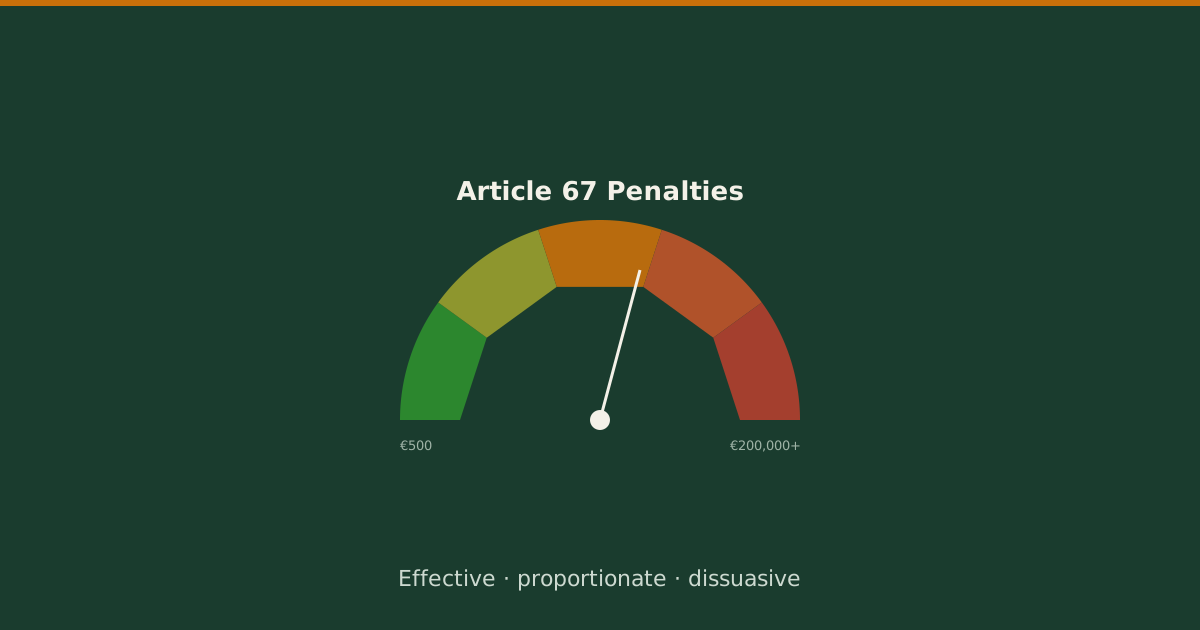
Article 67 of Regulation (EU) 2025/40 directs Member States to set "effective, proportionate, and dissuasive" PPWR penalties for non-compliance, but the actual fine ranges are set nationally, not by the Commission. The result is a fragmented enforcement landscape where Germany's ZSVR can issue penalties up to €200,000 per breach (overlapping with the parallel VerpackG regime), while several Eastern EU Member States are still building enforcement capacity and have yet to publish their implementing legislation. This guide maps every Member State fine range available from public source as of May 2026, plus the five-stage escalation cascade a non-compliant packaging type moves through before sanctions land.
The Commission Guidance of 30 March 2026 confirmed that fine amounts are not set centrally; Member States have until 12 August 2026 to publish their implementing legislation, and several remain pending. Two CFO-grade takeaways: first, Article 67 penalties stack with parallel-scheme fines (VerpackG, Citeo, CONAI, Ecoembes are administered separately and carry their own fine schedules); second, Article 67 sanctions are per breach, not per company, which means a 400-SKU portfolio with broad non-compliance can compound rapidly. The numbers in this guide refresh quarterly as Member States publish.
In this guide:
- What Article 67 actually says and the "effective, proportionate, dissuasive" standard
- The 5-stage sanction cascade from compliance notice through criminal liability
- Country-by-country fine matrix with enforcement maturity indicators
- How Article 21 multiplies importer exposure
- The mitigation pathway: pre-audit self-assessment, audit-trail documentation, monitoring
- 7-entry FAQ covering appeals, stacking, SME treatment, and CBAM overlap
What Article 67 Actually Says
Article 67 of PPWR ([Regulation (EU) 2025/40](https://eur-lex.europa.eu/eli/reg/2025/40/oj)) requires Member States to lay down rules on penalties applicable to infringements of the Regulation. Penalties must be effective, proportionate, and dissuasive. The Commission does not set amounts; each Member State publishes its own scale.
The "Effective, Proportionate, Dissuasive" Standard
The triple-test phrasing ("effective, proportionate, and dissuasive") is the standard EU formulation for penalty provisions and carries forward from the predecessor Directive 94/62/EC. Operationally, each adjective imposes its own constraint on Member State drafting.
- Effective. The penalty regime must actually produce compliance behaviour. A penalty that is unenforced or unenforceable does not meet this test.
- Proportionate. The fine must scale with breach severity. A missing DoC for a single packaging type cannot carry the same maximum as systemic falsification across a 400-SKU portfolio.
- Dissuasive. The fine must exceed the cost-of-compliance the breach avoids. A €1,000 fine for a €50,000 supplier-audit avoidance is not dissuasive; the breach pays for itself.
These three constraints set the floor for Member State drafting but leave wide discretion above the floor. Hence the wide variance in published ceilings (factor of 4-7 between the lowest and highest Member State maxima in our matrix below).
Member State Implementation Timeline
The implementing legislation deadline is the same as the regulation's general application date: 12 August 2026. Member States publishing earlier (Germany, France, Italy, Netherlands have published as of May 2026) signal the audit posture they intend to take. Member States publishing late create a transition risk: the substantive PPWR obligations apply from 12 August 2026 regardless, but the sanction mechanism may lag. As of this guide's date, 8 Member States have published fine schedules; the remaining 19 are pending.
The 5-Stage Sanction Cascade
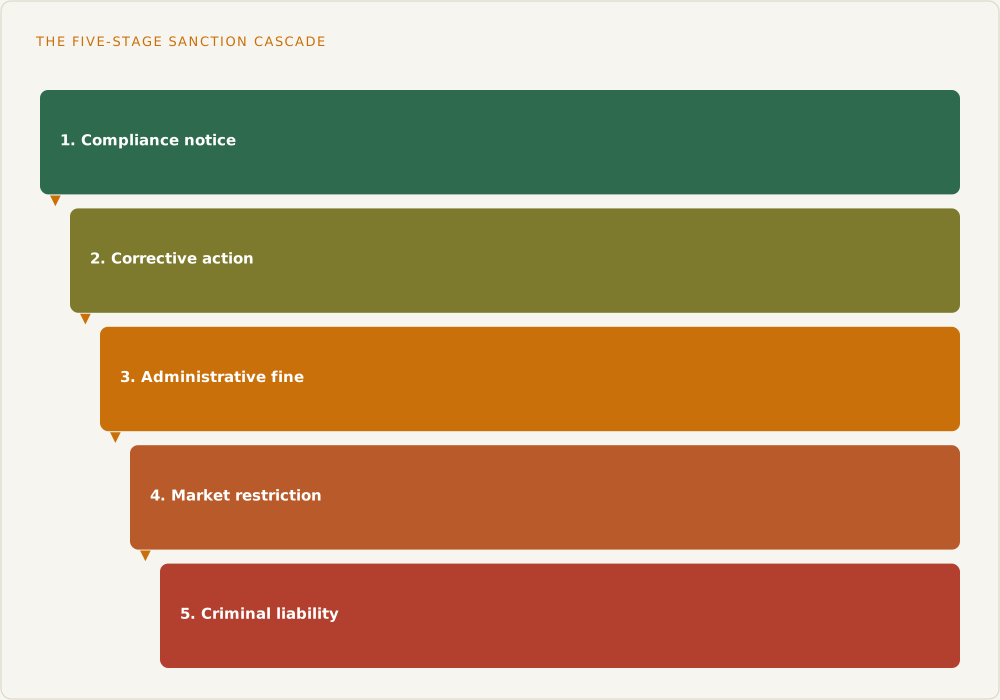
Member State enforcement protocols converge on a five-stage cascade, even where the exact procedural names vary. Most non-compliance resolves at Stage 1 or 2; the financial and operational exposure scales sharply at Stages 3 to 5.
Stage 1: Compliance Notice
The authority requests the DoC plus the supporting technical file under Article 11(5). The response window is 10 working days. No fine attaches at this stage; the notice is a formal request, not a penalty. Producers maintaining audit-ready documentation typically clear Stage 1 cleanly. Producers without methodology codes in Field 7, missing supplier certificates, or absent retention archives escalate to Stage 2.
Stage 2: Corrective Action Order
If the Stage 1 response is incomplete, the authority issues a written corrective action requirement. The typical remediation window is 30 to 90 days, depending on Member State and breach complexity. Compliance progress is reportable; the producer demonstrates remediation through document delivery, supplier evidence, or DoC re-issuance. Most procedural breaches (incomplete DoC, missing methodology code) resolve at Stage 2 without financial penalty.
Stage 3: Administrative Fine (Article 67)
Triggered by failure to remediate Stage 2 within the corrective window. The fine is calculated per breach, not per company; a 20-SKU non-compliance scenario can yield 20 separate fines that compound. Appeal windows vary by jurisdiction: Germany allows 30 days, France 60 days, Italy 60 days. Stage 3 is the first stage that produces a balance-sheet impact.
Stage 4: Market Restriction
The non-compliant packaging type is withdrawn from the EU market. Customs holds attach to imports of the same packaging type; physical inventory in EU warehouses cannot be released for sale. For importers under Article 21, Stage 4 is operationally the heaviest exposure because it interrupts revenue continuity rather than imposing a one-time financial cost. Lifting the restriction requires demonstrated remediation plus re-issuance of the Annex VIII DoC.
Stage 5: Criminal Liability
Reserved for fraud, falsified DoC content, and repeat wilful offenders. Germany's ZSVR carries criminal referral authority transferred from the parallel VerpackG regime; Italy and France have analogous criminal pathways for systemic non-compliance. Director-level personal liability applies in jurisdictions that allow it (Germany, Netherlands). Stage 5 is rare in practice but its existence is the dissuasive backstop the regulation requires.
Country-by-Country Fine Matrix
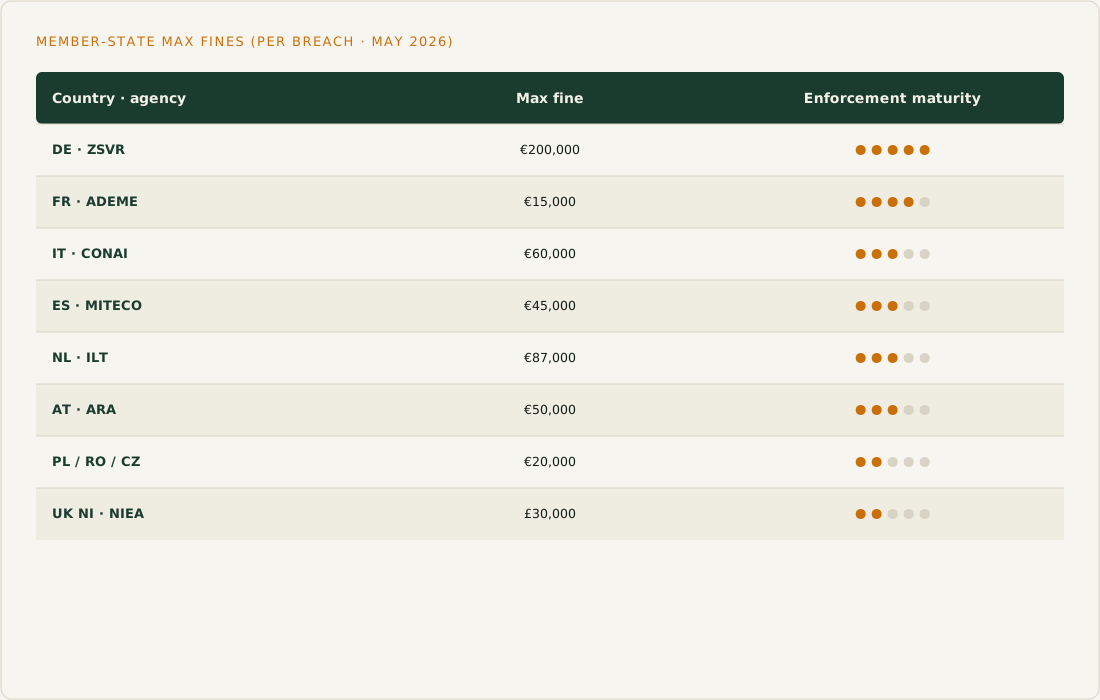
| Member State | Authority | Fine range (per breach) | Enforcement maturity |
|---|---|---|---|
| **Germany** | ZSVR / Bundesumweltministerium | €500 to €200,000 | ⭐⭐⭐⭐⭐ |
| **France** | ADEME / Citeo | €500 to €15,000 (higher on repeat) | ⭐⭐⭐⭐ |
| **Italy** | CONAI / Ministero dell'Ambiente | €300 to €60,000 | ⭐⭐⭐ |
| **Spain** | MITECO / Ecoembes | €250 to €45,000 | ⭐⭐⭐ |
| **Netherlands** | ILT / Afvalfonds | €500 to €87,000 | ⭐⭐⭐ |
| **Austria** | BMK / ARA | €500 to €50,000 | ⭐⭐⭐ |
| **Eastern EU (PL, RO, CZ)** | National environment ministries | €100 to €20,000 (varied) | ⭐⭐ |
| **UK Northern Ireland** | NIEA | £500 to £30,000 | ⭐⭐⭐ |
Germany: ZSVR and Bundesumweltministerium
Germany operates the most mature enforcement infrastructure in the EU. The fine range tops out at €200,000 per breach, mirroring the established VerpackG maximum that the ZSVR has applied since 2019. The agency has five years of operational audit experience to transfer to PPWR enforcement, and is the most-likely first-mover Member State for high-profile sanctions cases after 12 August 2026. The parallel VerpackG regime continues to apply; producers active in Germany face the prospect of stacked fines (Article 67 plus VerpackG plus, where applicable, LUCID registration enforcement). See our Germany VerpackG guide for the parallel-compliance protocol. Authority reference: Zentrale Stelle Verpackungsregister.
France: ADEME and Citeo
France's fine ceiling is published lower than Germany's (€15,000 administrative maximum per breach, with higher amounts available for repeat or aggravated breaches), but the audit cadence is comparable in maturity. ADEME runs sector-level compliance audits; Citeo handles the eco-modulation tariff structure and operational compliance flagging. The Loi AGEC predecessor regime provides an operational template that France is extending into PPWR. Authority reference: ADEME.
Italy: CONAI and Ministero dell'Ambiente
Italy's range tops at €60,000 per breach. CONAI is the operational scheme operator; the Ministry of the Environment holds the formal sanctioning authority. Enforcement maturity is scaling through 2027, with sectoral focus on food packaging and e-commerce categories. Authority reference: CONAI.
Spain: MITECO and Ecoembes
Spain's fine ceiling is €45,000 per breach under the Royal Decree 1055/2022 alignment that integrates PPWR with the Spanish EPR framework. Ecoembes administers operational compliance for plastics; MITECO is the sanctioning authority. The August 2025 publication of the Spanish sanction regime placed Spain among the early-publishing Member States. Authority reference: MITECO.
Netherlands: ILT and Afvalfonds
The Netherlands publishes a ceiling of €87,000 per breach. The ILT (Inspectie Leefomgeving en Transport) carries cross-border audit authority and has historically been strong on import-side enforcement, which makes the Netherlands the highest-exposure entry point for non-EU goods flowing into the EU. Afvalfonds handles the packaging-waste financing scheme. Authority reference: ILT.
Austria: BMK and ARA
Austria's ceiling is €50,000 per breach. DACH alignment with Germany on technical standards is strong, and Austrian audit protocols mirror ZSVR practice closely. Enforcement maturity is mid-tier scaling.
Eastern EU: Poland, Romania, Czechia
Fine ranges in the Eastern EU sit lower (typically €100 to €20,000 per breach), and several Member States have not yet finalised their implementing legislation. The audit precedent is limited, which makes the actual enforcement posture unpredictable through 2026 to 2027. The risk profile is asymmetric: lower base fines but greater process variance. The Polish ROP framework is the national implementation to watch here.
UK Northern Ireland: NIEA
Northern Ireland remains aligned with EU customs and product rules under the Windsor Framework, which places NI under PPWR. Fines are published in pounds, with a maximum near £30,000 per breach administered by the Northern Ireland Environment Agency. The same UK importer placing goods on the GB market falls under UK Packaging EPR (a separate regime) rather than Article 67.
Run your portfolio's per-country PPWR penalty exposure through Carbonorm's Risk Heatmap. CFO-ready risk number generated from your SKU data. [See the risk view](/manual/risk).
Article 21 Multiplier: Importer Penalty Exposure
Why Article 21 Importers Carry Higher Risk
Importers triggered into the manufacturer role under Article 21 face concentrated exposure for three operational reasons. First, the EU-side importer is the regulator's single point of contact and the first audit target; non-EU suppliers are outside Member State jurisdictional reach. Second, the importer cannot deflect to "the upstream supplier" because Article 21 has made them the manufacturer for PPWR purposes. Third, the technical file, retention archive, and audit response duty all sit with the importer. The combination concentrates Article 67 risk on the EU-side party even where the non-EU producer made the original product.
Worked Example: Romanian Steel Can Importer
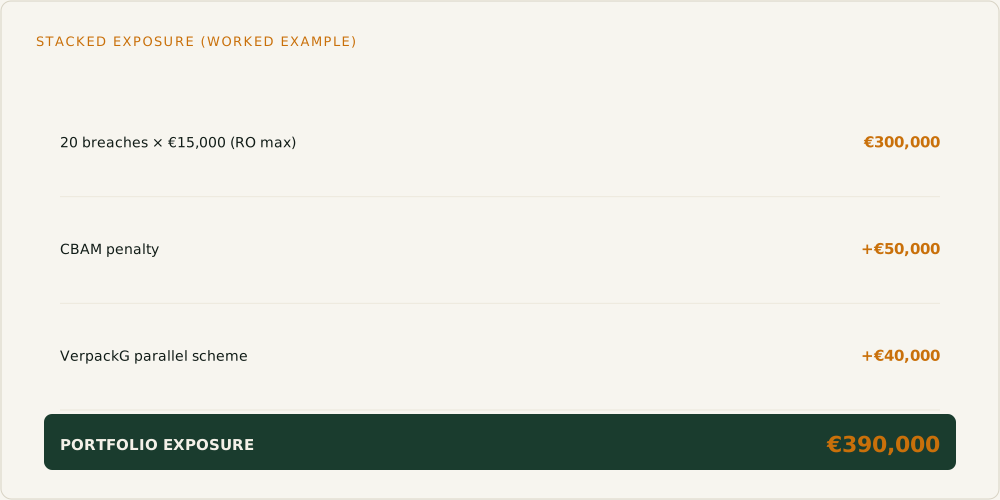
A Romanian distributor imports steel beverage cans from a Turkish producer, branded with the Romanian distributor's mark. Article 21 makes the distributor the PPWR manufacturer. The portfolio has 200 SKUs; an internal review finds that 20 SKUs (10%) lack methodology codes in Field 7 of their DoCs (the most-common audit failure). Romania's upper fine range is approximately €15,000 per breach; 20 breaches at the upper end produce a €300,000 PPWR exposure.
The metals packaging also intersects with CBAM Wave 2, which applies separate per-shipment fines for missing or incomplete CBAM declarations. The same SKUs may carry an additional €50,000 in CBAM-side exposure. If a portion of the portfolio also ships through Germany, parallel VerpackG fines add a further €40,000. Total stacked exposure: approximately €390,000 to €500,000 from a 10% non-compliance rate in a mid-sized portfolio. The numbers compound; Article 67 itself is rarely the full picture.
Mitigation Pathway: Reducing Article 67 Exposure
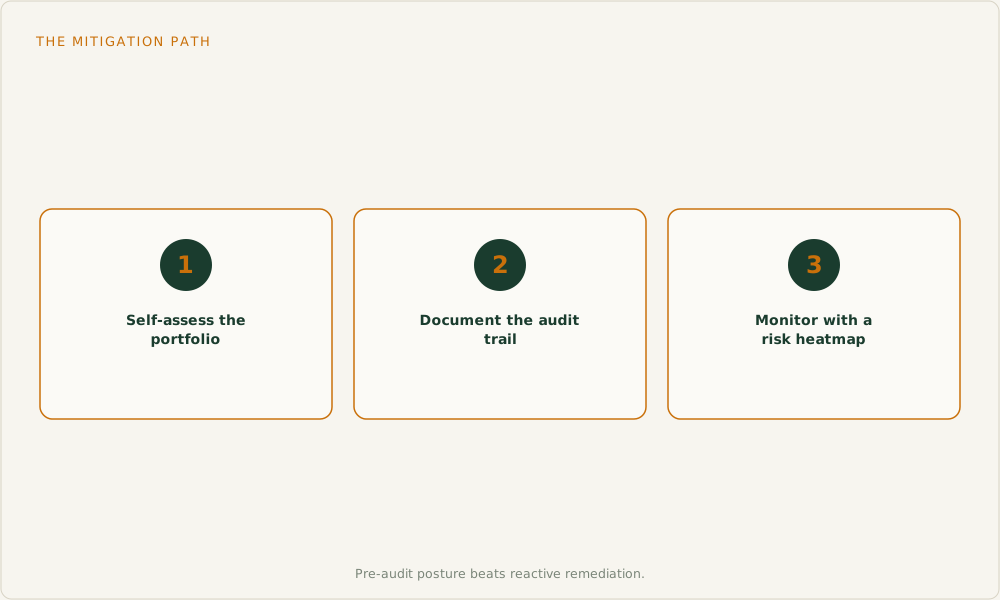
Pre-Audit Self-Assessment
Map the portfolio against the 12 Annex VIII fields, type by type. Identify the SKUs whose DoC has gaps; Field 7 (methodology codes) is the highest-fail-rate field across Member State audit programmes, followed by Field 9 (PCR traceability) and Field 4 (composition declarations). Quantify the gap in number of breaches at risk. The PPWR 90-day readiness plan is the sprint structure that walks portfolio audit through DoC issuance for the 12 August 2026 deadline.
Document the Audit Trail
Article 67 sanctions reduce significantly when the responsible party can demonstrate "good faith compliance effort" through documented evidence: DoC drafting history with version control, supplier outreach records, remediation logs after specification changes, and a documented audit-response protocol. Member State authorities often issue corrective action at Stage 2 (rather than escalating to Stage 3) where good-faith evidence is producible. The audit trail is the documentation that turns a discovery audit into a corrective conversation.
Continuous Monitoring
PPWR is not a one-time compliance event; it is a standing obligation that survives material changes, supplier substitutions, and methodology updates. A compliance dashboard that flags drift (a supplier's PCR chain-of-custody certificate expiring, a methodology code superseded, a packaging type entering a new Member State) keeps the portfolio in the corrective-action zone before it escalates. Carbonorm's risk heatmap provides per-SKU exposure visualisation against the Member State matrix, generating a CFO-ready risk number from your portfolio data.
Frequently Asked Questions
Q1: Are PPWR penalties per SKU or per company? Per breach. The Member State fine schedule applies to each instance of non-compliance, which typically maps to a packaging type. A 400-SKU portfolio resolving into 30 packaging types can produce up to 30 separate breaches if every type fails the same field. Compound exposure is the structural risk; per-company maximums are rare in published schedules.
Q2: Can I appeal a PPWR fine? Yes, through national administrative law procedures. Appeal windows vary: Germany 30 days, France 60 days, Italy 60 days. The appeal does not pause the underlying obligation; the corrective action continues during the appeal. Successful appeals typically reduce rather than eliminate the fine where the underlying breach is conceded.
Q3: Do parallel-scheme fines (VerpackG, Citeo, CONAI) stack with PPWR? Yes. The Article 67 fine is the EU-level penalty for breach of PPWR. National schemes (VerpackG in Germany, Citeo in France, CONAI in Italy, Ecoembes in Spain) administer their own separate fine schedules for breaches of national EPR obligations. The same factual breach can trigger fines under both regimes where both schemes are applicable.
Q4: What is the most expensive PPWR breach to commit? Falsified DoC content (Stage 5 criminal liability pathway) carries the highest single-breach exposure in jurisdictions that allow criminal referral. Among procedural breaches, missing methodology codes in Field 7 of the Annex VIII DoC is the most-cited audit failure and the most rapidly compounding when it spans a multi-type portfolio.
Q5: When will my Member State publish its sanction scale? The legislative deadline is 12 August 2026. As of May 2026, 8 Member States have published; 19 remain pending. Pending Member States may publish in stages (criminal pathway first, administrative fines later). Subscribe to the relevant national environment ministry publication channel for direct notice.
Q6: Do importers face different penalties than manufacturers? The fine schedule applies uniformly; the difference is who is on the hook. Under Article 21, importers placing packaging on the EU market under their own brand become the manufacturer for PPWR purposes and face the full Article 67 exposure. The original non-EU producer is generally outside Member State jurisdictional reach, which concentrates risk on the EU-side party.
Q7: Does Carbonorm estimate my PPWR penalty exposure? Yes. The risk heatmap module calculates per-SKU exposure against the published Member State fine matrix, flags the highest-risk types (typically those with Field 7 gaps), and produces a CFO-ready exposure number from your portfolio data. Start Audit; 50 SKUs free, no credit card.
Conclusion: Article 67 Is a Framework, Member State Is the Amount, Breach Is the Unit
Article 67 sets the principle (effective, proportionate, dissuasive) and routes the implementation to each Member State. The actual exposure a producer faces is the product of three variables: which Member State the packaging is placed in (the fine range), how many breaches the portfolio carries (the per-breach multiplier), and whether parallel schemes apply (VerpackG, Citeo, CONAI stacking). The Commission Guidance of 30 March 2026 confirmed that fine amounts are national; the matrix in this guide compiles published ranges as of May 2026 and refreshes quarterly.
The mitigation pathway is uncontroversial in its components: portfolio self-assessment, audit-trail documentation, continuous monitoring. The execution is the work. Carbonorm's risk heatmap calculates portfolio exposure against the Member State matrix and produces a CFO-ready risk number from your existing SKU data. The same platform runs the underlying DoC engine that closes the gaps that produce the exposure in the first place. Start Audit; 50 SKUs free, no card required.
---
Read next:
- PPWR Article 11 Declaration of Conformity →
- PPWR Article 21 Importer-as-Manufacturer →
- PPWR Annex VIII DoC Template →
- PPWR 90-Day Readiness Plan →
- PPWR Compliance Pillar →
- Germany VerpackG Overlay →
---