PPWR for SMEs: Exemptions, Eased Duties & the Path
PPWR for SMEs: What's Eased, What Still Applies, and the Practical Path
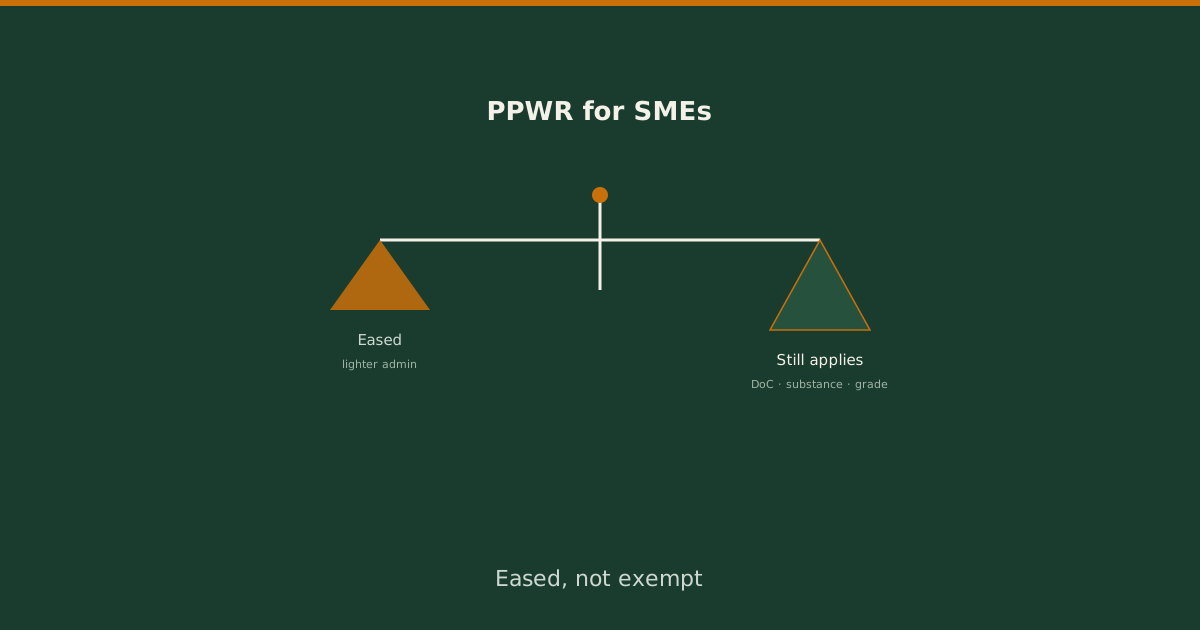
The most expensive sentence a small packaging business can say in 2026 is "we're too small for PPWR." It is not true. PPWR for SMEs is a story of easing, not exemption. Under Regulation (EU) 2025/40, which applies from 12 August 2026, small and micro-enterprises get specific relief, lighter administrative and reporting burdens, and certain carve-outs, but the core requirements still apply at every size. A small producer still issues a Declaration of Conformity, still meets the substance requirements, and still cannot place non-compliant packaging on the EU market.
This guide draws the line precisely: what is genuinely eased for SMEs, what still applies to every business, and the leaner compliance path a small portfolio can follow. The exact size thresholds and which easings attach to which tier follow the EU SME definition and the consolidated regulation, so treat the bands here as the working frame and confirm them before relying on a specific carve-out.
In this guide:
- SMEs are eased, not exempt
- What is eased
- What still applies to every business
- The SME compliance path
- The micro-enterprise case
- 6-entry FAQ
SMEs Are Eased, Not Exempt
Under PPWR, SMEs and especially micro-enterprises receive specific easing, including lighter administrative and reporting obligations and certain carve-outs (for example from some reuse targets), but they are not exempt from the core requirements. A small producer still issues a Declaration of Conformity, still meets the substance requirements, and still cannot place non-compliant packaging on the EU market.
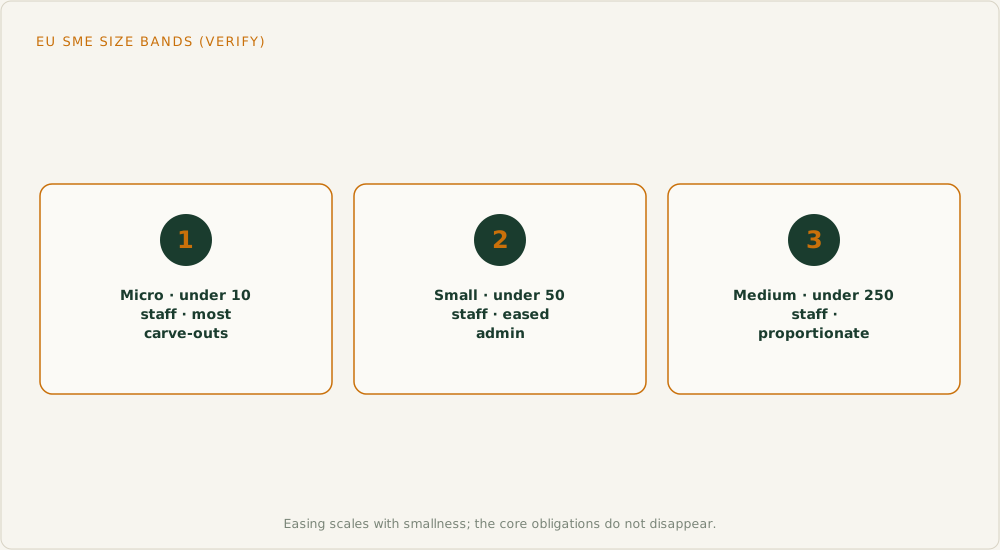
The EU SME definition sets the bands: micro-enterprises (fewer than 10 staff), small (fewer than 50), and medium (fewer than 250), with turnover and balance-sheet tests alongside the headcount. Which easing attaches to which band is the detail to confirm against the consolidated regulation. The principle is stable: relief scales with smallness, and micro-enterprises get the most, but the floor of core obligations does not disappear at any size.
What Is Eased
The relief for SMEs is real and worth claiming:
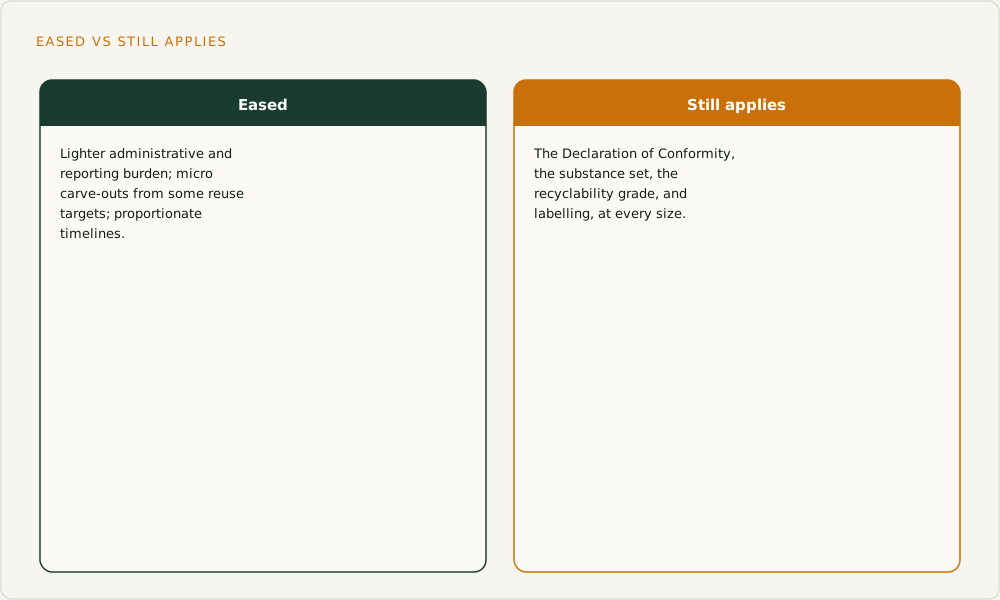
- Lighter administrative and reporting burden where the regulation provides it, reducing the paperwork load relative to large producers.
- Micro-enterprise carve-outs from some [reuse targets](/guides/ppwr-article-9-reuse-targets), where reuse systems would be disproportionate for the smallest operators.
- Proportionate application of certain requirements, so the obligation scales with the operator's size and capacity.
- Phased or longer timelines in places, giving smaller operators more runway (verify the specifics for your tier).
These easings lower the overhead. What they do not do is remove the substance of compliance, which is the part SMEs most often assume away.
What Still Applies to Every Business
These apply regardless of size:
- The Declaration of Conformity. Every business placing packaging on the EU market issues a DoC per packaging type under Article 11. There is no size exemption from the declaration itself.
- The substance requirements. The Article 4 set, PFAS limits, design for recycling, recycled content, minimisation, applies to the pack, not the company. A small producer's PET bottle faces the same rules as a large one's.
- Recyclability grading and the 2030 gate. Each pack is graded, and below-threshold packaging faces restricted market access from 2030, whatever the producer's size.
- Labelling. The harmonised symbols and data carrier apply per pack.
The pattern is consistent: the per-pack rules are size-blind; the easing is on the administrative wrapper around them.
The SME Compliance Path
For a small producer, the compliance path is a leaner version of the manufacturer path. The relief is not in the rules per pack; it is in the portfolio size. A producer with 15 SKUs grades 15 packs and issues 15 DoCs, which is a manageable project, where a 400-SKU producer faces a coverage sprint.
So the SME advantage is genuine but specific: fewer packs to assess, not easier rules per pack. The work still requires composition data per SKU, a grade per pack, and a DoC per type. The difference is that a small portfolio can finish it without industrial tooling.
The Micro-Enterprise Case
Micro-enterprises (fewer than 10 staff) sit in the strongest easing tier and pick up the most carve-outs, including from some reuse targets where a return system would be disproportionate. Even so, a micro-enterprise that places packaging on the EU market still issues a Declaration of Conformity for that packaging and still meets the substance requirements. The carve-outs trim the edges; they do not remove the core. A micro-business should claim every easing it qualifies for and confirm each against the regulation, while building the small DoC set it cannot avoid.
Frequently Asked Questions
Are SMEs exempt from PPWR?
No. SMEs and micro-enterprises are eased, not exempt. They get lighter administrative and reporting obligations and certain carve-outs, but they still issue Declarations of Conformity, still meet the substance requirements, and still cannot place non-compliant packaging on the EU market.
What PPWR obligations do small businesses have?
The core set applies: issue a DoC per packaging type, meet the substance requirements (PFAS, design for recycling, recycled content, minimisation), assess each pack's recyclability grade, and apply the required labelling. Small businesses get a lighter administrative wrapper, not relief from the per-pack rules.
Does PPWR apply to micro-enterprises?
Yes. Micro-enterprises receive the strongest easing tier and the most carve-outs, including from some reuse targets, but they still issue DoCs and meet the substance requirements for the packaging they place on the EU market. Confirm the specific carve-outs for your tier against the regulation.
What is eased for SMEs under PPWR?
Lighter administrative and reporting burdens, micro-enterprise carve-outs from some reuse targets, proportionate application of certain requirements, and phased or longer timelines in places. The easing is on the administrative overhead; the per-pack substance and DoC rules remain.
Does an SME need to issue a Declaration of Conformity?
Yes. There is no size exemption from the DoC. Any business placing packaging on the EU market issues a Declaration of Conformity per packaging type under Article 11, with a supporting technical file. A small portfolio simply has fewer types to cover.
Are SMEs exempt from reuse targets?
Micro-enterprises receive carve-outs from some reuse targets where a reuse system would be disproportionate, and SMEs may get proportionate treatment. This is one of the clearer easings, but it does not extend to the DoC or the substance requirements. Confirm the specific carve-out for your size against the regulation.
Conclusion
PPWR eases the load for SMEs and micro-enterprises, but it does not exempt them. The administrative wrapper is lighter and some reuse targets are carved out, while the core, the Declaration of Conformity, the substance requirements, and the recyclability grade, applies at every size.
The genuine SME advantage is portfolio size, not rule relief: fewer packs to grade and fewer DoCs to issue. That is exactly what makes a small portfolio finishable. Start Audit and grade your first SKUs at no cost, and use the substance map to walk the requirements that apply whatever your size.