PPWR Sustainability Requirements: Articles 4-12 Mapped
PPWR Sustainability Requirements: How Articles 4 to 12 Fit Together
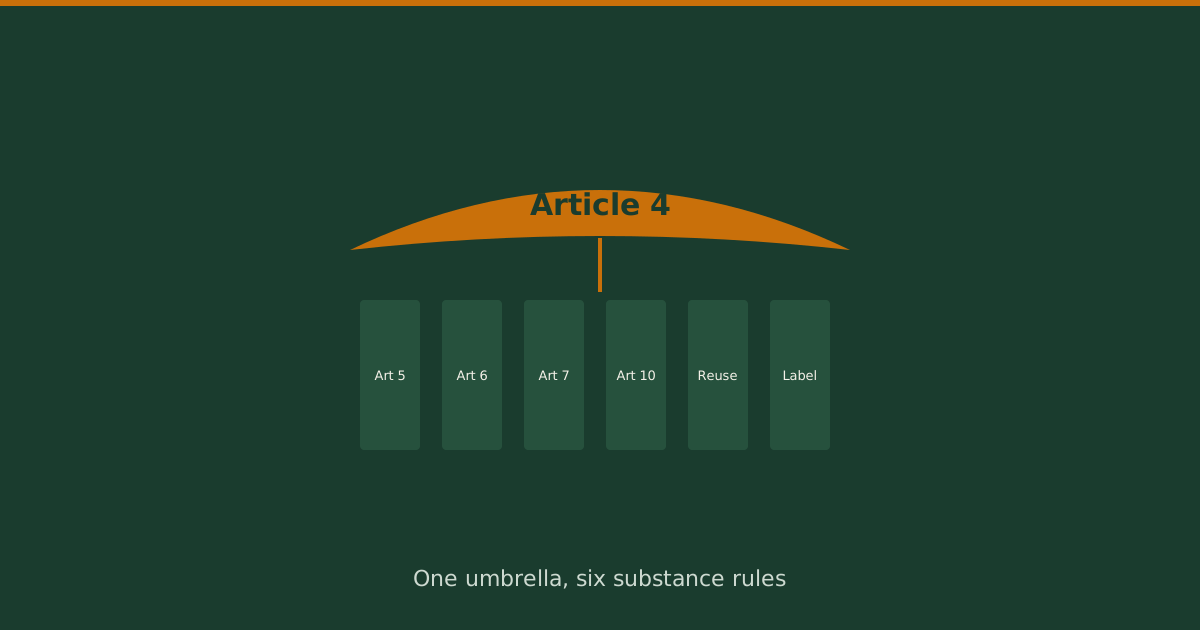
It is easy to read PPWR as a pile of separate rules: one for PFAS, one for recyclability, one for recycled content, and so on. They are not separate. PPWR sustainability requirements are bound together by Article 4, the umbrella provision that requires packaging placed on the EU market to meet the substantive requirements set out in the articles that follow. Under Regulation (EU) 2025/40, Article 4 does not set the detail itself; it makes Articles 5 to 12 binding as a single set, so a pack is compliant only when it meets all of them, not most of them.
This page is the map. Each individual requirement has its own deep-dive, and this guide ties them together: what Article 4 does, a one-line summary of each substance requirement with a link to its detail, how the requirements interact, and how the Declaration of Conformity pulls the whole set into a single claim. If you are new to PPWR's substance rules, start here and follow the links into the requirements that matter for your materials.
In this guide:
- What Article 4 does as the umbrella provision
- The substance requirements at a glance, with links to each
- How the requirements interact rather than standing alone
- How conformity pulls the whole set together
- Where to start
- 5-entry FAQ orienting you across Articles 4 to 12
What Article 4 Does
PPWR Article 4 is the umbrella sustainability provision: it requires packaging placed on the EU market to meet the substantive requirements set out in the following articles, covering restricted substances, recyclability, recycled content, minimisation, reuse, and labelling. Article 4 does not set the detail itself; it makes the following articles binding as a set.
Think of Article 4 as the gateway clause. It is the provision that says, in effect, "to be lawfully placed on the EU market, packaging must satisfy all of the following requirements", and then hands off to the articles that define each one. That structure is why compliance is assessed against the whole set rather than article by article in isolation: a producer does not claim to meet Article 6 alone, but to meet the combined sustainability requirements that Article 4 binds together.
The Substance Requirements at a Glance
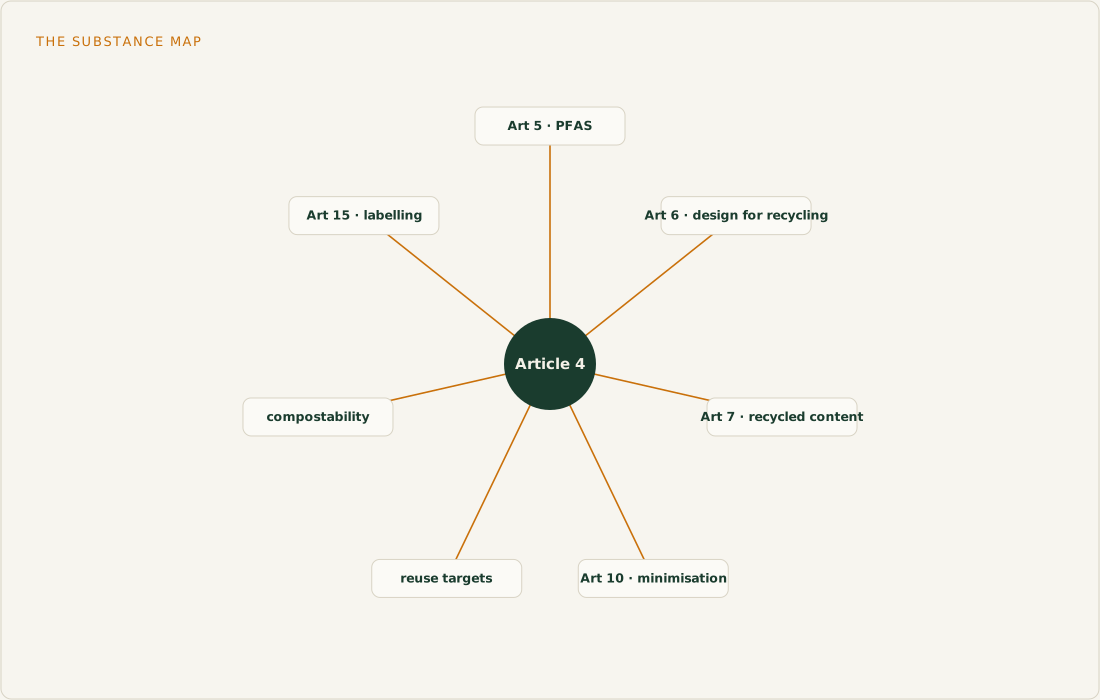
Here is the whole substance set in one line each, with the link to its detail. The article numbers follow the project's working convention; confirm them against the consolidated regulation where precision is needed.
- Restricted substances: limits on PFAS and other substances of concern in packaging. See Article 5 PFAS.
- Design for recycling: packaging must be designed to be recyclable at scale. See design for recycling.
- Recycled content: minimum recycled content thresholds, especially for plastics. See recycled content.
- Minimisation: no more packaging than function requires, with an empty space cap. See minimisation.
- Reuse and refill: rising reusable-share targets by sector. See reuse targets.
- Compostability: mandated for narrow formats, with vague claims restricted. See compostable vs biodegradable.
- Labelling: harmonised symbols and a QR data carrier on a staggered timeline. See labelling.
Each of those is a requirement in its own right, and each is a guide in its own right. Article 4 is what makes them a single obligation rather than seven.
How the Requirements Interact
The requirements are not independent dials you can set one at a time. They interact, and the interactions are where compliance gets interesting. A design-for-recycling choice changes the recyclability grade. Recycled content interacts with food-contact safety, because not all recycled streams are food-safe. Minimisation interacts with protection, because stripping material too far compromises the product. A single pack is the meeting point of all of them at once.
The sharpest interaction is the worst-of effect. Under the Annex II worst-of methodology, one failing element can sink a pack's classification even if everything else is strong, which means a producer cannot optimise one requirement while ignoring another. This is exactly why a per-SKU, whole-set view beats an article-by-article one: you have to see how all the requirements land on the same pack together, because that is how the regulation assesses it.
How Conformity Pulls It Together
The mechanism that turns the whole set into a single statement is the Declaration of Conformity. Under Article 11, the DoC attests that a packaging meets the applicable PPWR requirements, and the technical file behind it evidences each one. The DoC is not a recyclability certificate or a recycled-content certificate; it is a combined attestation that the pack satisfies the sustainability requirements Article 4 binds together.
That is the practical meaning of Article 4. "Meets PPWR" is a single combined claim, supported by evidence for each substance requirement, and signed off in one Declaration of Conformity. A gap in any one requirement is a gap in the whole claim.
Where to Start
If you are orienting yourself, the path is straightforward. Read the PPWR compliance pillar for the whole-regulation picture, then follow the substance links above into the requirements that bear on your materials, plastics producers to recycled content and recyclability, metal and laminate producers to recyclability and minimisation, and so on. Then assess your packaging per SKU across the full set, because that is the level at which the requirements actually combine.
Frequently Asked Questions
What are the PPWR sustainability requirements?
They are the substantive requirements packaging must meet to be placed on the EU market: restricted substances such as PFAS, design for recycling, recycled content, minimisation, reuse, compostability for some formats, and labelling. Article 4 binds them together so a pack must meet the whole set.
What does Article 4 of PPWR do?
Article 4 is the umbrella provision. It requires packaging to meet the substantive sustainability requirements set out in the following articles, without setting the detail itself. It is what makes the individual requirements a single combined obligation rather than separate rules.
What do Articles 5 to 12 cover?
They set the substance of the sustainability requirements: restricted substances and PFAS, design for recycling, recycled content, minimisation, reuse, and related rules, with labelling covered alongside. Each is a distinct requirement with its own detailed criteria and its own guide.
Do all the requirements apply to every packaging?
The set applies broadly, but the way each requirement lands depends on the packaging. Recycled content thresholds focus on plastics, compostability is mandated only for narrow formats, and reuse targets are sector-specific. Assess which requirements bite for your specific materials and formats.
How are the sustainability requirements assessed?
Per packaging, against the criteria in each substance article, with the evidence held in the technical file and the combined result attested in the Declaration of Conformity under Article 11. Because the requirements interact, the assessment is best done across the whole set per SKU rather than one article at a time.
Conclusion
Article 4 is the clause that turns PPWR's substance rules into one obligation. Restricted substances, recyclability, recycled content, minimisation, reuse, compostability, and labelling are not a menu to pick from; they are a set a pack must meet together, attested in a single Declaration of Conformity.
The implication for a producer is to stop thinking article by article and start thinking per SKU across the whole set, because that is how the regulation reads each pack. Use this map to reach the requirements that matter for your materials, then assess them together.
Carbonorm assesses each SKU against the substance requirements as a set. Start Audit and see where each of your packs stands across the whole of PPWR.