PPWR Annex II Worst-Of Methodology: 5 Edge Cases
PPWR Annex II Worst-Of Methodology: 5 Edge Cases That Decide Your Recyclability Grade
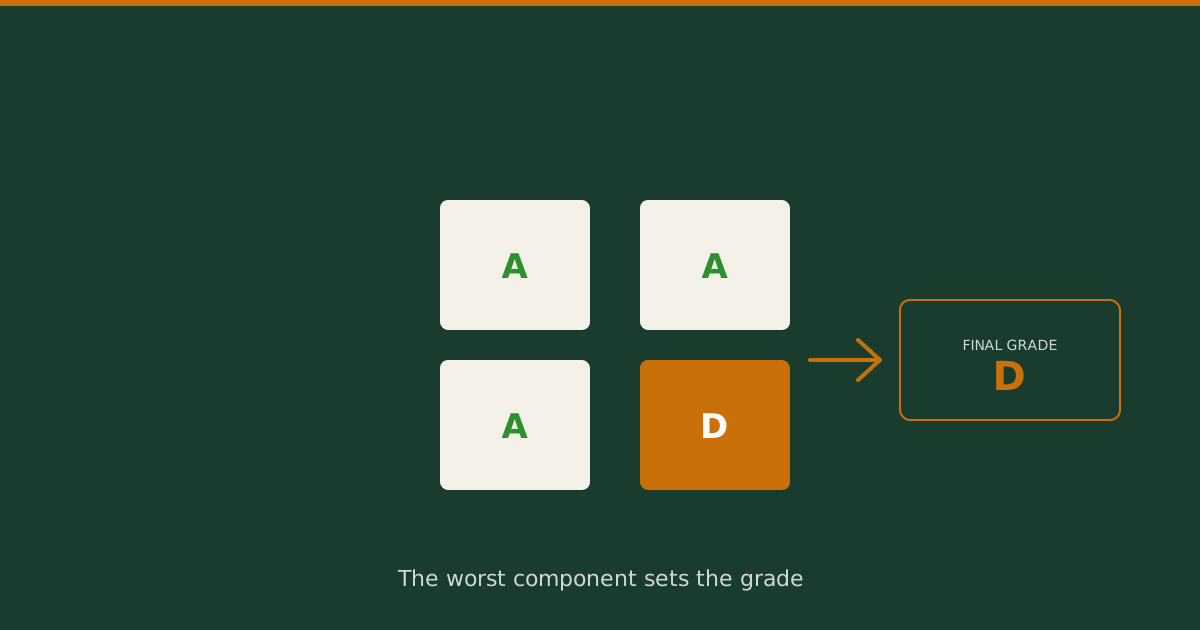
Under PPWR Annex II, the lowest-scoring component of a multi-component pack determines the final recyclability grade. This is the worst-of methodology, and it is the single most-debated rule among packaging engineers in 2026. A PET bottle (Grade A in isolation) with a PVC sleeve (Grade D) grades D overall. Not weighted by mass. Not averaged. The worst component wins. This guide walks the five edge cases that account for roughly 80% of grade-killing surprises in real portfolios, with citations to Regulation (EU) 2025/40 Annex II Table 1 and RecyClass alignment.
Article 6 of the regulation sets the recyclability obligation; Annex II provides the grading methodology that delivers the categorical grade (A through E) recorded in Field 8 of the Annex VIII DoC. The Commission Guidance of 30 March 2026 confirmed that the methodology applies to every "packaging type" as declared on the DoC. RecyClass, recognised by the Commission for grade evidencing, applies the same worst-of rule on its certification track. The methodology is uniform; the edge cases are where producers lose grade points unexpectedly.
In this guide:
- The worst-of rule in 60 seconds, with regulation citations
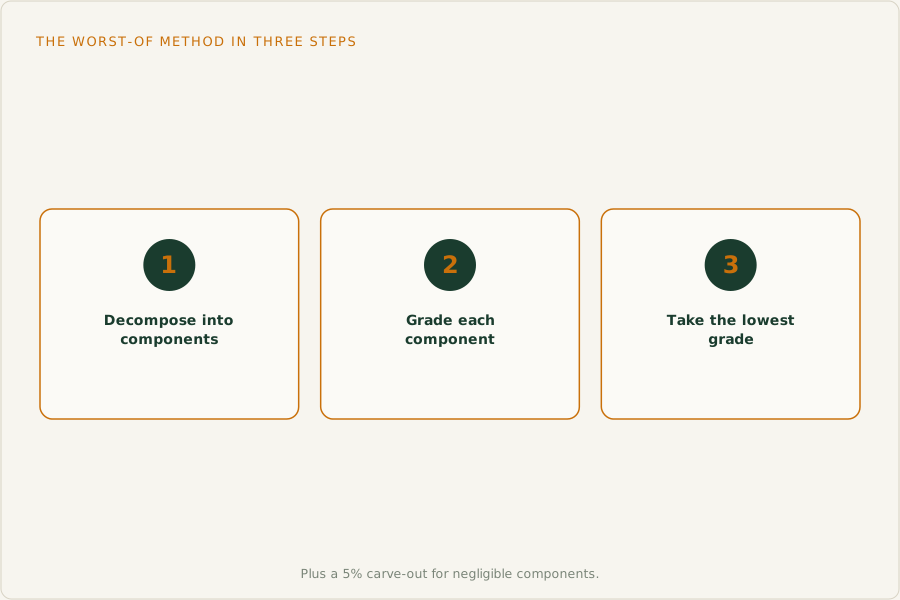
- How a grade is computed (decompose, grade, take lowest)
- 5 worked edge cases (PET+PVC sleeve, 5-layer film, metallised PP, cardboard+PE, Al+paper laminate)
- How Annex II relates to the quantitative grading framework
- 8-entry FAQ covering 5% threshold, RecyClass alignment, mono-material redesign
The Worst-Of Rule: What It Says, Where It Is Cited
Annex II of [Regulation (EU) 2025/40](https://eur-lex.europa.eu/eli/reg/2025/40/oj) establishes the worst-of methodology: the recyclability grade of a multi-component packaging type is determined by its lowest-scoring component. A PET bottle (Grade A) with a PVC sleeve (Grade D) is graded D, not partial-credit, not mass-weighted.
The Regulation Citation Chain
The recyclability obligation runs through three regulation locations and two recognised bodies. Article 6 of the regulation sets the requirement: packaging must be designed for recycling and graded on the categorical A through E scale. Annex II Table 1 defines what each grade means by component compatibility with the relevant recycling stream. Annex II Section 3 sets the worst-of computation rule itself. Article 38 cross-references the assessment evidencing requirement; the grade and its methodology code appear in DoC Field 7 and Field 8 (see the Annex VIII template guide for the field walkthrough). Producers seeking certification evidence go to RecyClass or an equivalent recognised body; the Article 6 guide walks the regulation context and the certification pathways.
Why Worst-Of, Not Weighted Average
The worst-of rule reflects how Material Recovery Facilities (MRFs) actually process mixed packaging streams. Recyclers cannot separate layers in a bale of multilayer film, cannot sort out a PVC sleeve from a PET bottle stream at industrial throughput, and cannot economically isolate a metallisation layer from a PP film. A single contaminating component disrupts the entire bale's downstream value: a PET stream containing PVC fragments cannot meet food-contact PCR specifications regardless of the PET mass share. Worst-of grading rewards conservative design choices that protect stream integrity; a weighted average would dilute the disruption signal and undercut the regulation's purpose.
The Methodology Mechanics: How a Grade Is Computed
Component Decomposition
The grading process starts with full decomposition. List every component of the packaging type: substrate, every coating layer, label, sleeve, closure, adhesive, ink, and structural reinforcement. Adhesives and inks are easy to overlook; they often determine the worst-of outcome in flexible packaging. Once the full component list is in place, each component is assigned its individual grade from Annex II Table 1, using the pre-tabulated mono-material grades as the starting point. The final grade is the lowest grade in the list.
The 5% Threshold Carve-Out
Components below 5% by mass may be excluded from the worst-of computation if the producer can demonstrate, through a recycler letter on file, that the component does not disrupt the recycling stream at its actual inclusion level. The burden of proof is on the producer; the letter is signed by a recycler operating the relevant stream and identifies the test conditions. The carve-out is not automatic, and the Commission Guidance carries reservations for chlorinated polymers (PVC, PVDC) where stream disruption is documented to occur at lower inclusion levels. Treat the 5% carve-out as a documented exception, not a default.
Multi-Stream Categorisation
A packaging type grades against its primary recycling stream, not against every possible stream. A PET bottle grades against the PET bottle stream rules; a PP film grades against the PP film rules; a paper-based pack grades against the paper stream. The component compatibility is judged against the stream the pack will actually enter. A paper label on a PET bottle is evaluated as a PET stream disruptor (the paper enters PET recycling with the bottle, not paper recycling), even though paper itself would grade A in its own stream. Stream attribution is the first analytical move before grade assignment.
Five Edge Cases That Decide Your Grade
Edge Case 1: PET Bottle with PVC Sleeve
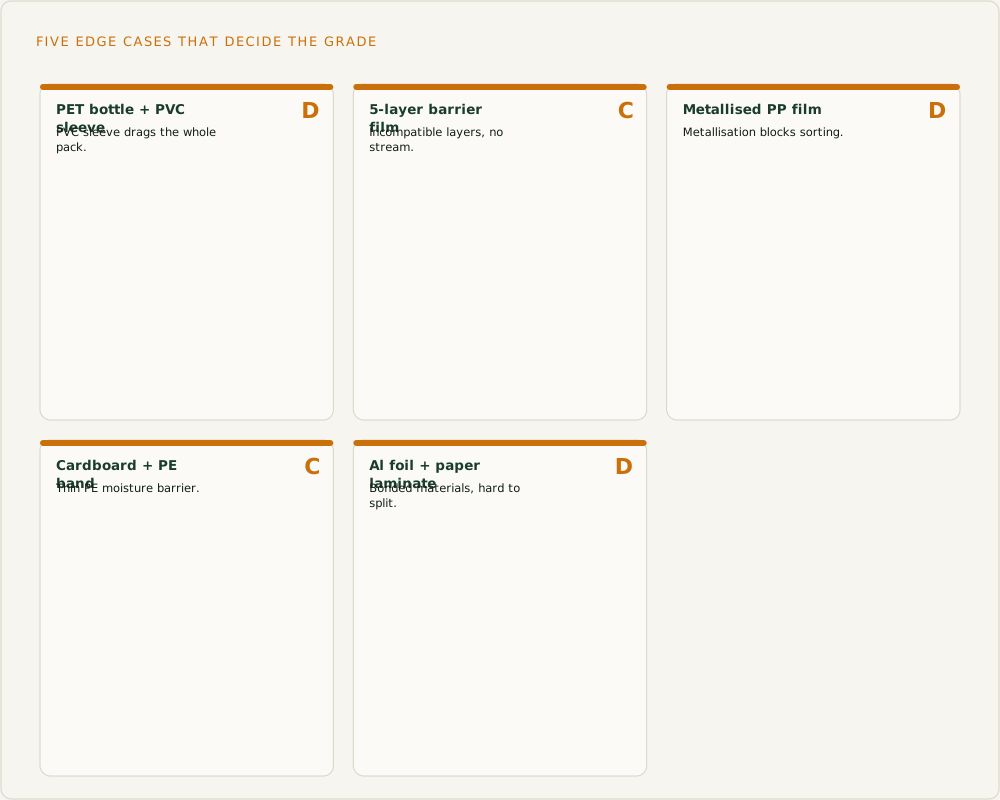
A monomaterial PET beverage bottle (Grade A in isolation) carrying a full-wrap PVC shrink sleeve grades D. The PVC sleeve is a documented contaminant for the PET recycling stream; chlorinated polymer fragments disrupt the rPET production process and the resulting resin fails food-contact specifications. The fix is straightforward and industry-proven: switch to OPS (oriented polystyrene) or LDPE shrink sleeves. Both deliver comparable shrink behaviour and shelf appearance with a neutral grade impact on the PET stream. Major beverage brands (Coca-Cola European Partners, several DACH private-label lines) transitioned through 2024 to 2025. RecyClass guidelines confirm the same conclusion: PVC sleeves are an automatic grade penalty regardless of mass share. The PET packaging recyclability guide walks the material-specific grade implications in more detail.
Edge Case 2: 5-Layer Barrier Film (LDPE / EVOH / PE-MA / PE / LDPE)
A 5-layer cheese packaging film, common across the EU dairy industry, illustrates the worst-of rule's reach into flexible packaging. The three LDPE layers grade A in the PE film stream. The PE-MA (maleic anhydride grafted polyethylene) tie layer grades B. The EVOH (ethylene vinyl alcohol) barrier layer grades C when its inclusion level exceeds 5%, because EVOH disrupts PE film recycling above that threshold. The final grade is C. The trade-off facing packaging engineers is direct: EVOH delivers shelf-life, but it costs grade points. The fix paths are zeolite-loaded LDPE (lower barrier, higher grade), a PE-only monomaterial with vapour-deposited SiOx (recyclability-first), or accepting the C grade if shelf-life requirements dominate. Recyclability versus shelf-life is the most-debated single decision in 2026 food packaging engineering.
Edge Case 3: Metallised PP Film
A PP-substrate film with aluminium metallisation grades D. The PP substrate alone grades B in the PP film stream. The aluminium metallisation, even at sub-1% mass content, disrupts PP recycling because metal fragments contaminate the resin stream and the optical sorting equipment cannot reliably exclude metallised film fragments. The worst-of rule applies at the disruption threshold, not the mass threshold; metallisation is an automatic grade killer in the PP stream regardless of layer thickness. The industry fix is transparent SiOx (silicon oxide) coating, which delivers comparable barrier properties with no metal contamination. Snack and confectionery packaging has shown a measurable uptick in SiOx specification from 2024 through 2026 as brands chase PPWR-aligned grades ahead of the 2030 Grade D restriction cliff.
Edge Case 4: Cardboard with PE Moisture Barrier
A corrugated or solid-board pack with a polyethylene moisture barrier grades by PE inclusion level, not by paper share. Cardboard substrate alone grades A in the paper stream. With PE coating below 5% mass and a FEFCO-aligned recycler letter on file, the 5% carve-out can apply and the pack retains Grade A. PE coating in the 5% to 15% range grades the pack C: the paper stream tolerates limited PE inclusion but progressively rejects it through this band. PE coating above 15% grades the pack D: the pack is functionally excluded from paper recycling and routed to mixed-residue streams. FEFCO recyclability protocols are the cited body for the grade assignments. The watch-items are e-commerce mailers (PE-coated for moisture resistance during multi-day transit) and frozen-food cartons (PE-coated for freezer condensation tolerance).
Edge Case 5: Aluminium Foil and Paper Laminate
Pure aluminium foil grades A in the aluminium stream when separable from other materials. Pure paper grades A in the paper stream. A non-separable aluminium-paper laminate, however, grades D: neither stream can accept the laminate at industrial throughput because separating the two materials is uneconomic. The industry response splits into two paths. Path one: switch to monomaterial paper with vapour-deposited aluminium, which is technically separable in MRF processing and grades B or C depending on the deposition technique. Path two: accept the D grade for product categories where shelf-life or specialised barrier properties dominate the decision (UHT beverages being the most-cited example). The TetraPak composite carton controversy sits in this edge case: composite cartons grade C to D under current methodology, and the manufacturer has an active challenge to the grade attribution. Cepi is the cited paperboard authority body.
Carbonorm flags worst-of grade killers across your 400-SKU portfolio in 30 seconds, with the 5% carve-out recycler letter check built in. [See the grading view](/manual/skus).
Annex II and the Quantitative Grading Framework
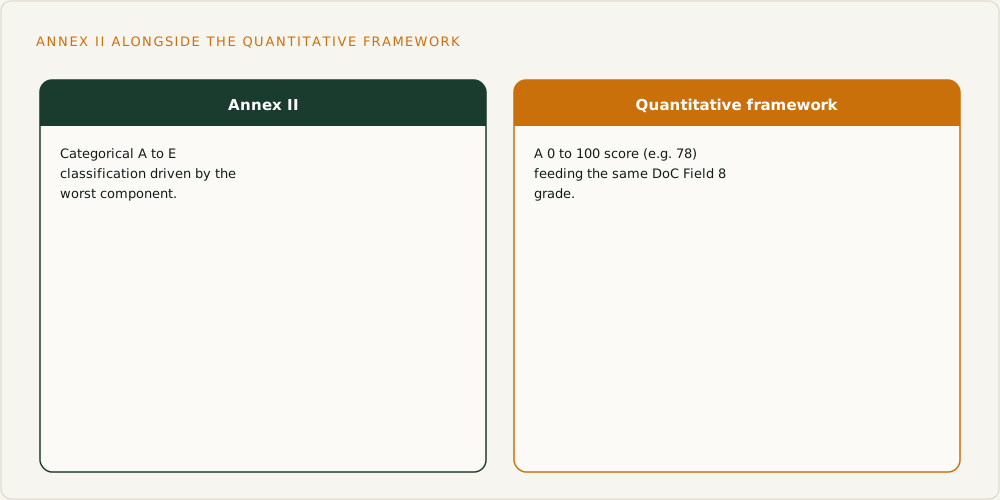
PPWR's recyclability grading runs on two parallel rails. Annex II delivers the categorical grade (A through E) under the worst-of methodology this guide walks; the categorical grade is mandatory in Field 8 of the Annex VIII DoC for every packaging type from 12 August 2026. The regulation also frames a quantitative recyclability assessment used for advanced reporting and eco-modulation fee calculation in several Member States; the specific scoring scale and its disclosure obligations are addressed in the Annex VII grading guide (coming soon).
The practical relationship for producers: the categorical grade is the binding artefact on the DoC and the threshold against which the 2030 Grade D and E restrictions apply. The quantitative framework refines the score for fee-modulation purposes where Member States adopt it. A packaging type at Grade C categorically may carry a quantitative score that places it in the upper or lower band of the C category, with consequences for eco-modulation but not for market access. Producers should not conflate the two: the categorical worst-of grade is the regulatory primary; the quantitative score is the financial refinement.
Frequently Asked Questions
Q1: What is the Annex II worst-of methodology? The worst-of methodology states that the recyclability grade of a multi-component packaging type is determined by its lowest-grading component, not by mass-weighted average. A PET bottle (Grade A) with a PVC sleeve (Grade D) is graded D overall. The rule is set in Annex II of Regulation (EU) 2025/40 Section 3 and applies to every packaging type from 12 August 2026.
Q2: Does the worst-of rule apply at 1% component mass? Generally yes. The default rule is mass-independent: a single disruptive component triggers the worst-of grade regardless of its mass share. The 5% threshold carve-out is the only documented exception, and it requires a recycler letter on file confirming the component does not disrupt the relevant stream at the actual inclusion level.
Q3: Why is PVC particularly disruptive? PVC contaminates the PET recycling stream because chlorinated polymer fragments disrupt rPET production: the resin fails food-contact specifications, the processing equipment fouls, and stream contamination is detectable to downstream buyers. The Commission Guidance carries reservations for chlorinated polymers under the 5% carve-out for this reason. PVDC behaves similarly in PE streams.
Q4: Does RecyClass use the same methodology? Yes. RecyClass is recognised by the Commission for grade evidencing and applies the same worst-of rule on its certification track. RecyClass methodology codes (RC-2024-A, RC-2024-B, etc.) appear in Field 7 of the Annex VIII DoC and the grade itself appears in Field 8. RecyClass certification is the practical evidence pathway for most EU producers.
Q5: How is the worst-of rule different from quantitative grading? Worst-of (Annex II) produces a categorical grade (A through E) under the lowest-component rule. The quantitative grading framework produces a numerical score used primarily for eco-modulation fee calculation. Both apply to every SKU; the categorical grade is the binding DoC artefact, the quantitative score is the financial refinement.
Q6: Can a 5-layer film ever achieve Grade A? Yes, but only with monomaterial design. A 5-layer film made entirely of PE family materials with compatible tie layers grades A in the PE film stream. The moment a non-PE barrier material exceeds the 5% threshold without a recycler letter carve-out, the grade falls. Achieving Grade A on a barrier 5-layer requires monomaterial PE plus vapour-deposited SiOx or equivalent.
Q7: Are paper-aluminium laminates always Grade D? Non-separable laminates are. The monomaterial paper alternative with vapour-deposited aluminium can grade B or C depending on the deposition technique and the recyclability assessment outcome. The categorical grade hinges on whether the materials can be separated in MRF processing at industrial throughput; non-separable composites grade D under current methodology.
Q8: Does Carbonorm apply the worst-of rule automatically? Yes. The platform decomposes each packaging type into its components, assigns Annex II Table 1 grades per component, applies the worst-of rule, flags the 5% carve-out candidates, and prompts for recycler letter upload where the carve-out applies. The final categorical grade populates Field 8 of the generated Annex VIII DoC. Start Audit; 50 SKUs free.
Conclusion: One Component Decides the Grade
The Annex II worst-of methodology is short to state and consequential to operate: the lowest-grading component decides the final grade. Article 6 § 2 of Regulation (EU) 2025/40 sets the recyclability obligation; Annex II Table 1 defines the per-component grades; Annex II Section 3 sets the worst-of rule; the Commission Guidance of 30 March 2026 confirms the methodology applies to every packaging type as declared on the DoC. The five edge cases walked above (PET with PVC sleeve, 5-layer barrier film, metallised PP, cardboard with PE barrier, aluminium-paper laminate) cover the majority of grade-killing surprises in real portfolios.
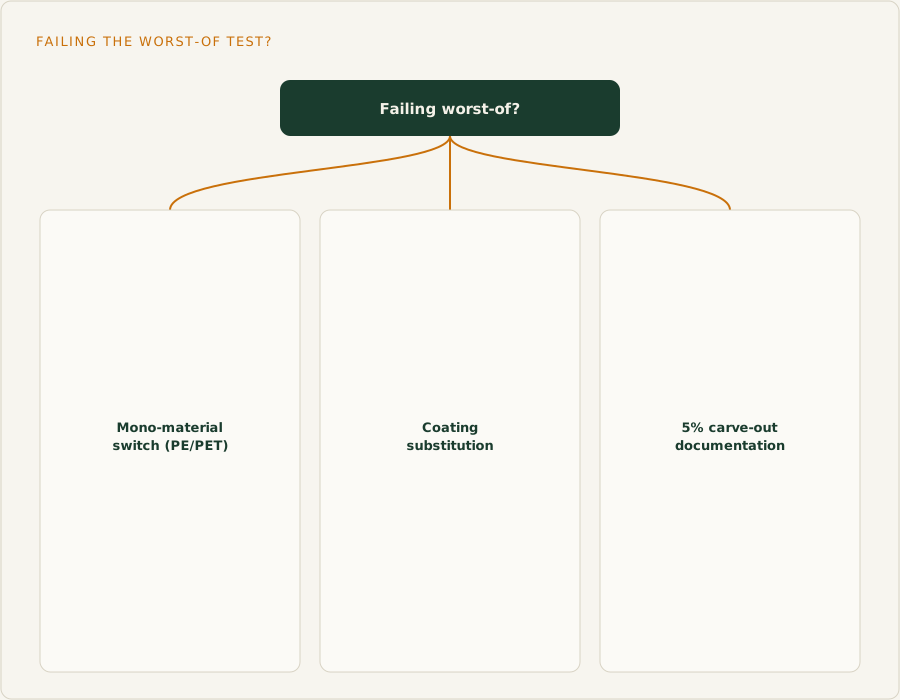
The redesign paths are bounded and well-mapped. Monomaterial substitution is the most reliable; coating substitution (SiOx for metallisation, OPS for PVC sleeves) is the fastest; the 5% carve-out documentation pathway is the cheapest when the recycler letter is available. The 2030 Grade D and E restriction cliff makes early redesign work commercially efficient: SKUs that grade D today must be redesigned, withdrawn, or carry an explicit exception by 1 January 2030. Article 6 sets the destination; Annex II sets the test; the worst-of rule sets the difficulty.
Carbonorm runs Annex II worst-of grading across your portfolio automatically, populates Field 8 of the generated Annex VIII DoC, and flags the highest-risk components for redesign or 5% carve-out documentation. Start Audit; 50 SKUs free, no credit card.
---
Read next:
- PPWR Article 6 Design for Recycling →
- PPWR Annex VIII DoC Template →
- PPWR Article 11 Declaration of Conformity →
- PET Packaging Recyclability →
- PPWR Compliance Pillar →
---