PPWR for Importers: Article 21 Risk + DoC Workflow
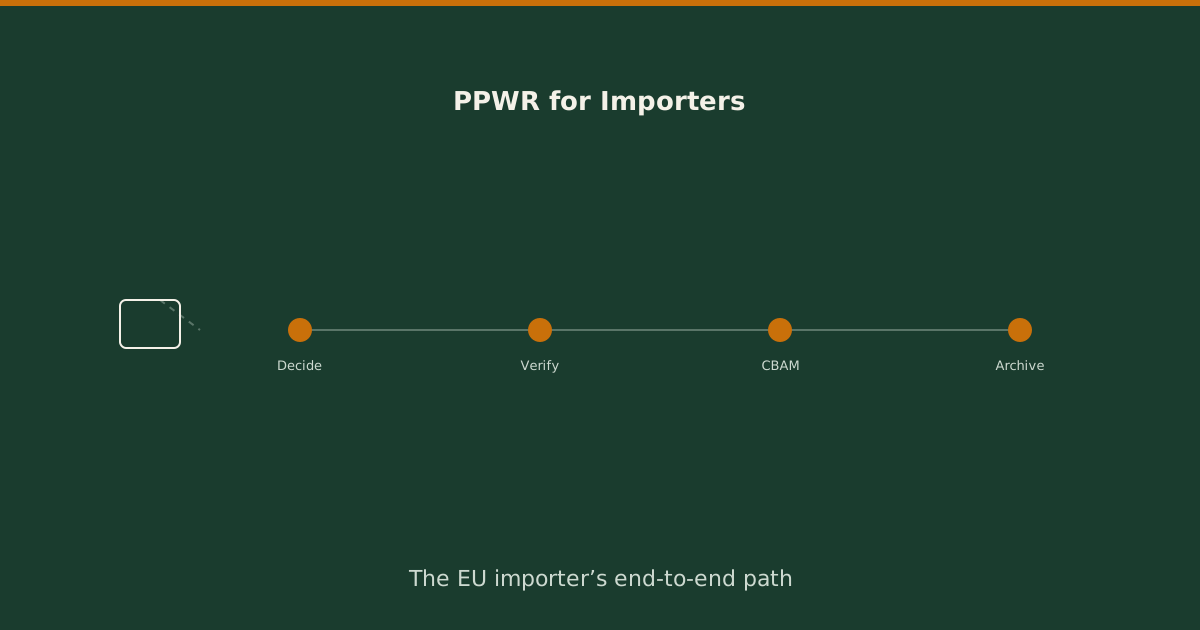
PPWR for Importers: The End-to-End Compliance Path
If your business brings packaging into the EU from a non-EU supplier, PPWR for importers is not a side question. The importer is the EU-market accountability anchor for packaging produced outside the Union: the party market surveillance can reach, the party that verifies conformity, and, in many cases, the party that ends up issuing the Declaration of Conformity itself. Under Regulation (EU) 2025/40, which applies from 12 August 2026, an importer's entire compliance scope turns on one early decision and then runs through a repeatable verification loop.
Take Marcus, who runs operations at an EU importer with 300 SKUs sourced from Turkish and Polish suppliers. His first question is not "what does Article 18 say" but "what do I actually have to do, in what order, and who owns each step." This guide is that path, not the legal text. It routes into the Article-level deep-dives where the detail lives, and keeps the focus on the journey: the importer-or-manufacturer decision, the core duties, the DoC verification workflow, the CBAM overlay for metal packaging, the non-EU exporter relationship, penalty exposure, and a 30-day readiness checklist.
In this guide:
- The first decision: are you an importer or a manufacturer?
- The importer's core duties, in one place
- The DoC verification workflow, step by step
- The CBAM overlay for metal-packaging importers
- The non-EU exporter relationship (TR / PL / RO)
- Why importers carry concentrated penalty exposure
- A 30-day importer readiness checklist
- 6-entry FAQ
First Decision: Importer or Manufacturer?
Under PPWR, an importer who brings in packaging carrying the manufacturer's identity has the Article 18 duty set: verify conformity, add contact details, and retain the DoC. The moment the importer's own brand or name is on the pack, Article 21 flips them into the manufacturer, who must issue the DoC. The whole compliance scope turns on this one question.
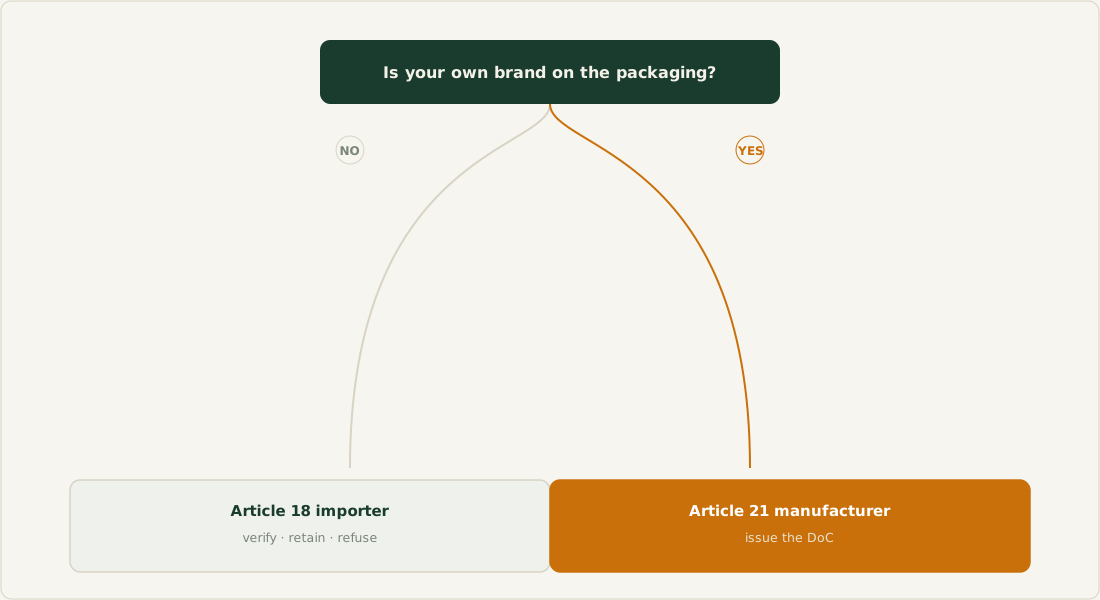
The practical test is one line: whose name and brand is on the pack? If it carries the original manufacturer's identity, you are an Article 18 importer with a verify-and-retain duty set. If your own brand is on it, Article 21 makes you the manufacturer, and the full obligation to issue the Declaration of Conformity is yours. Most importers run a mix: some lines carry the supplier's brand, some carry their own private label. So this is not a one-time answer for the company; it is a per-SKU classification, and it is the first thing to settle before any other work.
The Importer's Core Duties
For the lines where you stay an Article 18 importer, six duties apply. The Article 18 deep-dive works through each in detail; here they are as the working set:
- Place only compliant packaging on the EU market.
- Verify the manufacturer's conformity (assessment done, technical documentation exists, DoC drawn up).
- Add your importer contact details to the pack or an accompanying document.
- Protect compliance in storage and transport while the packaging is under your responsibility.
- Retain the Declaration of Conformity and ensure the technical documentation can be supplied to authorities.
- Act on non-compliance and cooperate with surveillance requests.
For Marcus, the useful split is one-time setup versus ongoing per-shipment work. Adding importer contact details and designing the retention archive are one-time setup. Verifying conformity is a per-SKU, per-supplier task that recurs whenever a new line or a changed specification arrives. Getting that recurring task to scale is where the real effort sits.
The DoC Verification Workflow
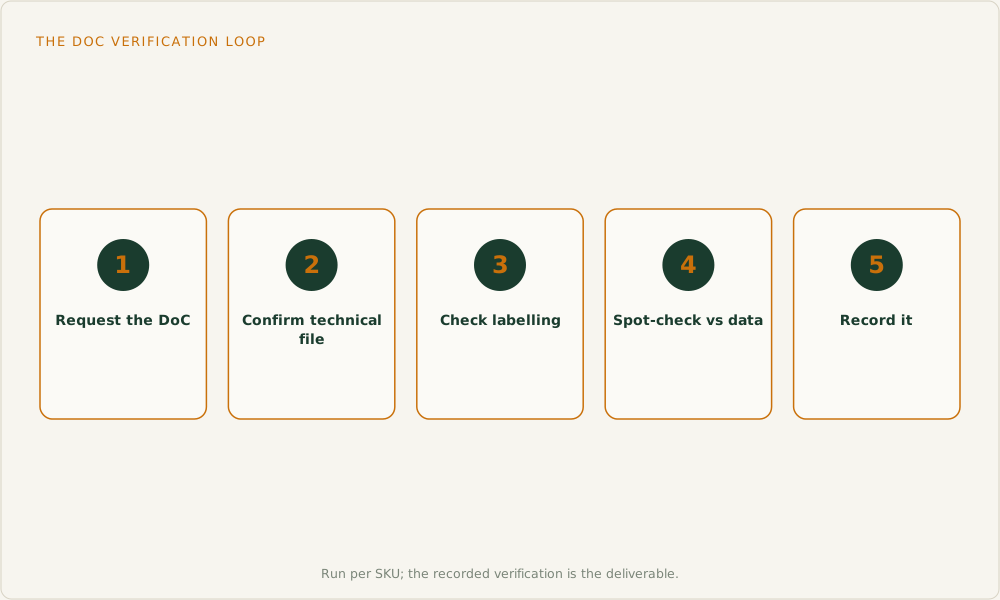
"Verify the manufacturer's conformity" sounds like a single check and is actually a short, repeatable loop:
- Request the DoC and read it. Confirm it references the correct packaging and the applicable PPWR requirements, not a generic or outdated version.
- Confirm the technical documentation exists. You do not need to hold it, but you must be able to confirm it exists and can reach authorities within the response window.
- Check the labelling is present, including composition and recyclability marks and, where applicable, the QR identifier under Article 15.
- Spot-check the claim against your own data. Cross-check the conformity claim against the composition data you hold for the SKU; a mismatch is a flag to resolve before placing on the market.
- Record the verification: who checked, when, against which DoC version. That record is your audit trail.
The deliverable of this loop is not the DoC itself, which the manufacturer drew up; it is the evidenced verification. The Annex VIII template and the Article 11 DoC obligations cover what a good DoC must contain, so you know what you are checking against.
The CBAM Overlay for Metal Importers
If your packaging is aluminium or steel, there is a second regime to scope. The same EU importer that handles the PPWR side may also be the CBAM declarant for the embedded carbon of the imported metal. That is two regulatory outputs, the PPWR Declaration of Conformity and the annual CBAM declaration, from the same import.
The two reconcile from one data set: the composition figures (metal mass per unit) that populate the PPWR DoC are the same figures that feed the CBAM embedded-emissions calculation. The PPWR + CBAM overlap guide walks the dual workflow. The importer takeaway is to flag, during the per-SKU scoping in the first decision, which lines contain non-EU aluminium or steel, because those carry the CBAM overlay on top of the PPWR duties.
The Non-EU Exporter Relationship: TR, PL, RO
The importer is the regulatory issuer; the non-EU producer is the technical data source. That division is the heart of the relationship. A Turkish, Polish, or Romanian supplier does not file with EU authorities, but the importer cannot verify conformity or, under Article 21, issue a DoC without the composition, test, and emissions data the supplier holds.
This gives both sides leverage. For the importer, the quality of supplier data sets the cost of the whole verification loop: clean, complete data turns verification into a lookup, while patchy data turns it into weeks of chasing. For the non-EU exporter, supplying clean data is how they make themselves the easy partner to keep. The exporters who treat PPWR data as a service they provide, rather than a request they resist, become the indispensable ones. For Marcus, the practical move is to standardise what he asks every supplier for, so the same data template covers PPWR verification and, for metal lines, the CBAM calculation.
Why Importers Carry Concentrated Exposure
Importers sit at the sharp end of Article 67 penalties for three structural reasons. First, the EU-side importer is the regulator's single point of contact and the first audit target; non-EU suppliers are outside Member State jurisdictional reach. Second, where Article 21 applies, the importer cannot deflect to "the upstream supplier" because they have become the manufacturer for PPWR purposes. Third, the technical file, retention archive, and audit-response duty all sit with the importer.
The heaviest exposure is not always the fine. Stage 4 of the enforcement cascade is market restriction: the non-compliant packaging type is withdrawn, customs holds attach to further imports, and EU warehouse inventory cannot be released for sale. For an importer, that interrupts revenue, which is why Andreea, the CFO, wants the exposure number scoped early rather than discovered in an audit. The penalty case is the strongest argument for getting the verification loop running before 12 August 2026, not after.
The Importer's 30-Day Readiness Checklist
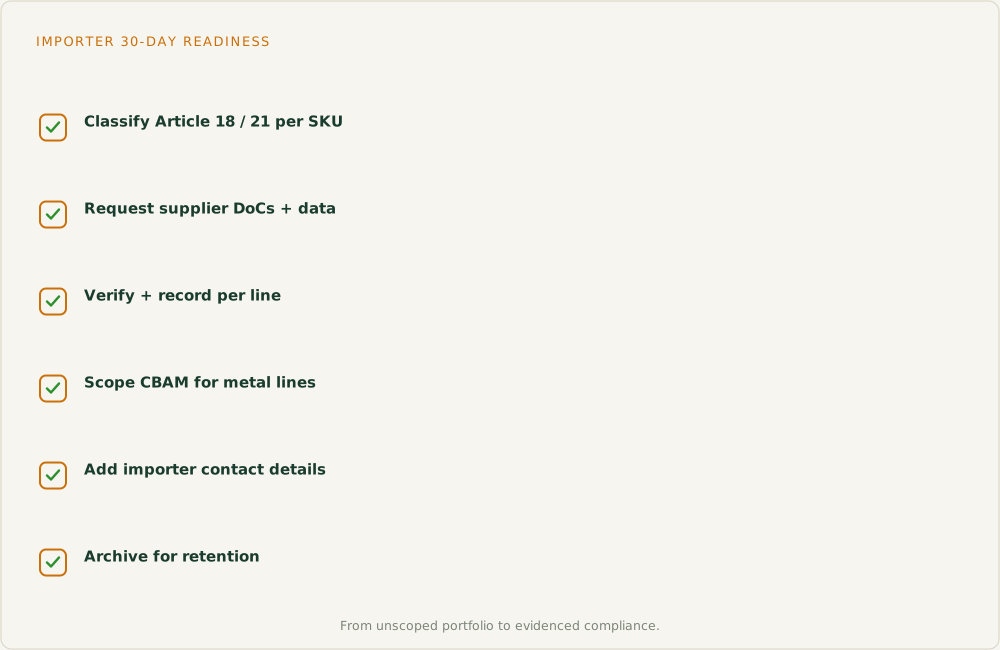
A focused importer can scope the work in a month:
- Week 1: Classify per SKU. Mark each line Article 18 (supplier brand) or Article 21 (your brand). Flag aluminium and steel lines for the CBAM overlay.
- Week 2: Request supplier DoCs and data. Send a standard template to every non-EU supplier; the response cycle runs two to six weeks, so start now.
- Week 3: Verify and record. Run the five-step loop on the DoCs as they arrive; record each verification.
- Week 4: Close the gaps. Add importer contact details, designate the CBAM declarant for metal lines, and set up the retention archive.
This compresses into the front end of the broader 90-day readiness plan; the importer's slice is the verification-and-archive spine. Marcus owns the loop; Andreea signs off the exposure number; the supplier relationship carries the data.
Frequently Asked Questions
What do importers need to do for PPWR?
Classify each SKU as an Article 18 importer line (supplier's brand) or an Article 21 manufacturer line (your brand). For Article 18 lines: verify the manufacturer's conformity, add your contact details, and retain the DoC. For Article 21 lines: issue the DoC yourself. Metal lines may also need a CBAM declaration.
Am I an importer or a manufacturer under PPWR?
It depends per SKU on whose brand is on the pack. If the packaging carries the manufacturer's identity, you are an Article 18 importer. If your own name or brand is on it, Article 21 makes you the manufacturer with the obligation to issue the DoC. Most importers have a mix of both.
How does an importer verify a PPWR DoC?
Run a five-step loop per SKU: request and read the DoC, confirm the technical documentation exists, check the required labelling is present, spot-check the conformity claim against your own composition data, and record the verification. The recorded verification is your audit trail.
Does PPWR apply to non-EU exporters?
Non-EU exporters do not file with EU authorities directly, but they are the technical data source the EU importer needs. The importer is the regulatory issuer. Exporters who supply clean composition and conformity data make the importer's verification frictionless and become the preferred partner.
What PPWR penalties do importers face?
Importers carry concentrated Article 67 exposure: they are the first audit target, cannot deflect upstream under Article 21, and hold the retention duty. The heaviest exposure is often market restriction (Stage 4), which withdraws the packaging and interrupts revenue, not just the fine.
Do importers of metal packaging also need CBAM?
If you import aluminium or steel packaging from outside the EU, you may also be the CBAM declarant for the embedded carbon of the metal. That is a separate annual declaration alongside the PPWR DoC, reconciled from the same composition data. See the PPWR + CBAM overlap guide.
Conclusion
The importer's path is one decision followed by a repeatable loop. Decide, per SKU, whether you are an Article 18 importer or an Article 21 manufacturer. Then run the verification loop, record it, and archive it. Everything else, CBAM for metal lines, supplier data, penalty exposure, hangs off those two moves.
Three things make it manageable: scope every SKU early, build a single source of truth for supplier DoCs and composition data, and run a recorded verification per line. Do that before 12 August 2026 and PPWR is a data exercise; leave it late and it becomes an audit emergency.
Carbonorm keeps supplier DoCs, composition data, and verification records in one portfolio, so the importer loop is a lookup rather than a chase. Start Audit, and pair this with the Article 18 duties and Article 21 deep-dive to classify each of your lines.