PPWR + CBAM Overlap: Aluminium & Steel Packaging Guide
PPWR + CBAM: How EU's Two Regulations Overlap for Aluminium & Steel Packaging
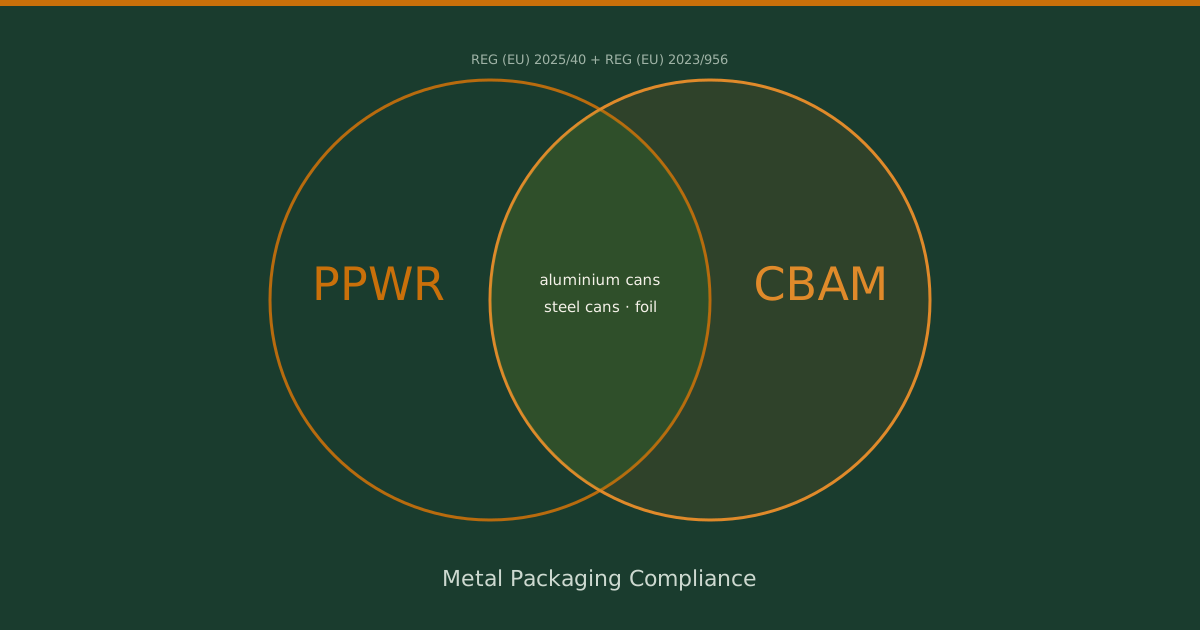
Two EU regulations, two distinct legal regimes, one physical piece of packaging. The PPWR CBAM overlap is not a technicality for metal packaging producers; it is the operational reality of placing an aluminium beverage can or a steel food can on the EU market from 2026 onwards. PPWR (Regulation (EU) 2025/40) applies from 12 August 2026 to every packaging type, requiring a Declaration of Conformity. CBAM (Regulation (EU) 2023/956) applies to carbon-intensive imported goods; its definitive period started on 1 January 2026, with the first annual declarations due 31 May 2027. The two regulations were drafted by different Commission directorates, serve different policy goals, and impose different obligations, yet they converge on the same physical object.
Where they meet is metal packaging: aluminium cans, steel beverage cans, aluminium foil laminates, and metal closures are packaging types under PPWR and, when imported from outside the EU, contain CBAM-covered materials. A producer who treats these as one compliance problem will misfile both; a producer who maps them as two parallel workflows feeding from one data source handles both efficiently. This guide walks through what CBAM is, the format-by-format overlap, the combined timeline, the dual compliance workflow, and three worked scenarios (a Turkish steel can producer shipping to Romania, a Swiss aluminium supplier serving a German brand, and a German domestic foil laminate that triggers only one of the two regimes).
In this guide:
- The overlap defined, with a PPWR vs CBAM side-by-side comparison
- What CBAM is, in 200 words, for the PPWR audience
- Which metal packaging formats trigger one regime, both, or neither
- The combined CBAM and PPWR timeline through 2026 to 2034
- The dual compliance workflow: two documents, two authorities, one data source
- Three worked scenarios across import and domestic-production cases
- How Article 67 fines and CBAM penalties stack
- 7-entry FAQ covering scope, timing, and domestic production
Two Regulations, One Pack: The Overlap Defined
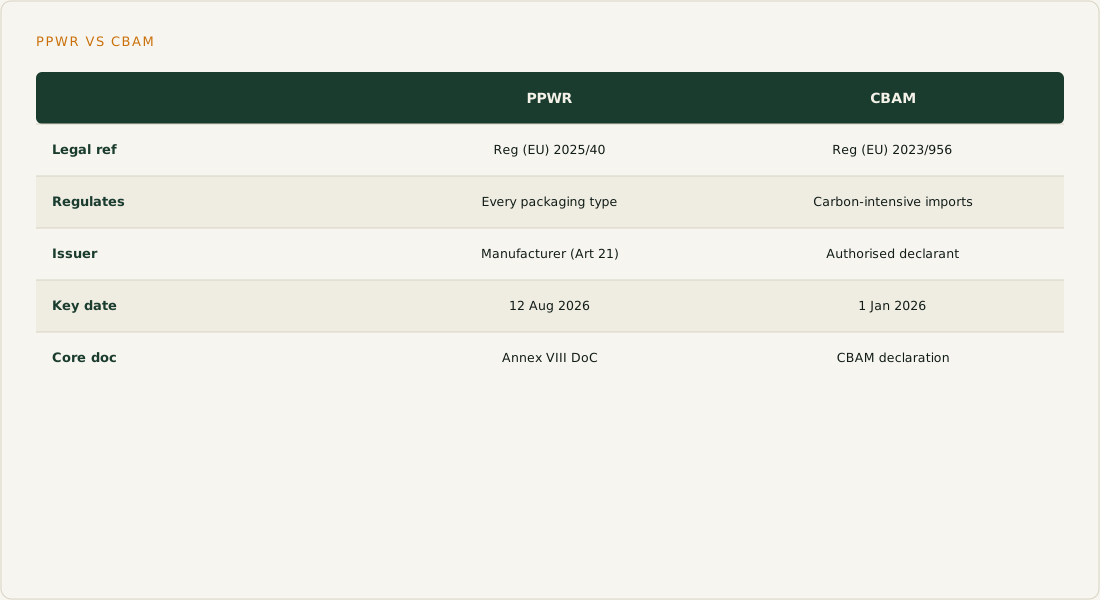
PPWR (Regulation (EU) 2025/40) and CBAM (Regulation (EU) 2023/956) overlap for metal packaging because the same physical aluminium can or steel beverage can is both a "packaging type" under PPWR (requiring a Declaration of Conformity) and a carbon-intensive imported good under CBAM (requiring a CBAM declaration and certificate purchase). PPWR governs the packaging; CBAM governs the embedded carbon of the steel or aluminium it is made from.
The critical distinction is what each regulation actually regulates. PPWR regulates the packaging as a placed-on-market product: its recyclability, recycled content, and conformity documentation. CBAM regulates the carbon embedded in imported steel and aluminium, regardless of what that metal is later turned into. The same can therefore sits inside two regulatory frames at once, with two separate obligations that do not substitute for each other.
| PPWR | CBAM | |
|---|---|---|
| Legal reference | Regulation (EU) 2025/40 | Regulation (EU) 2023/956 |
| What it regulates | Every packaging type on the EU market | Carbon-intensive imports (6 sectors) |
| Who issues documents | Manufacturer (or importer under [Article 21](/guides/ppwr-article-21-importer-manufacturer)) | Authorised CBAM declarant |
| Key deadline | 12 August 2026 application | 1 January 2026 definitive period |
| Core document | Annex VIII Declaration of Conformity | Annual CBAM declaration + certificates |
| Fine framework | Set per Member State (Article 67) | Article 26, per tonne of unreported emissions |
The two regimes never merge into a single filing. They run in parallel, and for metal packaging imported into the EU, both apply to the same shipment.
What CBAM Is, in 200 Words
For the Carbonorm PPWR audience meeting CBAM for the first time: CBAM is the Carbon Border Adjustment Mechanism, established by Regulation (EU) 2023/956. Its scope covers imported goods in six carbon-intensive sectors: cement, iron and steel, aluminium, fertilisers, electricity, and hydrogen. Its purpose is to equalise the carbon cost between EU and non-EU production, closing the carbon-leakage gap relative to the EU Emissions Trading System (EU ETS). The mechanism is straightforward: importers buy CBAM certificates priced against the EU ETS to cover the emissions embedded in the goods they import.
CBAM runs in phases. The transitional period (1 October 2023 to 31 December 2025) required quarterly reports only, with no payment. The definitive period began on 1 January 2026, and importers must now account for embedded emissions and purchase certificates. The first annual CBAM declaration, covering 2026 emissions, is due 31 May 2027. The authoritative implementation reference is the European Commission DG TAXUD CBAM page. For metal packaging, the two relevant sectors are iron and steel and aluminium, the materials that make up cans, foil, and closures.
Where the Two Regulations Meet: Metal Packaging Formats
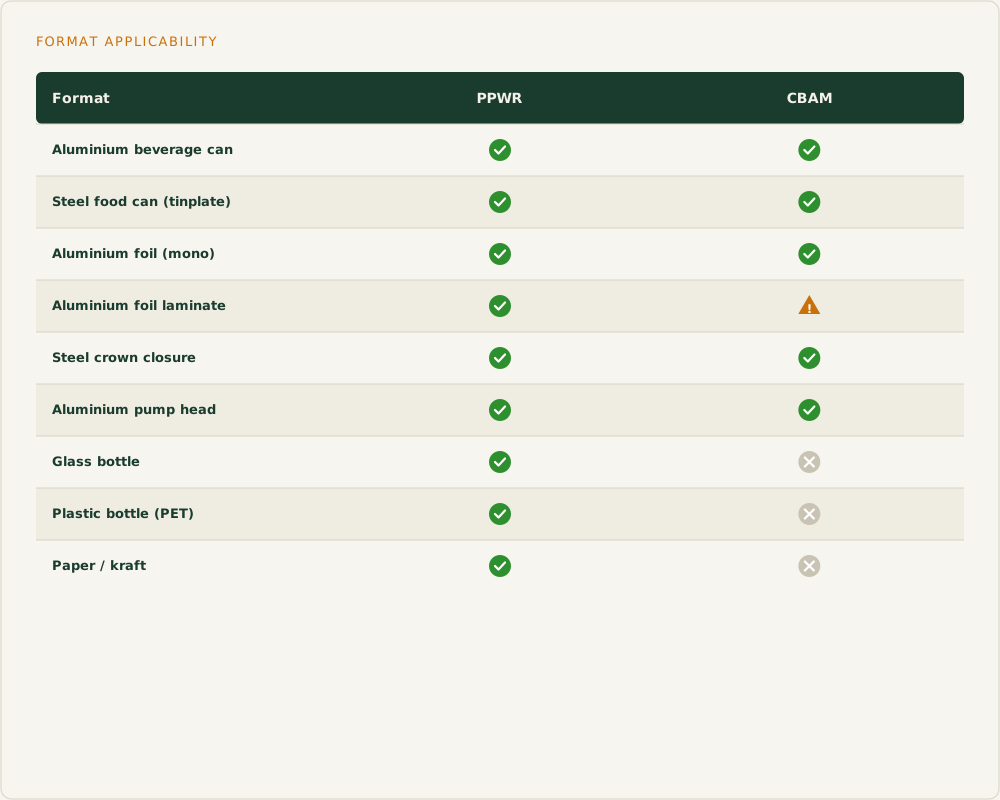
Not every metal packaging triggers CBAM. CBAM covers the material, not the packaging, and only when that material crosses the EU border as an import. The table below maps the common metal packaging formats against both regimes.
| Packaging format | PPWR | CBAM (if imported from non-EU) |
|---|---|---|
| Aluminium beverage can | ✅ packaging type, Annex VIII DoC | ✅ aluminium in CBAM scope |
| Steel food can (tinplate) | ✅ packaging type | ✅ steel in CBAM scope |
| Aluminium foil (single-material) | ✅ packaging type | ✅ aluminium in CBAM scope |
| Aluminium foil laminate (with PE/PET) | ✅ packaging type | ⚠️ partial: aluminium component in scope; polymer not |
| Steel crown closure | ✅ component of bottle | ✅ steel in CBAM scope |
| Aluminium pump head / closure | ✅ component | ✅ aluminium in CBAM scope |
| Glass bottle | ✅ packaging type | ❌ glass not in CBAM scope |
| Plastic bottle (PET) | ✅ packaging type | ❌ plastic not in CBAM scope |
| Paper / kraft / corrugated | ✅ packaging type | ❌ not in CBAM scope |
Two qualifications matter. First, the foil laminate case is partial: an aluminium and polymer laminate carries aluminium that is in CBAM scope and a polymer layer that is not, so the embedded-emissions calculation applies only to the metal fraction. Second, domestic EU production of aluminium or steel is not subject to CBAM at all. CBAM is a border-adjustment mechanism; EU producers face the EU ETS instead. The border is the trigger, not the metal itself.
CBAM Timeline Through 2026 to 2034
CBAM and PPWR both reach activation milestones in 2026, which is why coordinated compliance planning is the working frame for metal packaging producers rather than two disconnected projects.
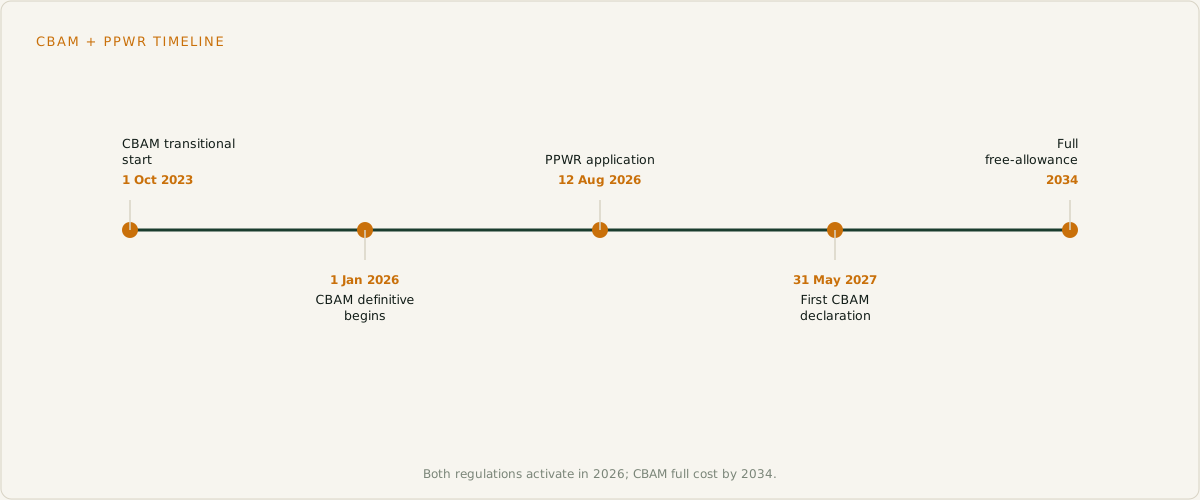
- 1 October 2023 to 31 December 2025: CBAM transitional period. Quarterly reports only, no certificate purchase.
- 1 January 2026: CBAM definitive period begins. Importers must account for embedded emissions and buy certificates.
- 12 August 2026: PPWR general application. Annex VIII Declarations of Conformity required for packaging placed on the market.
- 31 May 2027: First annual CBAM declaration due, covering 2026 embedded emissions.
- 2026 to 2034: Phased reduction of EU ETS free allowances, ramping CBAM certificate cost upward as free allocation is withdrawn.
- 2034: Full free-allowance phase-out; CBAM applies at full cost.
The convergence is the point. Both the PPWR deadline timeline and the CBAM definitive period land in 2026, so a metal packaging producer faces both new obligations in the same operating year.
Dual Compliance Workflow: Two Documents, Two Workflows
For each metal packaging type imported from outside the EU, the EU-side importer or brand owner produces two separate outputs through two separate workflows.
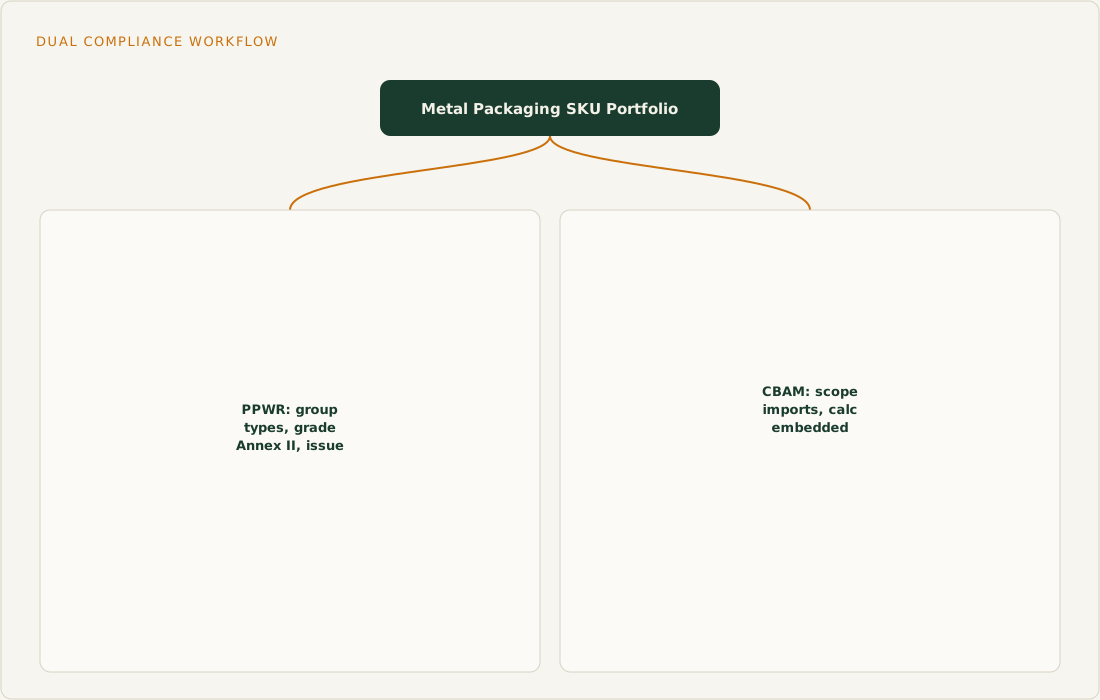
The two outputs are:
- Annex VIII Declaration of Conformity under PPWR, per the Article 11 declaration obligations and the Annex VIII template. Produced per packaging type, signed by an authorised signatory, retained for the statutory period, with a 10-working-day audit-response window.
- Annual CBAM declaration filed through the EU CBAM Registry by an authorised CBAM declarant. A separate filing, a separate authority, and separate retention obligations (four years).
The workflows differ in cadence and ownership. PPWR is organised per packaging type; CBAM moves from per-shipment reporting in the transitional period to annual declaration in the definitive period. The two are signed and filed by different authorised parties. What links them is the data: the composition figures (steel or aluminium mass per unit) that populate Annex VIII Field 4 are the same figures that feed the CBAM embedded-emissions calculation. Run two reconciling outputs from one source of truth and the duplication collapses into a single data-capture step.
A critical overlay is Article 21. If the importer's brand appears on the can, Article 21 makes that importer the PPWR manufacturer, and for the same import the importer is typically also the CBAM declarant. One party, two regimes, two documents.
Three Worked Scenarios
The overlap behaves differently depending on who imports, whose brand appears, and whether production is inside or outside the EU. Three scenarios make the pattern concrete.
Scenario 1: Turkish Steel Beverage Can Producer to Romanian Distributor
A Turkish producer ships steel beverage cans to a Romanian distributor, and the cans carry the Romanian distributor's brand. On the PPWR side, Article 21 triggers: because the distributor's brand appears on the packaging, the Romanian distributor becomes the PPWR manufacturer and issues the Annex VIII Declaration of Conformity. On the CBAM side, the Romanian distributor is the importer of record for the steel content and therefore the authorised CBAM declarant, filing the annual CBAM declaration via the Romanian competent authority. The data that must align across both: the steel mass per can, used in PPWR DoC Field 4 and in the CBAM embedded-emissions calculation. The Turkish producer's commercial position is to become the EU partner's indispensable data supplier for both regimes, providing composition and emissions data that the Romanian distributor needs for two separate filings.
Scenario 2: Swiss Aluminium Can Supplier to German EU Brand
A Swiss aluminium can plant supplies a German EU brand. Switzerland is outside the EU customs territory, so the aluminium crosses the CBAM border. The German brand triggers Article 21 (its brand on the can makes it the PPWR manufacturer) and issues the PPWR Declaration of Conformity. The German brand is also the CBAM declarant and files the annual CBAM declaration for the aluminium content. The embedded-emissions data from the Swiss plant feeds the CBAM declaration: the Swiss producer supplies the figures, the German brand files. Both obligations land on the German brand, sourced from data the Swiss supplier provides.
Scenario 3: German Aluminium Foil Laminate (Domestic EU Production)
A German producer makes an aluminium foil laminate (aluminium plus PE) within the EU and places it on the EU market. PPWR applies in full, because every packaging type placed on the EU market is in PPWR scope, and the producer issues an Annex VIII Declaration of Conformity. CBAM does not apply, because this is domestic EU production and CBAM is a border-adjustment mechanism, not a domestic carbon tax. The aluminium production instead falls under the EU ETS, which the producer accounts for separately. The lesson: domestic EU production triggers EU ETS, not CBAM, and the two regimes do not stack on the same domestically produced shipment.
Cost and Penalty Stacking
The two regimes carry separate penalty schedules, administered by separate authorities, and they accumulate rather than substitute.
- PPWR fines are set per Member State under Article 67. Germany can issue penalties up to €200,000 per breach, and amounts vary widely across Member States.
- CBAM penalties sit in Regulation (EU) 2023/956 and its implementing acts. Penalties for non-declaration or under-declaration are set per tonne of unreported embedded emissions, with substantially higher exposure for repeated or deliberate infringement.
- National EPR scheme fines (VerpackG in Germany, Citeo in France, CONAI in Italy) are administered separately again and carry their own schedules.
These do not net against each other. A producer placing a large portfolio of imported steel cans on the market with, say, 10 percent non-compliance on PPWR Declarations of Conformity and a missing CBAM declaration faces PPWR exposure, CBAM exposure, and EPR exposure as three separate liabilities accumulating per breach and per shipment. The combined exposure across regimes, rather than any single fine ceiling, is the operative reason to run one reconciled compliance data source rather than three disconnected ones.
Strategic Implications for Metal Packaging Producers
Four moves position a metal packaging producer for the dual-regime environment.
- Map per-SKU CBAM scope first. Identify which packaging types contain aluminium or steel from non-EU sources (CBAM-triggering) versus domestic-EU production (EU ETS, not CBAM). This split determines which SKUs need a CBAM declaration at all.
- Align the data architecture. The composition data feeding PPWR DoC Field 4 and the CBAM embedded-emissions calculation must reconcile to a single source of truth, or the two filings will drift and an audit on either side will expose the gap.
- Designate the authorised CBAM declarant. This is a separate role from the PPWR signatory and requires registration with the National Competent Authority. Treating it as an afterthought delays the annual CBAM filing.
- Revisit sourcing strategy for 2026 to 2034. As the EU ETS free-allowance phase-out compounds, CBAM certificate costs rise toward full cost by 2034. Over that window, domestic EU production of aluminium and steel becomes progressively more cost-competitive against non-EU imports, which feeds directly into the sourcing roadmap for cans, foil, and closures.
As Carbonorm extends into CBAM-specific guidance, this post will serve as the metal-packaging cross-link into that cluster.
Frequently Asked Questions
Does CBAM apply to packaging?
CBAM does not apply to packaging as such; it applies to the carbon-intensive materials some packaging is made from. Aluminium and steel are in CBAM scope, so an aluminium can or steel can imported from outside the EU triggers CBAM on its metal content. Glass, plastic, and paper packaging are not in CBAM scope.
Is aluminium packaging in CBAM scope?
Aluminium is one of the six CBAM sectors, so aluminium packaging imported from outside the EU is in scope for its aluminium content. An aluminium and polymer laminate is partially in scope: the aluminium fraction counts, the polymer does not. Domestically produced EU aluminium packaging is not in CBAM scope and falls under the EU ETS instead.
Do I need both a PPWR DoC and a CBAM declaration for the same can?
For an imported metal can, yes. PPWR requires an Annex VIII Declaration of Conformity for the packaging, and CBAM requires an annual declaration for the embedded carbon of the steel or aluminium. They are separate documents, filed with separate authorities, and one does not substitute for the other.
When does CBAM start?
CBAM's transitional period ran from 1 October 2023 to 31 December 2025 with quarterly reports only. The definitive period began on 1 January 2026, when certificate purchase obligations took effect. The first annual CBAM declaration, covering 2026 emissions, is due 31 May 2027.
Does CBAM apply to domestic EU production?
No. CBAM is a border-adjustment mechanism that applies to imports crossing into the EU. Aluminium or steel produced within the EU is not subject to CBAM; it falls under the EU Emissions Trading System (EU ETS). The border is the trigger, not the material on its own.
What is the relationship between CBAM certificates and EU ETS prices?
CBAM certificates are priced against the EU ETS so that imported goods bear a carbon cost comparable to EU-produced goods. As the EU ETS free allowances are phased out between 2026 and 2034, the effective CBAM cost rises toward full price by 2034.
Can Carbonorm help with both PPWR and CBAM compliance?
Carbonorm's dual-track platform captures composition data once and reconciles it across both the PPWR Declaration of Conformity and the CBAM declaration, so the same SKU portfolio feeds both regulatory outputs. See the dual-track workflow.
Conclusion
PPWR and CBAM are two regulations, two workflows, and one converging operational reality for metal packaging producers. 2026 is the year both fully activate: CBAM's definitive period on 1 January and PPWR's general application on 12 August. The producers who handle the overlap well are not the ones who treat it as a single problem, but the ones who run two parallel filings from one reconciled data source.
Three moves carry the most weight: scope each SKU for CBAM first, align the composition data feeding both the Annex VIII Declaration of Conformity and the CBAM emissions calculation, and revisit the sourcing roadmap as CBAM cost ramps toward 2034. Get those right and dual compliance becomes a data exercise rather than a duplicated burden.
Carbonorm runs PPWR and CBAM data flows from one SKU portfolio. Start Audit and map your metal packaging across both regimes from a single source of truth.