PPWR for Distributors: Verification Duties + Refusal
PPWR for Distributors: Verification Duties and Refusal Rights
Of the PPWR roles, the distributor carries the lightest duty set, but it is not no duty. A PPWR distributor makes packaging available on the market without being the manufacturer or importer, and its job is a gate: check that the basics are in place, and refuse packaging it knows to be non-compliant. Under Regulation (EU) 2025/40, which applies from 12 August 2026, the distributor does not issue the Declaration of Conformity and does not re-grade the pack. It performs a documentary check and exercises a refusal right that is also a duty.
This guide is the distributor's path: who counts as a distributor, the duty set, the refusal right, how the role compares with importer and manufacturer, and the line where a distributor crosses into one of those heavier roles.
In this guide:
- Who counts as a distributor
- The distributor's duties
- The refusal right (and duty)
- Distributor vs importer vs manufacturer
- When a distributor becomes more
- Penalty exposure
- 6-entry FAQ
Who Is a Distributor?
Under PPWR, a distributor is any party in the supply chain, other than the manufacturer or importer, that makes packaging available on the market. A distributor handles packaging that already carries its manufacturer's or importer's identity. Distributors do not issue the Declaration of Conformity; their duty is to check the basics are present and to refuse packaging they know to be non-compliant.
Most retailers are distributors. The exception is the own-brand case: where a retailer puts its own brand on the packaging, Article 21 makes it the manufacturer, not a distributor. So a supermarket selling branded goods is a distributor for those lines, and a manufacturer for its private label.
The Distributor's Duties
The distributor's duties are real but documentary, not technical:
- Check the basics before making available. Confirm the Declaration of Conformity exists and that the required labelling and the manufacturer or importer identification are present.
- Act with due care. Do not make available packaging you know, or ought to know, is non-compliant.
- Protect compliance in storage and transport while the packaging is under your responsibility.
- Cooperate with authorities and pass information up and down the chain.
- Refuse and report non-compliant packaging.
None of these asks the distributor to assess recyclability or re-grade a pack. The check is whether the documentation and labelling are present and the pack is not obviously non-compliant, not whether the grade was calculated correctly. That is the manufacturer's and importer's territory.
The Refusal Right (and Duty)
The distinctive distributor lever is the right, and the duty, to refuse non-compliant packaging. If a pack arrives without a DoC, without the required labelling, or without identification of the manufacturer or importer, the distributor should not make it available and should flag it back up the chain.
"Non-compliant" at the distributor's level means the visible, documentary failures: a missing declaration, missing labelling, absent identification. The distributor is not expected to detect a mis-calculated recyclability grade buried in the technical file. The refusal gate is a presence check, and it is the point at which a distributor protects itself from carrying someone else's non-compliance onto the market.
Distributor vs Importer vs Manufacturer
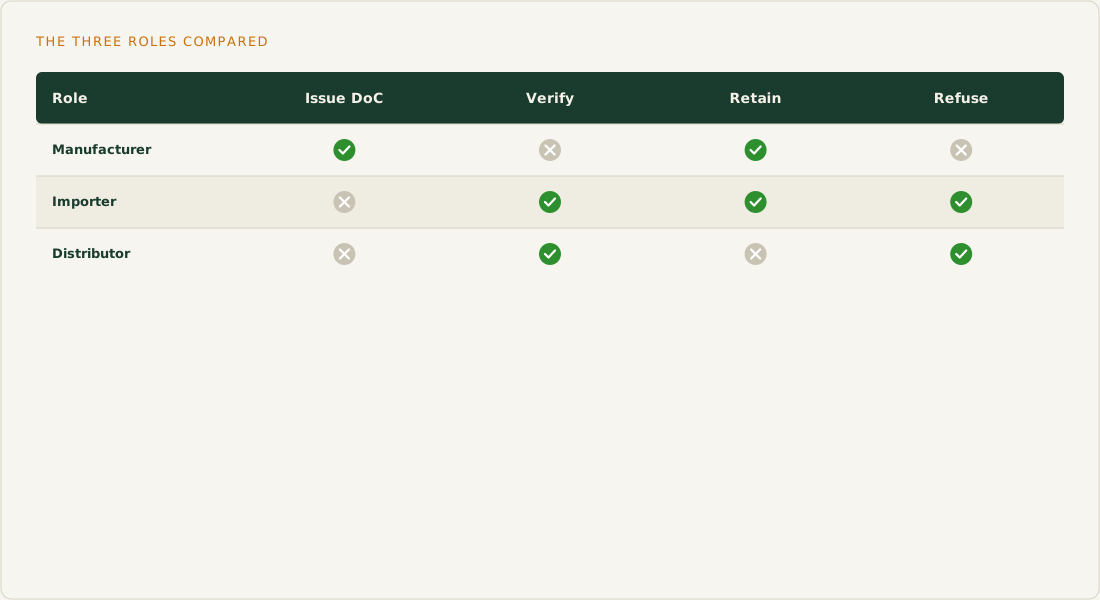
The three roles sit on a gradient. The manufacturer issues the DoC and carries the substance set. The importer verifies the manufacturer's conformity, adds its contact details, and retains the DoC. The distributor checks the basics are present and refuses what fails. Each role does less than the one before it, and the stakeholder roles overview maps all four (including the fulfilment service provider) in one place.
When a Distributor Becomes More
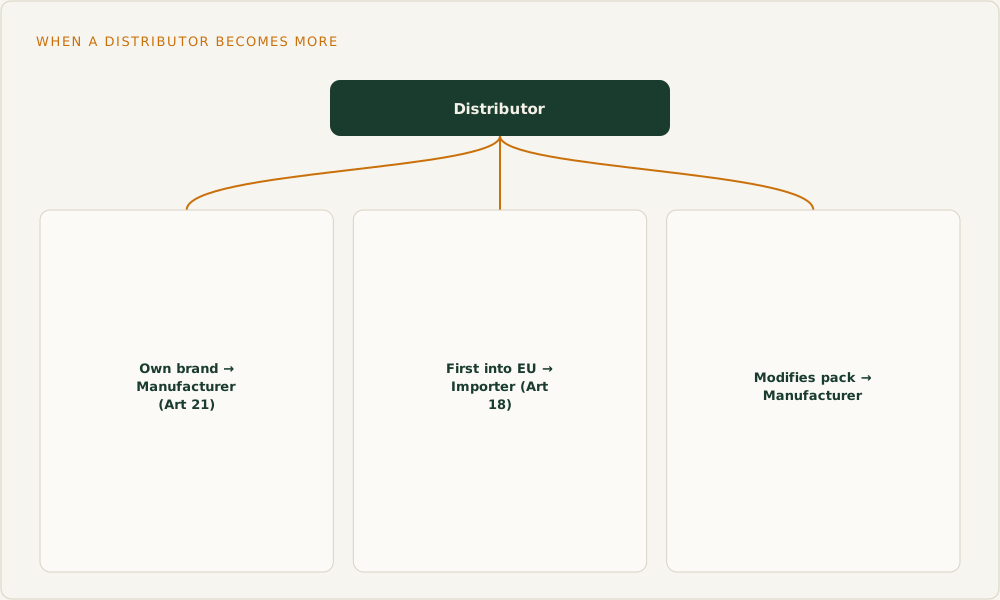
A distributor does not stay a distributor automatically. Three crossings move it into a heavier role:
- Own brand on the pack. Putting your own name or trademark on the packaging makes you the manufacturer under Article 21, with the full obligation set.
- First to place a non-EU pack on the EU market. If you are the party bringing the packaging into the Union, you are the importer, with the Article 18 duties, not a distributor.
- Modifying the pack. Changing the packaging in a way that affects its compliance can make you the manufacturer for that pack.
Knowing where these lines sit is the most valuable thing a distributor can do, because crossing one quietly means carrying obligations you did not know you had.
Penalty Exposure
Distributors do face Article 67 penalties, but the exposure is lighter than for manufacturers and importers. The distributor's breach is making available packaging it knew, or should have known, was non-compliant, or failing to cooperate with authorities. The penalty regime is set per Member State and applies per breach. The distributor's protection is straightforward: run the presence check, refuse what fails, and keep a simple record of having done so.
Frequently Asked Questions
What are a distributor's duties under PPWR?
Check that the Declaration of Conformity exists and that the required labelling and manufacturer or importer identification are present before making packaging available; act with due care; protect compliance in storage and transport; cooperate with authorities; and refuse and report non-compliant packaging. The check is documentary, not technical.
Does a distributor need to issue a DoC?
No. Distributors do not issue the Declaration of Conformity. That is the manufacturer's obligation. The distributor checks that the DoC and required labelling are present and refuses packaging that lacks them. If a distributor puts its own brand on the pack, it becomes the manufacturer and then must issue the DoC.
Can a distributor refuse non-compliant packaging?
Yes, and it is a duty as well as a right. A distributor should not make available packaging that lacks a DoC, required labelling, or manufacturer/importer identification, and should flag it back up the chain. The refusal gate protects the distributor from carrying someone else's non-compliance onto the market.
Is a retailer a distributor under PPWR?
Usually, yes, for the branded goods it sells. The exception is private label: where the retailer puts its own brand on the packaging, Article 21 makes it the manufacturer for those lines. So a retailer is typically a distributor for branded products and a manufacturer for its own-brand products.
When does a distributor become an importer or manufacturer?
A distributor becomes the importer if it is the first party to bring a non-EU pack onto the EU market, and the manufacturer if it puts its own brand on the pack or modifies it in a way that affects compliance. Each crossing brings the heavier duty set of that role.
Do distributors face PPWR penalties?
Yes, though lighter than manufacturers and importers. The distributor's breach is making available packaging it knew or should have known was non-compliant, or failing to cooperate. Article 67 penalties are set per Member State and applied per breach. Running the presence check and recording it is the distributor's protection.
Conclusion
The distributor's PPWR job is a documentary gate: check that the Declaration of Conformity, labelling, and identification are present, and refuse what fails. It does not issue the DoC and does not re-grade the pack. The one thing every distributor should know precisely is where the lines sit that turn it into an importer or manufacturer, because crossing one means inheriting a much heavier duty set.
Run the presence check, exercise the refusal right, and keep a simple record. Start Audit to see how the role fits the wider PPWR picture, and use the stakeholder roles guide to place yourself precisely.