PPWR Article 18: Importer Obligations Checklist 2026
PPWR Article 18: The Importer Obligations Checklist for the 2026 Deadline
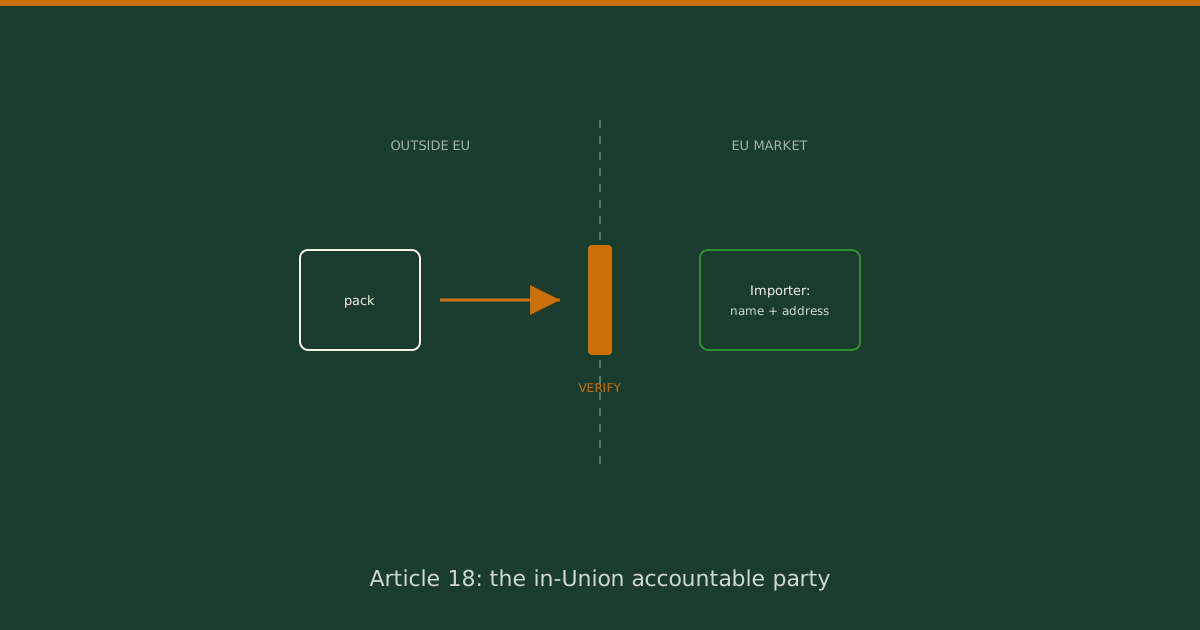
PPWR for importers begins with Article 18, the provision that sets out what an importer must do to place packaging on the EU market lawfully when the original manufacturer's identity stays on the pack. Under Regulation (EU) 2025/40, which applies from 12 August 2026, the importer is the in-Union accountable party for packaging produced outside the EU: the reachable party market surveillance can turn to. Article 18 importers verify the manufacturer's conformity work, add their own contact details, and retain the Declaration of Conformity. What they do not do, under Article 18, is issue the DoC themselves.
That last point is the whole reason Article 18 and Article 21 must be read together. Article 18 covers the importer who brings in packaging that already carries the manufacturer's name and brand. The moment the importer's own name or trademark appears on the pack instead, Article 21 flips the role and the importer becomes the manufacturer, with the full obligation to issue the DoC. This guide stays on the Article 18 side of that line: the six duties, the verification workflow, the contact-detail rule, and the pathway for non-EU exporters and their EU partners, with the boundary to Article 21 marked clearly so you know which side you are on.
In this guide:
- What Article 18 actually requires of importers
- The six importer duties, as a working checklist
- The Article 18 vs Article 21 boundary every importer must find
- A step-by-step importer verification workflow
- The importer contact-detail and labelling rule
- The non-EU exporter pathway for TR, PL, and RO supply chains
- 6-entry FAQ covering the DoC, contact details, distributors, and retention
What Article 18 Actually Requires
PPWR Article 18 requires importers to place only compliant packaging on the EU market, to verify that the manufacturer has carried out the conformity assessment and drawn up the Declaration of Conformity and technical documentation, to add the importer's own contact details, and to retain the DoC for the statutory period. The importer does not issue the DoC under Article 18; that obligation arises only if [Article 21](/guides/ppwr-article-21-importer-manufacturer) applies.
Article 18 applies the standard EU New Legislative Framework importer-obligation pattern to packaging. The logic is consistent across EU product law: when goods are made outside the Union, the importer is the party inside the Union that authorities can hold accountable. The importer does not re-do the manufacturer's conformity assessment, but must confirm it was done, must not place packaging it believes to be non-compliant, and must make itself identifiable and reachable.
A note on precision: the exact sub-paragraph numbering within Article 18 should be confirmed against the consolidated EUR-Lex text of Regulation (EU) 2025/40 before any of these references is cited verbatim in a compliance document. The duty structure below is stable; the paragraph labels are the detail to verify.
The Six Importer Duties Under Article 18
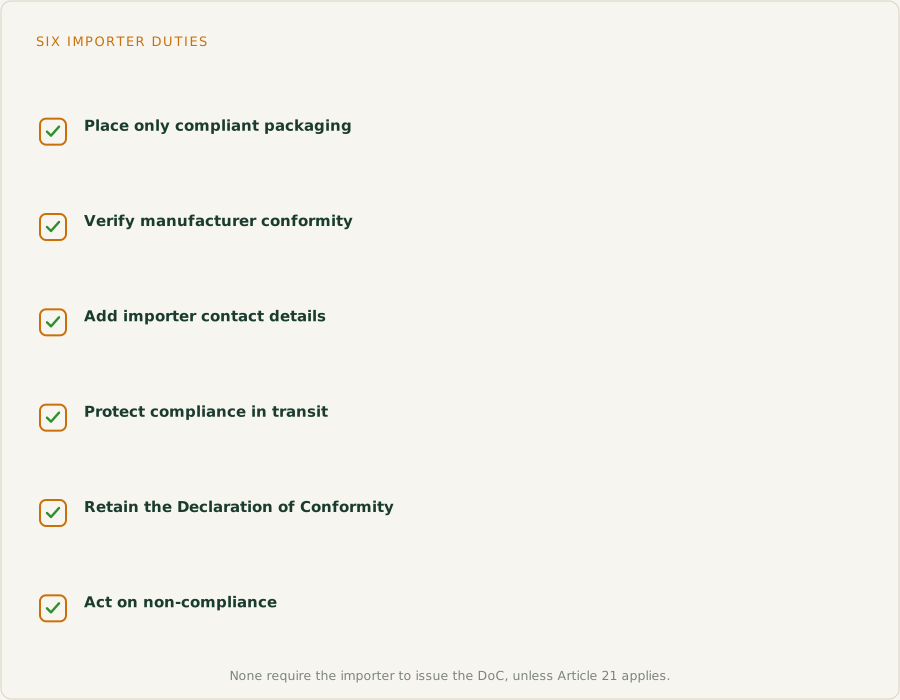
- Place only compliant packaging. Do not place packaging on the EU market that you know, or have reason to believe, does not meet PPWR requirements. Belief matters: wilful blindness is not a defence.
- Verify the manufacturer's conformity work. Confirm that the conformity assessment was carried out, that the technical documentation exists, and that the Declaration of Conformity has been drawn up for the packaging you are importing.
- Add importer contact details. Indicate your name, registered trade name or trademark, and a postal plus electronic contact address on the packaging or, where that is not possible, on an accompanying document.
- Protect compliance in storage and transport. While the packaging is under your responsibility, ensure storage and transport conditions do not jeopardise its conformity with PPWR requirements.
- Retain the Declaration of Conformity. Keep a copy of the DoC available for market surveillance authorities for the retention period, and ensure the technical documentation can be supplied to them on request.
- Act on non-compliance and cooperate. Where packaging you have placed on the market is non-compliant, take corrective measures; where it presents a risk, inform the authorities; and cooperate with surveillance requests.
None of these six duties asks the importer to issue the DoC. That single fact is what separates an Article 18 importer from an Article 21 manufacturer.
Article 18 vs Article 21: The Line Every Importer Must Find
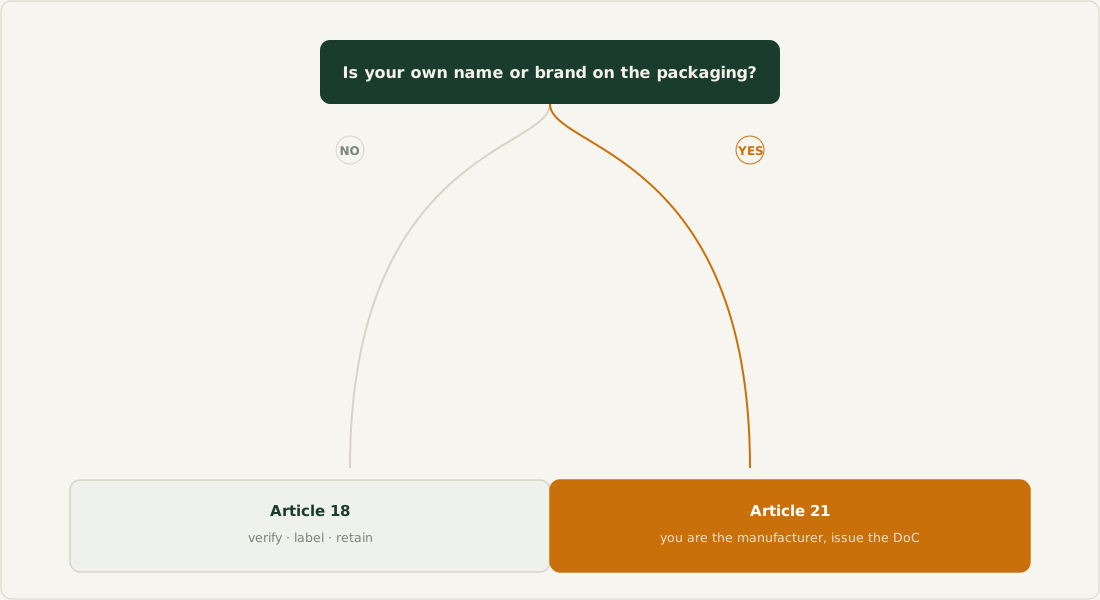
The most consequential question for any importer is which of the two regimes applies. Do you stay an Article 18 importer, with a verify-and-retain duty set, or does Article 21 turn you into the manufacturer, with the full obligation to issue the Declaration of Conformity?
| Article 18 (importer) | Article 21 (importer-as-manufacturer) | |
|---|---|---|
| Trigger | Import packaging carrying the manufacturer's identity | Place packaging under your own name, trademark, or modified spec |
| Who issues the DoC | The original manufacturer | You, the importer |
| Technical file owner | Manufacturer (importer verifies access) | You, the importer |
| Your core duty | Verify, add contact details, retain | Full Article 11 manufacturer obligations |
| What you retain | A copy of the DoC | The full DoC and technical documentation |
The flip to Article 21 is automatic and unconditional: there is no threshold and no opt-out, as the Article 21 deep-dive sets out. Private-label and own-brand imports are the usual triggers, because they put the importer's name where the manufacturer's used to be. The practical test fits in one line: whose name and brand is on the pack? If it is yours, you are most likely under Article 21, and the Article 11 DoC obligations are now yours to discharge.
The Importer Verification Workflow
"Verify the manufacturer's conformity" is the duty importers most often underestimate, because it sounds like a single check and is actually a short workflow. The steps below turn it into something repeatable per SKU.
- Request the DoC and read it. Confirm the Declaration of Conformity references the correct packaging and the PPWR requirements that apply to it, not a generic or outdated version.
- Confirm the technical documentation exists. You do not need to hold it, but you must be able to confirm it exists and can be made available to authorities within the response window.
- Check the labelling is present. Confirm required labelling, including composition and recyclability marks and, where applicable, the QR identifier under Article 15 labelling.
- Spot-check the claim against your own data. Cross-check the conformity claim against the composition data you already hold for the SKU; a mismatch is a flag worth resolving before placing on the market.
- Record the verification. Note who checked, when, and against which DoC version. That record is your own audit trail if surveillance ever asks how you discharged the duty.
Importer Contact Details and Labelling
Article 18 requires the importer to be identifiable on the packaging. In practice this means adding your name, your registered trade name or trademark, and a postal plus electronic contact address. Where the packaging itself cannot carry that information, it goes on an accompanying document or the outer wrapping instead.
The purpose of the rule is straightforward: market surveillance must have a reachable party inside the EU for packaging produced outside it, and the importer is that party. This is separate from the manufacturer's own identification, which remains on the pack as well; both identifiers can and usually do appear together. Adding importer contact details does not, by itself, turn you into the manufacturer. The trigger for that is putting your own name or brand on the pack as the apparent producer, which is the Article 21 case, not the Article 18 contact-detail requirement.
The Non-EU Exporter Pathway: TR, PL, RO
When packaging is produced outside the EU, or an EU company sources it from a non-EU plant, the obvious question is who carries the Article 18 duties. The answer follows the market-placement, not the production: the EU-side party that places the packaging on the EU market is the importer and carries Article 18, while the non-EU producer is the technical data source behind the conformity claim.
For a Turkish exporter of food packaging, steel cans, or aluminium foil, this usually means the EU distributor or brand is the Article 18 importer. The exception is the Article 21 case: if the EU party's own brand is on the pack, that EU party becomes the manufacturer under Article 21, not merely an importer. Where the imported packaging is aluminium or steel, there is a further overlay, because the same EU importer may also be the CBAM declarant for the embedded carbon of the metal, as the PPWR + CBAM overlap guide explains.
The commercial takeaway for the non-EU exporter is to become the EU partner's reliable data supplier. The importer's Article 18 verification is only as frictionless as the composition and DoC inputs the producer provides. An exporter that supplies clean, complete data makes itself the easy partner to keep, on both the PPWR and, for metal packaging, the CBAM side.
Frequently Asked Questions
Does an importer issue the PPWR Declaration of Conformity?
Not under Article 18. An Article 18 importer verifies that the manufacturer has drawn up the DoC and retains a copy, but the manufacturer issues it. The importer issues the DoC only if Article 21 applies, which happens when the importer's own name or brand is on the packaging.
What contact details must an importer add to packaging?
The importer must add its name, registered trade name or trademark, and a postal plus electronic contact address. Where the packaging cannot carry this, it goes on an accompanying document or the outer wrapping. The aim is a reachable in-Union party for market surveillance.
What is the difference between Article 18 and Article 21?
Article 18 covers importers who bring in packaging carrying the manufacturer's identity: they verify, label, and retain. Article 21 applies when the importer places packaging under its own name or trademark, which makes the importer the manufacturer with the full obligation to issue the DoC.
How long must an importer keep the Declaration of Conformity?
The importer keeps a copy of the DoC available for market surveillance for the statutory retention period that applies to the packaging, and must be able to make the technical documentation available on request. Confirm the exact period for your packaging type against Regulation (EU) 2025/40.
Does a distributor have the same obligations as an importer?
No. A distributor's duties are lighter than an importer's: a distributor checks that the required labelling and documentation are present before making packaging available, but does not carry the importer's full verification and contact-detail obligations. The importer is the party that first brings the packaging into the EU market.
Who is the importer when an EU company buys from a non-EU plant?
The EU-side party that places the packaging on the EU market is the importer and carries Article 18. If that EU party also puts its own brand on the pack, Article 21 applies and it becomes the manufacturer. The non-EU plant remains the technical data source either way.
Conclusion
Article 18 is the importer's verify-and-retain duty set, and Article 21 is the line where the importer stops being an importer and becomes the manufacturer. The operative question never changes: whose brand is on the pack? Answer that, and you know which set of obligations is yours.
Three moves make Article 18 compliance routine rather than reactive. Build a single source of truth for supplier DoCs and SKU composition data. Run a recorded verification for every SKU you import, so the duty is evidenced, not assumed. And add your importer contact details correctly, on the pack or an accompanying document, so you are the reachable party the regulation expects.
Carbonorm keeps supplier DoCs, composition data, and verification records in one portfolio, so Article 18 verification is a lookup rather than a chase. Start Audit, and pair this with the Article 21 deep-dive to confirm which side of the line each of your SKUs sits on.