PPWR for Manufacturers: Full Obligations Guide 2026
PPWR for Manufacturers: The Complete Obligations Path
Under PPWR, the manufacturer carries more than anyone. PPWR for manufacturers means the full set: the substance requirements that govern what a pack is made of, the recyclability grade that decides whether it can be sold, the Declaration of Conformity that attests to all of it, and the labelling that puts it on the pack. Under Regulation (EU) 2025/40, which applies from 12 August 2026, the manufacturer is the primary obligated party, and the primary audit target.
Take Martina, a Sustainability Manager responsible for 400 food-packaging SKUs across several EU markets. Her problem is not understanding any single rule; it is carrying all of them across a large portfolio, per SKU, with evidence. This guide is the manufacturer's obligations journey, mapping the full set and routing into the deep-dives where each requirement's detail lives. It keeps the focus on the path: who counts as the manufacturer, the substance requirements, recyclability grading and its consequences, issuing the DoC, the per-SKU reality, penalty exposure, and a readiness route.
In this guide:
- Who counts as the manufacturer
- The substance requirements you must meet
- Recyclability grading and its consequences
- Issuing the Declaration of Conformity
- The per-SKU reality of a real portfolio
- Penalty exposure
- The manufacturer readiness path
- 6-entry FAQ
Who Is the Manufacturer?
Under PPWR, the manufacturer is the party that makes packaging, or has it designed and made, and places it on the EU market under its own name or trademark. An importer who puts their own brand on imported packaging becomes the manufacturer under [Article 21](/guides/ppwr-article-21-importer-manufacturer). The manufacturer carries the full set of substance requirements plus the obligation to issue the Declaration of Conformity.
The defining act is placing packaging on the market under your own identity. That is what separates the manufacturer from the importer and distributor, who handle packaging that already carries someone else's identity. It is also why a brand-owning importer is pulled into the manufacturer role: putting your name on the pack is the manufacturer's signature act, regardless of who physically produced it.
The Substance Requirements You Must Meet
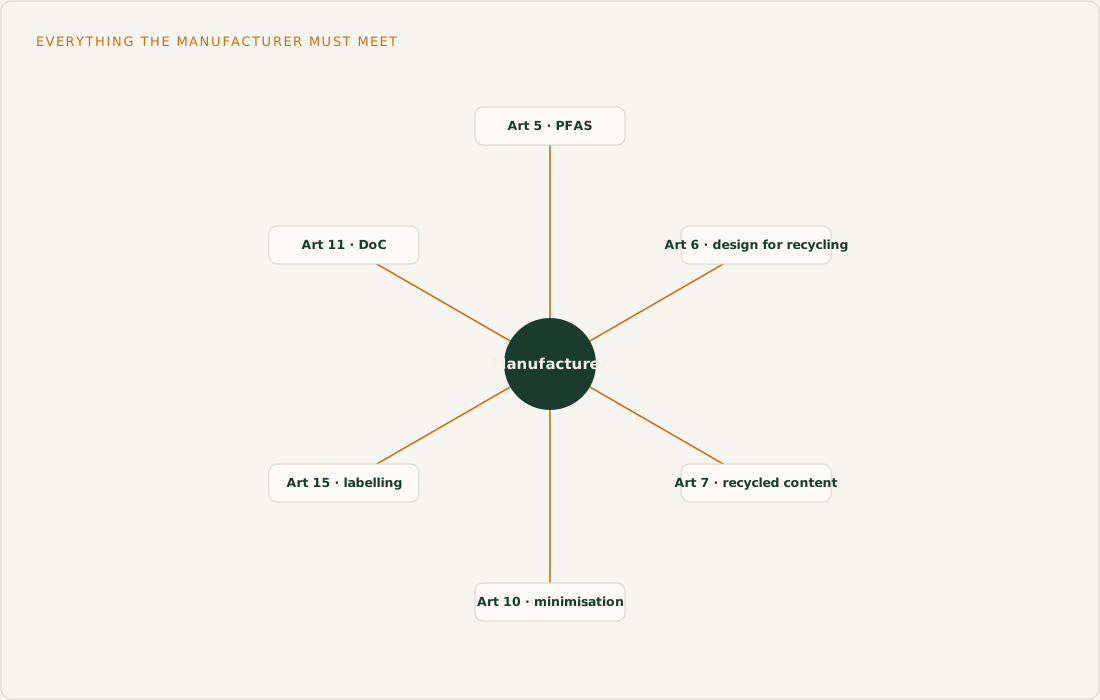
The manufacturer's substance obligations sit under the Article 4 umbrella, which binds the following into a single set a pack must meet together:
- Restricted substances, including the PFAS limits, under Article 5.
- Design for recycling, so the pack is recyclable at scale, under Article 6.
- Recycled content thresholds, especially for plastics, under Article 7.
- Minimisation, no more packaging than function requires, under Article 10.
- Labelling, harmonised symbols and a data carrier, under Article 15.
Because Article 4 binds these as a set, a pack is compliant only when it meets all of them, not most. The manufacturer cannot optimise recycled content while ignoring recyclability, or minimise weight while breaching a substance limit. The substance map is the manufacturer's checklist, and every pack is assessed against the whole of it.
Recyclability Grading and Its Consequences
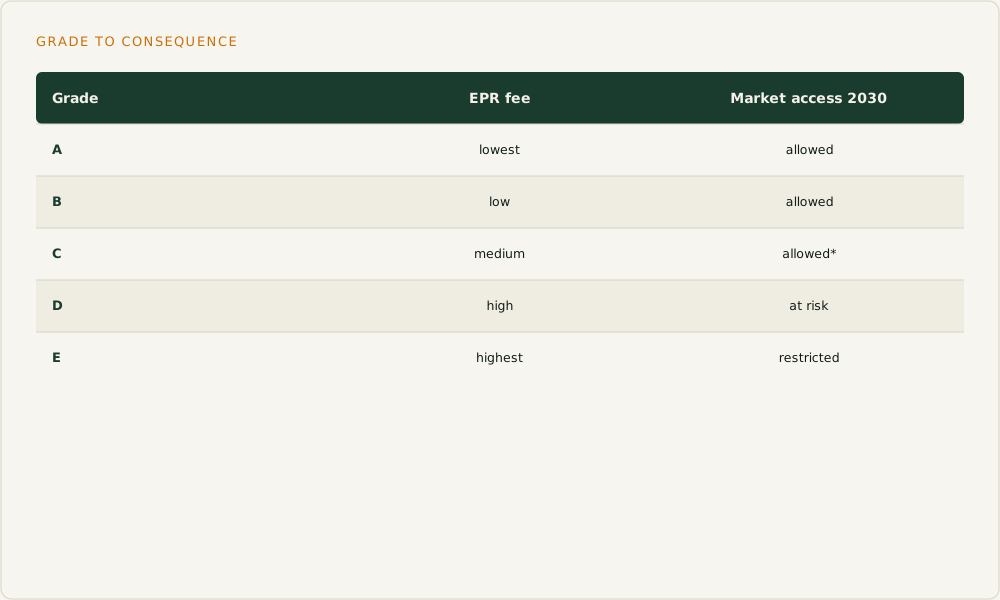
The manufacturer must assess each pack's recyclability and assign it a performance grade under Article 38, using the Annex II worst-of methodology where multi-material packs are involved. The grade is not academic. From 2030, packaging below a set threshold faces restricted market access, and the grade drives extended-producer-responsibility fees now. For a manufacturer, a graded-out pack is a pack it can no longer sell, and a better-graded pack pays lower fees every year. That makes grading a commercial decision, not just a compliance one, and it is the strongest reason to grade the portfolio early.
Issuing the Declaration of Conformity
The act that pulls the whole set together is the Declaration of Conformity. The manufacturer issues a DoC per packaging type under Article 11, on the Annex VIII template, attesting that the pack meets the applicable PPWR requirements. Behind it sits the technical file evidencing each requirement, an authorised signatory, and the retention obligation (five years for single-use, ten for reusable, from last EU placement).
The DoC is not a recyclability certificate or a recycled-content certificate; it is the combined attestation. A gap in any one substance requirement is a gap in the whole declaration.
The Per-SKU Reality
The single biggest mistake a manufacturer makes is treating PPWR as a corporate-wide exercise. It is per packaging type. For Martina's 400-SKU portfolio, that means 400 grade assessments and a DoC for each type, not one signature on a company letterhead. One corporate-wide DoC is a documented audit failure.
The way to make that tractable is data architecture: capture each SKU's composition once, and let it feed the recyclability grade, the DoC fields, and the label symbol from the same source. When composition lives in one place, grading the portfolio and generating DoCs becomes a coverage exercise rather than a per-pack research project. When it is scattered across spreadsheets and supplier emails, every SKU is a fresh investigation, and a 400-SKU portfolio never finishes.
Penalty Exposure
As the primary obligated party, the manufacturer is the primary audit target. A market-surveillance authority asks the manufacturer for the DoC and technical file first. The Article 67 penalty framework is set per Member State, ranges widely (up to €200,000 per breach in Germany), and is calculated per breach, so a portfolio with broad non-compliance compounds quickly. The heaviest exposure is often market restriction rather than the fine itself, because a withdrawn packaging type interrupts the product it carries. For Martina, the exposure number is what turns PPWR from a sustainability project into a board-level one.
The Manufacturer Readiness Path
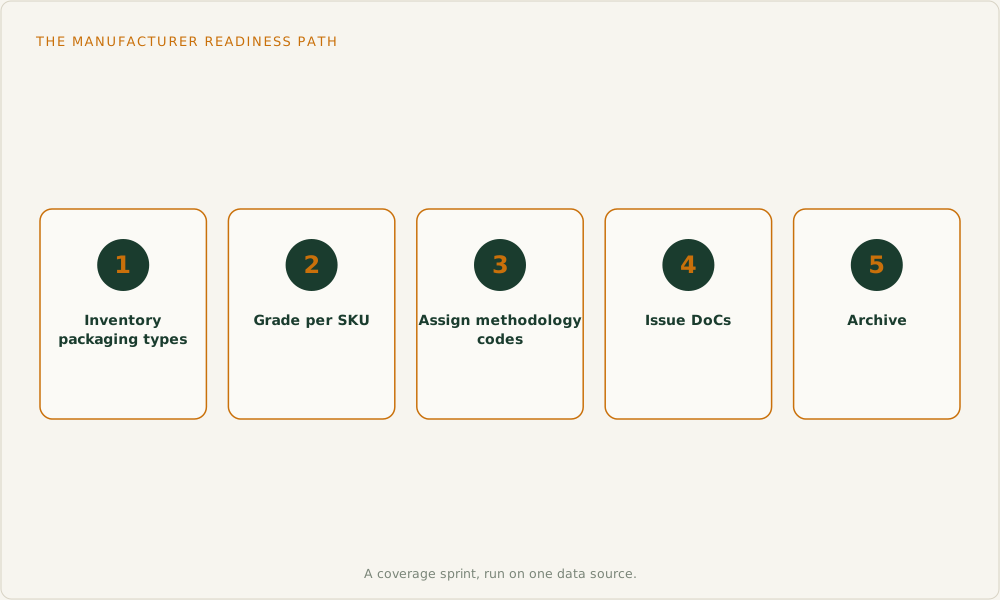
The manufacturer's path is a coverage sprint:
- Inventory every packaging type in the portfolio.
- Grade each SKU against the recyclability criteria; flag the lines near the 2030 threshold.
- Assign methodology codes so each grade is defensible in the DoC.
- Issue the DoCs per packaging type, on the Annex VIII template.
- Archive the DoCs and technical files for the retention period.
This is the producer's slice of the broader 90-day readiness plan. The work is repetitive rather than hard, which is exactly why it benefits from running on one data source instead of by hand.
Frequently Asked Questions
What are a manufacturer's obligations under PPWR?
Meet the substance requirements (restricted substances, design for recycling, recycled content, minimisation, labelling), assess each pack's recyclability grade, and issue a Declaration of Conformity per packaging type with a supporting technical file. The manufacturer carries the full set and is the primary audit target.
Who is the manufacturer under PPWR?
The party that makes packaging, or has it made, and places it on the EU market under its own name or trademark. An importer who puts their own brand on imported packaging becomes the manufacturer under Article 21. Placing packaging under your own identity is the defining act.
Does the manufacturer issue the DoC?
Yes. The manufacturer issues a Declaration of Conformity per packaging type under Article 11, on the Annex VIII template, with a technical file evidencing each requirement, an authorised signatory, and retention for five years (single-use) or ten years (reusable).
What substance requirements apply to manufacturers?
The Article 4 umbrella binds restricted substances and PFAS (Article 5), design for recycling (Article 6), recycled content (Article 7), minimisation (Article 10), and labelling (Article 15) into one set the pack must meet together. A gap in any one is a gap in the whole declaration.
What happens if my packaging grades below the threshold?
Below the set recyclability grade threshold, packaging pays higher EPR fees and, from 2030, faces restricted market access. A graded-out pack effectively cannot be sold, so lines near the threshold are commercial risks with a fixed deadline. Grade the portfolio early and redesign the worst offenders first.
Are manufacturers the primary audit target?
Yes. As the primary obligated party, the manufacturer is asked for the DoC and technical file first. Article 67 penalties are per breach and set per Member State, and market restriction can interrupt the product the packaging carries, which often outweighs the fine.
Conclusion
The manufacturer carries the full PPWR set: substance requirements, recyclability grade, and the Declaration of Conformity that attests to all of it. The work is not conceptually hard; it is per-SKU, repetitive, and only manageable when composition data lives in one place and feeds grade, DoC, and label together.
Three moves carry it: inventory and grade every packaging type, run the substance set as one checklist per SKU, and issue DoCs from the same data that produced the grade. Done early, it is a coverage sprint; done late, it is a portfolio-wide scramble against an audit.
Carbonorm grades each SKU and generates the Annex VIII DoC from one source of truth. Start Audit, and use the Article 4 substance map to walk each requirement your packs must meet.