PPWR Article 10 Minimisation: Empty Space & Right-Sizing
PPWR Article 10 Minimisation: Empty Space, Right-Sizing, and the Functional Minimum
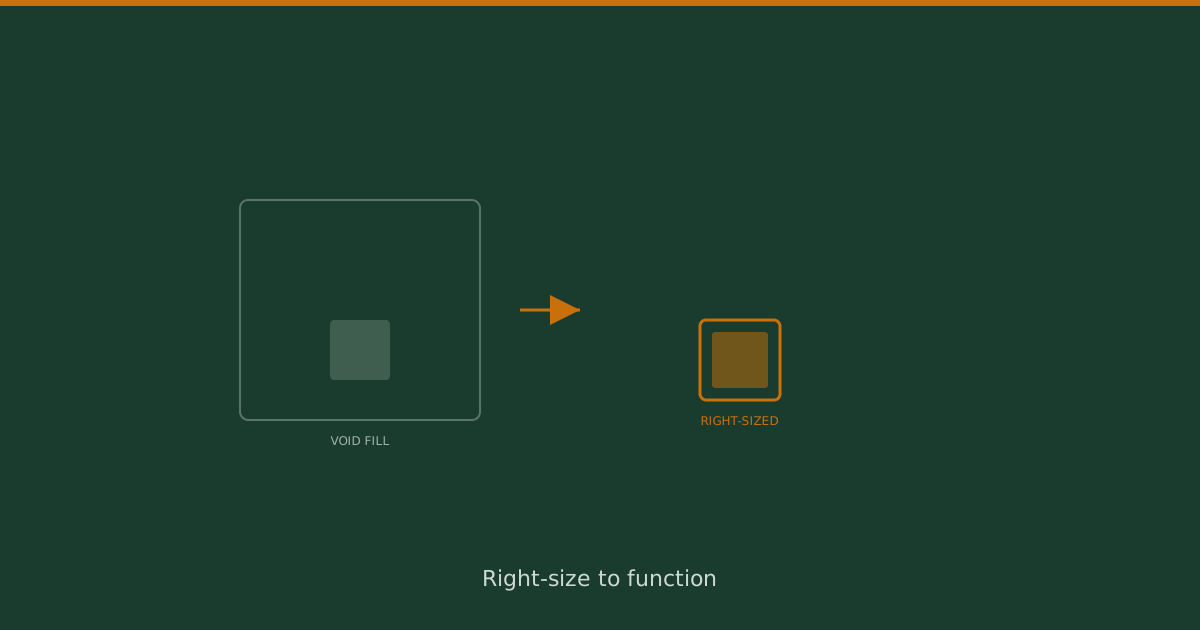
The oversized box with a small product rattling inside a sea of void fill is exactly what PPWR minimisation targets. PPWR minimisation under Article 10 requires packaging to be reduced to the weight and volume genuinely necessary for its function, with no unnecessary layers and a limited empty space ratio for grouped, transport, and e-commerce packaging. Under Regulation (EU) 2025/40, over-packaging beyond what function requires is non-compliant, not merely wasteful.
Minimisation has two parts: a cap on empty space and a set of functional minimum criteria, in Annex IV, against which every packaging choice has to justify itself. E-commerce is where the rule bites hardest, because oversized shipping boxes and excessive void fill are the most visible form of over-packaging. This guide sets out the empty space ratio, the functional minimum criteria, the genuine exemptions, and the e-commerce case. The exact void-volume limit and the Annex IV detail are tied to the consolidated regulation, so treat the figures here as the planning frame and verify them before citing them formally.
In this guide:
- What Article 10 requires of every packaging
- The empty space ratio and how it is calculated
- The functional minimum criteria in Annex IV
- The e-commerce over-packaging case
- The genuine exemptions, and why marketing is not one
- 6-entry FAQ covering the ratio, criteria, and exemptions
What Article 10 Requires
PPWR Article 10 requires packaging to be minimised to the weight and volume necessary for its function, with no unnecessary packaging layers and a limited empty space ratio for grouped, transport, and e-commerce packaging. Minimisation is assessed against the functional performance criteria in Annex IV, and over-packaging beyond what function requires is non-compliant.
The rule has a simple logic: packaging exists to perform functions, such as protecting the product and carrying legally required information, and anything beyond what those functions need is excess to be removed. A producer must minimise both weight and volume, strip out unnecessary layers, and be able to show, against the Annex IV criteria, that what remains is justified. The assessment is documented as part of the technical file, so minimisation is something a producer must be able to evidence, not just assert.
The Empty Space Ratio
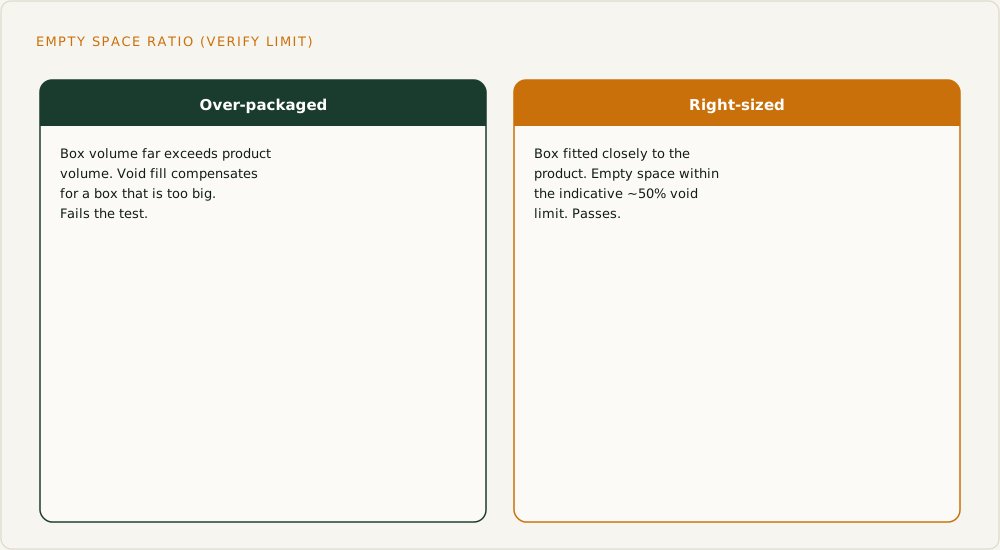
The empty space ratio caps how much of a pack can be void. It is most consequential for grouped, transport, and e-commerce packaging, where the gap between product and box is largest. The indicative limit is a maximum void ratio in the region of 50%, meaning empty space should not dominate the package, but the exact figure and its precise scope must be verified against the consolidated regulation before being relied on.
The ratio is calculated by comparing the volume the product (and any genuinely necessary protective material) actually occupies against the internal volume of the packaging. A box twice the size of its contents fails the test; a box fitted closely to its contents passes it. The calculation is why right-sizing matters so much: the same product in a smaller box can move from non-compliant to compliant without any change to the product itself. E-commerce is the obvious target, because that is where oversized boxes and void fill are routine.
The Functional Minimum Criteria
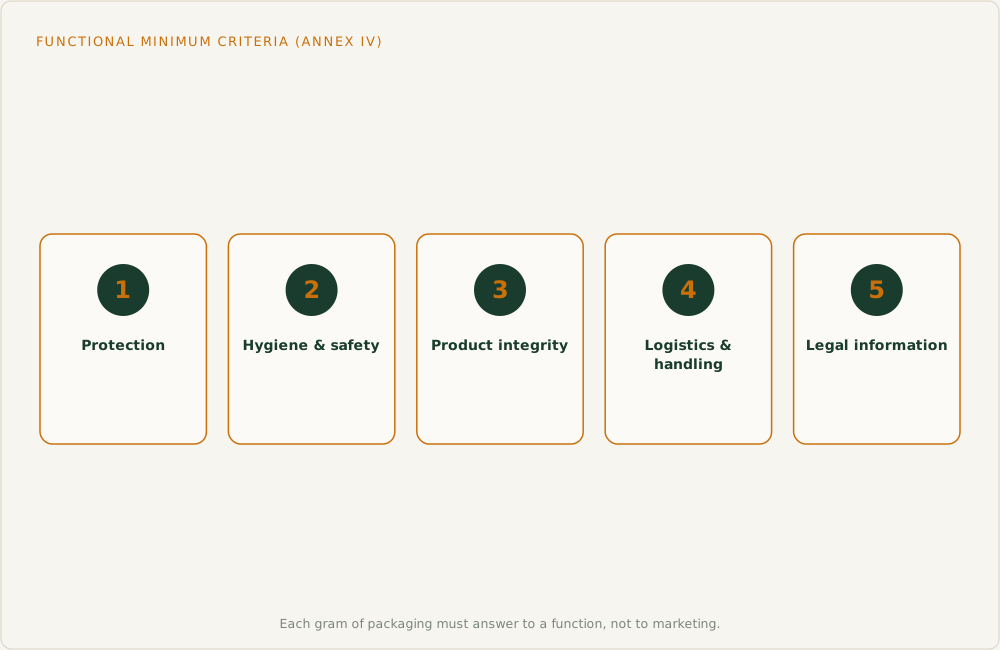
Annex IV sets out the functions that legitimately justify packaging. They are the lens through which minimisation is judged: each gram and millimetre of packaging must answer to one of them. The recognised functions centre on:
- Protection. Preventing damage to the product through the supply chain.
- Hygiene and safety. Maintaining the product's safety and, where relevant, sterility.
- Product integrity. Keeping the product in usable condition, including shelf life.
- Logistics and handling. Enabling transport, storage, and handling, including stacking.
- Information and legal requirements. Carrying mandatory labelling and information.
- Consumer acceptance within limits. Reasonable presentation, but not unbounded bulk.
The test a producer should apply is concrete: for every layer and every centimetre of box, which function does this serve? If the honest answer is none, or "it looks more premium", it is excess. Marketing perception is not on the list of valid justifications. A larger box to signal value or fill shelf space is precisely the over-packaging the rule removes.
The E-commerce Case
E-commerce is where minimisation is most visible and most often breached. The familiar failures are oversized shipping boxes that dwarf their contents, excessive void fill compensating for a box that is too big, and double-boxing where a single carton would do. Each is empty space the rule targets directly.
The fix is right-sizing. Fit-to-product box selection, on-demand box-making that builds the carton to the order, and reducing void fill to what genuinely protects the item all bring the empty space ratio down. These are operational changes to fulfilment, not product changes, which makes e-commerce minimisation one of the faster compliance wins available. The fulfilment-side detail (right-sizing systems, on-demand box-making) is e-commerce-specific; the Article 10 point is that the empty space ratio applies squarely to the shipping box.
Exemptions and Limits
Minimisation does not mean stripping packaging below what function requires, and the regulation recognises genuine functional needs. Protective packaging that is actually required to prevent damage is justified, even if bulky, because protection is a recognised function. Regulated products, such as pharmaceuticals, may have mandated packaging that minimisation cannot override. And where reducing packaging would compromise hygiene, safety, or product integrity, that reduction is not required.
What is not an exemption is marketing. Larger packaging to enhance brand perception, fill shelf space, or signal premium value is not a recognised function and does not justify excess. The line is functional necessity, and aesthetics sit on the wrong side of it.
What to Do Now
Minimisation is a measurement exercise first. Calculate the empty space ratio per SKU, identify the lines where packaging volume most exceeds product volume, and right-size the worst offenders, since they carry both the compliance risk and the clearest waste. Then document the functional justification for what remains, so the technical file can show each packaging choice answers to an Annex IV function.
Frequently Asked Questions
What is the PPWR empty space ratio?
It is a cap on how much of a pack can be void, most relevant to grouped, transport, and e-commerce packaging. The indicative limit is a maximum void ratio in the region of 50%, comparing product volume to packaging internal volume. Verify the exact figure and scope against Regulation (EU) 2025/40.
What does PPWR minimisation require?
Article 10 requires packaging to be reduced to the weight and volume necessary for its function, with no unnecessary layers and a limited empty space ratio. Minimisation is judged against the functional minimum criteria in Annex IV, and over-packaging beyond functional need is non-compliant.
Is there an empty space limit for e-commerce packaging?
Yes. Grouped, transport, and e-commerce packaging are the main targets of the empty space ratio, because oversized shipping boxes and void fill are the most common over-packaging. Right-sizing the box to the product is the direct way to comply.
What are the functional minimum criteria?
They are the Annex IV functions that justify packaging: protection, hygiene and safety, product integrity, logistics and handling, mandatory information, and reasonable consumer acceptance within limits. Each packaging choice must answer to one of these functions to be justified.
Which packaging is exempt from minimisation?
Packaging genuinely required for protection, regulated products with mandated packaging such as pharmaceuticals, and cases where reducing packaging would compromise hygiene, safety, or product integrity. These are functional exceptions, not blanket exemptions, and must be justifiable.
Is marketing a valid reason for larger packaging?
No. Enlarging packaging for brand perception, shelf presence, or premium signalling is not a recognised function under Annex IV. Marketing-driven bulk is exactly the over-packaging Article 10 removes; only genuine functions justify the weight and volume of a pack.
Conclusion
Article 10 minimisation is the rule that makes a producer justify every gram and millimetre of packaging against a function. It works through an empty space ratio that caps void volume and a set of Annex IV functional criteria that define what counts as necessary, with marketing firmly outside that definition.
The practical path is to measure the empty space ratio per SKU, right-size the most over-packaged lines (e-commerce shipping boxes first), and document the functional justification for what stays. It is one of the few compliance moves that cuts cost and waste at the same time.
Carbonorm flags packaging volume against product volume per SKU so over-packaged lines surface early. Start Audit and find the lines carrying more box than they need.