PPWR Compostable Packaging: What's Mandated vs Banned
Compostable vs Biodegradable Packaging Under PPWR: What's Mandated, What's Restricted
Three words get used interchangeably in packaging marketing and are treated very differently in law: compostable, biodegradable, and recyclable. For EU compostable packaging, the distinction is not pedantry. Under PPWR (Regulation (EU) 2025/40), which applies from 12 August 2026, Articles 25-26 mandate compostability for a narrow set of formats and restrict loose "biodegradable" claims, while recyclability remains the default route for packaging in general. A producer who treats the three as synonyms will both miss a mandate and risk a greenwashing claim.
The confusion is understandable, because the marketing language has blurred terms that carry precise meanings. Compostable is a certified, time-bound, condition-specific breakdown into soil. Biodegradable, on its own, promises almost nothing. Recyclable is a different end-of-life route entirely. This guide settles the three-way distinction, sets out where PPWR actually mandates compostable packaging, explains the standards that give the word "compostable" any meaning at all, and shows why a bare "biodegradable" label is a liability rather than a selling point.
In this guide:
- Compostable vs biodegradable vs recyclable, settled in one table
- What PPWR Articles 25-26 actually say
- The narrow set of formats where compostable packaging is mandated
- The standards that define compostable, starting with EN 13432
- Why "biodegradable" is not a free claim under EU law
- Why compostable is not recyclable, and can contaminate recycling
- 6-entry FAQ covering the distinctions, standards, and home vs industrial
Compostable vs Biodegradable vs Recyclable, Settled
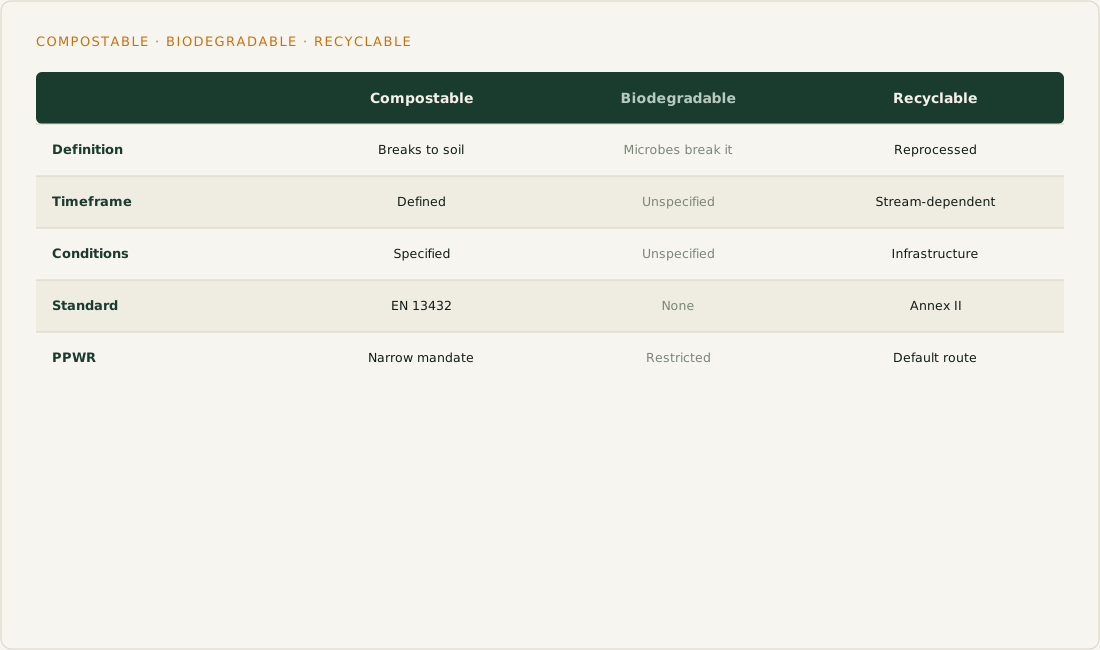
Compostable packaging breaks down under defined composting conditions into CO2, water, and biomass within a set time, leaving no toxic residue, and is certified to a standard such as EN 13432. Biodegradable means only that microorganisms can break it down, with no guarantee of timeframe, conditions, or end result. Recyclable means it can be reprocessed into new material. The three are not interchangeable, and only two of them are useful compliance claims.
The table below compares the three on the dimensions that decide compliance, not the ones marketing tends to emphasise.
| Compostable | Biodegradable | Recyclable | |
|---|---|---|---|
| Definition | Breaks down into soil under composting conditions | Microorganisms can break it down, eventually | Can be reprocessed into new material |
| Timeframe | Defined (set by the standard) | Unspecified | Stream-dependent |
| Conditions | Specified (industrial or home) | Unspecified | Sorting and reprocessing infrastructure |
| Certified standard | EN 13432 / EN 14995 | None inherent | PPWR Annex II grading |
| PPWR treatment | Mandated for narrow formats | Restricted as a bare claim | Default route for most packaging |
The single most important row is "timeframe". Compostable carries a defined one; biodegradable does not. A claim with no timeframe and no conditions tells a buyer nothing actionable, which is precisely why PPWR does not let "biodegradable" stand on its own.
What PPWR Articles 25-26 Actually Say
Articles 25-26 are where PPWR sets compostability requirements and the limits on biodegradable claims. Two principles run through them. First, compostability is mandated only for a narrow list of formats, not for packaging in general. Second, "biodegradable" is not a stand-alone compliance route: packaging must still meet either the recyclability requirements or the specific compostability mandate that applies to its format.
The reason for the narrow mandate is practical rather than ideological. Compostable packaging is required where the packaging is likely to end up in organic-waste or food streams, where it would otherwise contaminate compost or be impossible to separate. For most packaging, recyclability is the intended route, and a broad compostability mandate would undermine it by contaminating recycling streams.
A note on precision: the exact scope of Articles 25-26, and any detail set by delegated acts, should be confirmed against the consolidated EUR-Lex text of Regulation (EU) 2025/40 before any of this is cited verbatim in a compliance document. The principles are stable; the format list and act references are the detail to verify, not least because Member State composting infrastructure varies and shapes how the mandate lands in practice.
Where Compostable Packaging Is Mandated
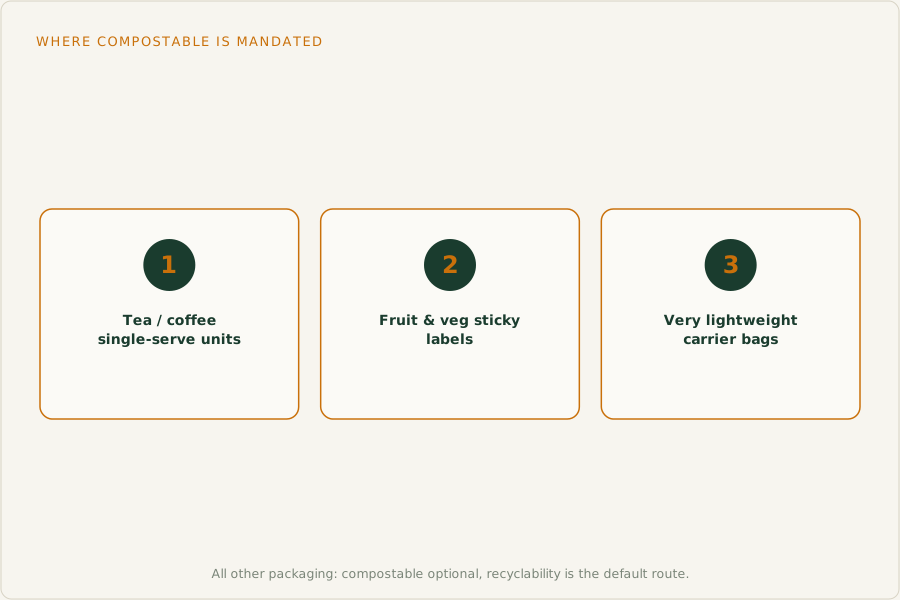
PPWR mandates compostability for a specific, short list of formats. Verify the exact list against the regulation, but it centres on formats that routinely end up in organic-waste or food streams:
- Tea, coffee, and similar single-serve units and filter bags intended for the brewing system, where they are likely to be discarded with food or organic waste.
- Sticky labels attached to fruit and vegetables, which travel into the food stream and cannot realistically be separated.
- Very lightweight plastic carrier bags, where required by the applicable Member State context.
For everything else, compostability is an option rather than a mandate, and only where it does not undermine the recycling stream the packaging would otherwise belong to. The mandate is targeted at contamination risk, not at replacing recycling. If your packaging is not on the mandated list, the question is not "should it be compostable" but "is it recyclable to the design for recycling requirements".
The Standards That Define "Compostable"
The word "compostable" is only meaningful against a named standard and a named environment. Two standards do most of the work in the EU.
- EN 13432 is the industrial compostability standard. It tests four things: disintegration (the packaging physically breaks apart), biodegradation (it converts to CO2 within the set time), ecotoxicity (the resulting compost supports plant growth), and heavy-metal content (below set limits). Passing EN 13432 is what lets packaging carry a credible industrial-compostable claim.
- EN 14995 covers the compostability of plastics more broadly and is closely related.
The critical distinction within "compostable" is industrial versus home. EN 13432 is an industrial standard: it assumes the controlled temperature and conditions of an industrial composting facility. Home composting is a stricter, real-world claim with its own separate certification schemes, because a home compost heap never reaches the temperatures an industrial facility does. A packaging certified industrial-compostable will not necessarily break down in a garden compost bin, and labelling it simply "compostable" without naming the environment is misleading. Certification marks exist precisely so the claim points to a named standard and environment rather than a vague promise.
Why "Biodegradable" Is Not a Free Claim
A bare "biodegradable" label is the weakest environmental claim a pack can carry, because it answers none of the questions a buyer or regulator would ask. In what timeframe? Under what conditions? Leaving what behind? Almost everything biodegrades eventually under some conditions, which is what makes the unqualified word close to meaningless.
EU law has moved firmly against vague environmental claims, through PPWR and the wider empowering-consumers and green-claims direction. The practical consequence for packaging is consistent: a "biodegradable" label does not satisfy a compostability mandate, and it does not make packaging recyclable. It is not a third route that lets a producer sidestep both the recyclability requirements and the compostability mandate.
The discipline that follows is simple. Claim only what is certified, and name the environment. If the packaging is certified compostable to EN 13432, say so and say industrial. If it meets the recyclability requirements under Annex II, claim recyclable. Avoid bare "biodegradable" on pack entirely, because an unqualified claim is an enforcement and reputational risk that buys nothing in return.
Compostable Is Not Recyclable, and Can Hurt Recycling
A common and costly error is to treat compostable as simply a greener form of recyclable. They are different routes that interfere with each other. Compostable packaging dropped into a recycling stream is a contaminant: it is not designed to be reprocessed and can degrade the quality of the recycled output. Recyclable packaging dropped into a composting stream does not break down and has to be screened out.
This mutual interference is exactly why PPWR mandates compostability only for the narrow formats most likely to reach organic streams. A broad compostability mandate would push compostable material into recycling streams and contaminate them at scale. It is also why a compostable layer in a multi-material pack still matters to your recyclability grade: under the Annex II worst-of methodology, a compostable component does not earn a recyclability pass, and combining it with recyclable layers can drag the whole pack's grade down. Compostable and recyclable are choices to make per format, not labels to stack on the same pack.
Frequently Asked Questions
What is the difference between compostable and biodegradable?
Compostable means certified breakdown into soil under defined composting conditions within a set time, to a standard such as EN 13432. Biodegradable means only that microorganisms can break it down, with no guaranteed timeframe, conditions, or end result. Compostable is a useful claim; bare biodegradable is not.
Which packaging must be compostable under PPWR?
PPWR mandates compostability for a narrow set of formats, centred on tea and coffee single-serve units, sticky labels on fruit and vegetables, and very lightweight carrier bags where required. For other packaging, compostability is optional and recyclability is the default route. Confirm the exact list against Regulation (EU) 2025/40.
Is biodegradable packaging allowed under PPWR?
A bare "biodegradable" claim is not a stand-alone compliance route. Packaging must still meet either the recyclability requirements or the specific compostability mandate for its format. "Biodegradable" on its own does not satisfy either, and unqualified environmental claims face restriction under EU green-claims rules.
What is EN 13432?
EN 13432 is the European standard for industrial compostability. It tests disintegration, biodegradation within a set time, ecotoxicity of the resulting compost, and heavy-metal limits. Passing EN 13432 supports a credible industrial-compostable claim, but not necessarily a home-compostable one.
Is compostable packaging recyclable?
No. Compostable and recyclable are different end-of-life routes. Compostable packaging in a recycling stream is a contaminant, and recyclable packaging does not break down in composting. A pack should be designed for one route or the other, not labelled as both.
What is the difference between home compostable and industrial compostable?
Industrial compostable, certified to EN 13432, assumes the controlled high temperatures of an industrial facility. Home compostable is a stricter claim with its own certification, because a home compost heap is cooler and slower. Industrial-compostable packaging will not reliably break down in a garden bin.
Conclusion
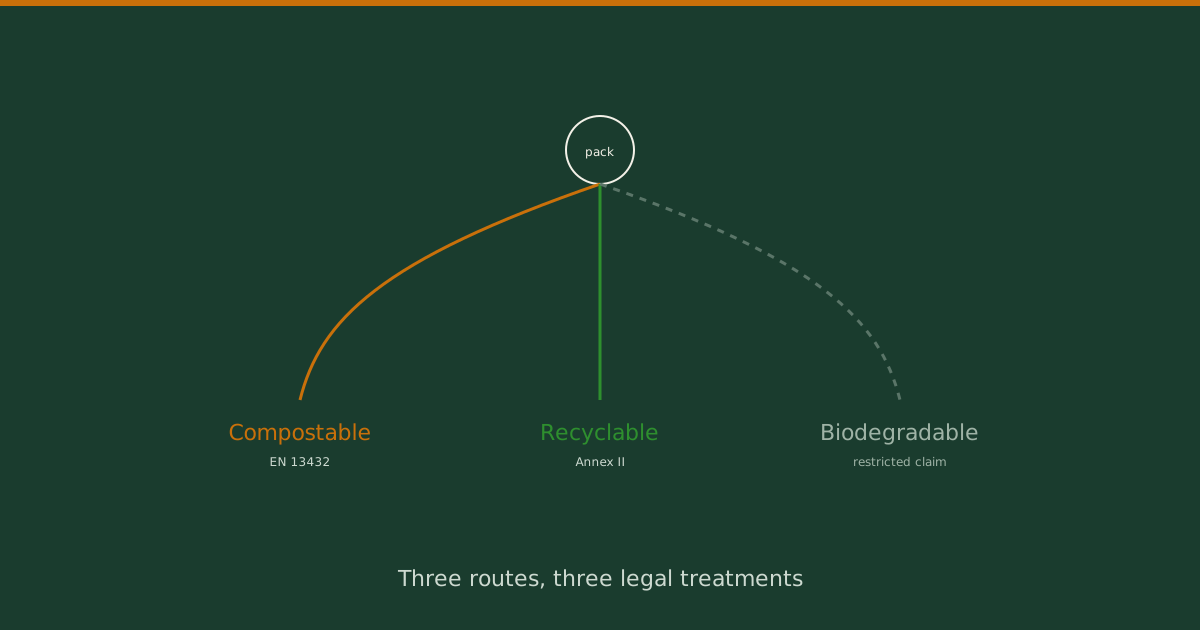
Compostable, biodegradable, and recyclable name three different end-of-life routes with three different legal treatments. PPWR mandates compostable only for the narrow formats most likely to reach organic streams, restricts loose "biodegradable" claims, and keeps recyclability as the default route for packaging in general.
Three moves keep a producer on the right side of all three. Claim only certified properties, never a bare "biodegradable". Name the environment, industrial or home, whenever you claim compostable. And keep compostable material out of recycling streams by designing each format for one route, not both.
Carbonorm grades each SKU's material and end-of-life route, so a compostable or recyclable claim is evidenced against a standard rather than assumed. Start Audit and check which route each of your formats actually qualifies for.