PPWR Article 15 Labelling: Symbols, QR Codes, Timeline
PPWR Article 15 Labelling: Symbols, QR Codes, and the Staggered Timeline
PPWR labelling under Article 15 is where many producers make the same planning error: they assume every label requirement starts on 12 August 2026, the regulation's general application date. It does not. Under Regulation (EU) 2025/40, Article 15 introduces labelling in three layers, and those layers phase in across staggered dates that run to 2029. Designing label artwork for the wrong date means re-plating it later, which is exactly the avoidable cost this guide is about.
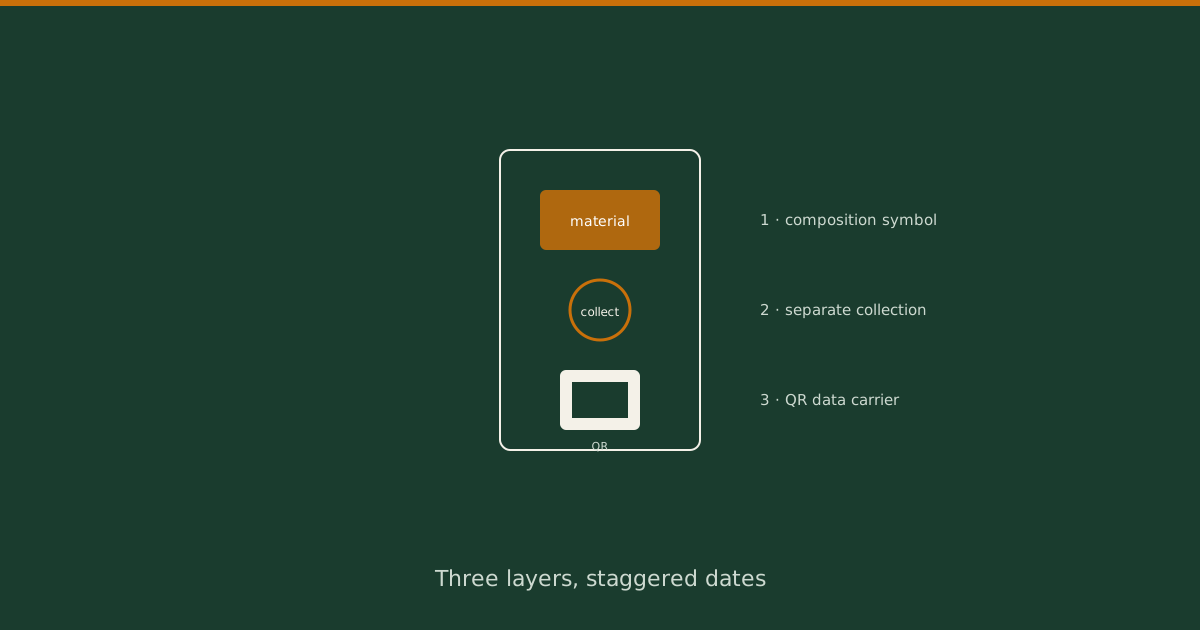
The three layers are a harmonised set of composition and material symbols to support sorting, a marking that indicates the correct separate-collection stream, and, for certain packaging, a QR code or other data carrier that links to further information. Each has its own scope and its own date. This guide sets out what Article 15 requires, the staggered timeline, what the QR data carrier is (and is not), who carries the obligation, and how to get label artwork ready once rather than three times.
In this guide:
- What Article 15 requires, across its three label layers
- The harmonised composition symbols, separate-collection marking, and QR data carrier
- The staggered timeline from 2026 to 2029
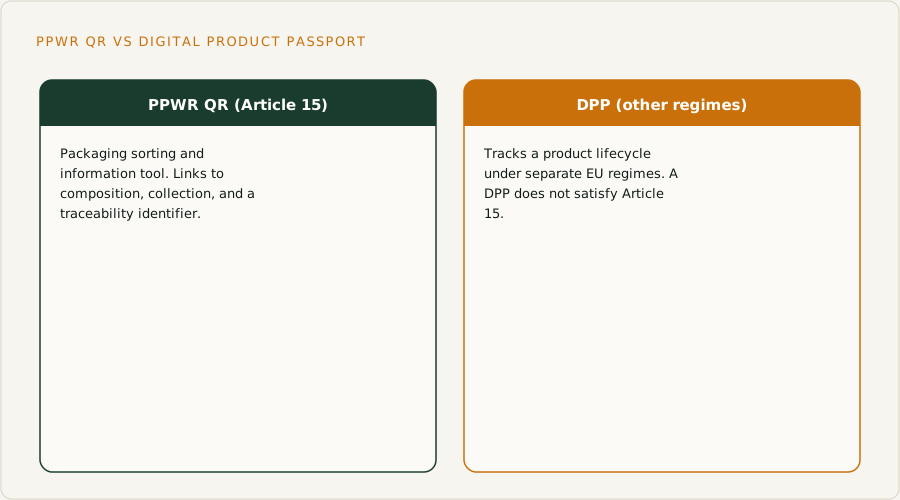
- What the QR code links to, and why it is not a Digital Product Passport
- Who must comply and where the label goes
- 6-entry FAQ covering QR codes, deadlines, symbols, and small formats
What Article 15 Requires
PPWR Article 15 requires packaging to carry harmonised labelling on its material composition to support sorting, marking to indicate separate collection, and, for certain packaging, a QR code or other data carrier linking to further information. The requirements phase in on staggered dates rather than all at the 12 August 2026 application date.
The intent is to make packaging legible to two audiences at once: the consumer deciding which bin it goes in, and the sorting system deciding which stream it belongs to. Harmonised symbols matter because fragmented national labelling has long sent the same material to different bins in different Member States. Article 15 replaces that with a common set.
A note on precision before any of this is cited verbatim: the exact paragraph references within Article 15, including the sub-paragraphs dealing with the data carrier and traceability identifier, and the specific dates, are tied to implementing acts and should be confirmed against the consolidated EUR-Lex text. The three-layer structure is stable; the paragraph labels and exact dates are the detail to verify, which is why this guide is set to refresh quarterly.
The Three Label Layers
Article 15 is easier to plan for when you separate it into the three things a compliant label has to do.
- Harmonised composition and material symbols. Standardised pictograms that identify the packaging material so both consumers and sorting systems can route it correctly. The harmonised symbols themselves are set by an implementing act, which is why their application date sits later than the regulation's general date.
- Separate-collection marking. A marking that tells the consumer which waste stream the packaging belongs to, aligning the pack with the collection system.
- QR code or data carrier. For certain packaging, a QR code or equivalent data carrier that links to extended information, which may include composition detail, reuse or deposit information where applicable, and a traceability identifier.
The first two are about the physical label face. The third adds a digital layer. A pack can need all three, and the dates on which each becomes mandatory are not the same.
The Staggered Timeline
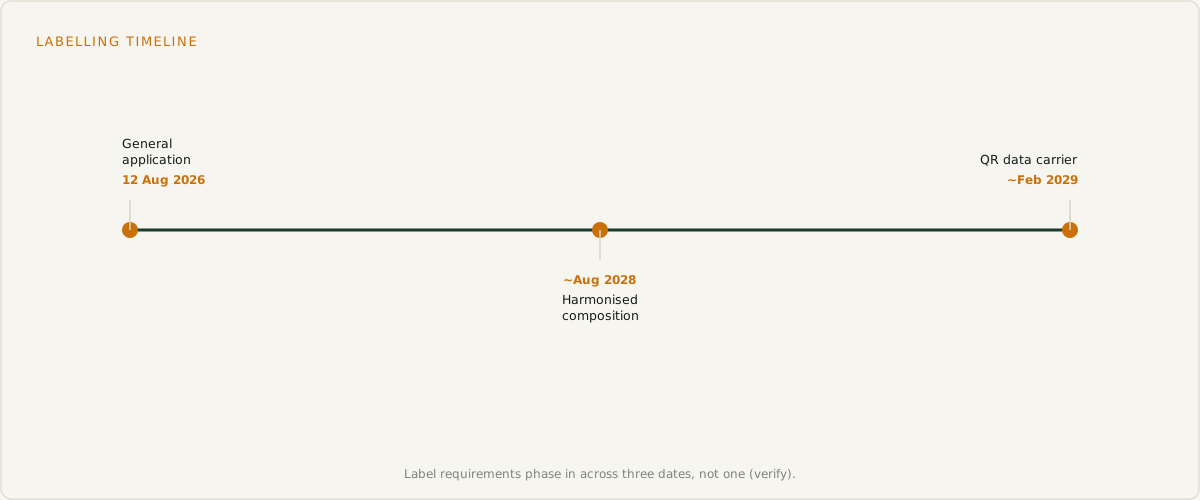
The dates below are the working planning frame. Treat each as approximate and tied to implementing acts, and confirm against the consolidated regulation before locking artwork.
| Requirement | Applies to | Indicative date |
|---|---|---|
| PPWR general application; labelling baseline | All packaging | 12 August 2026 |
| Harmonised composition / material symbols | Packaging placed on market | ~August 2028 (≈24 months after the harmonised-symbols implementing act) |
| QR code / data carrier | In-scope packaging | ~February 2029 |
The planning point is straightforward. Label artwork has long lead times, and re-plating to add symbols or a QR code later is an avoidable cost. Design once for the final state, with space reserved for the composition symbols and the data carrier, rather than chasing each date with a new revision. The PPWR deadline timeline puts these label dates alongside the regulation's other milestones so artwork planning fits the wider compliance calendar.
The QR Code and Data Carrier
The QR code, or other data carrier, is the layer that causes the most confusion, partly because QR codes appear in several different EU regimes. Under Article 15, the data carrier links to extended packaging information and, where applicable, carries a traceability identifier. It is a packaging-sorting and information tool.
It is not a Digital Product Passport. The DPP, which appears under other EU regimes for products such as batteries and textiles, tracks a product's lifecycle and is a separate obligation with separate content. Conflating the two leads producers to over-build the PPWR data carrier or assume a DPP satisfies Article 15. It does not. Keep the PPWR QR scoped to what Article 15 asks for, and treat any DPP obligation as a distinct workstream.
Where the packaging participates in a deposit-return scheme or is reusable, the data carrier can also support those interactions, which is one reason the QR requirement sits later in the timeline: it depends on the surrounding systems being in place.
Who Must Comply and Where the Label Goes
The labelling obligation sits with the manufacturer, and the importer must verify it is satisfied as part of its Article 18 verification duties. Where the importer's own brand is on the pack, the importer becomes the manufacturer and the labelling obligation is theirs directly.
The label normally goes on the packaging itself. Where a format is too small to carry the full label, the regulation provides for the information to appear on an accompanying document or outer packaging, and the QR data carrier becomes especially useful precisely because it compresses extended information into a small mark. Small-format exceptions are the detail to confirm per format, but the principle is that the requirement scales to what the surface can physically hold.
Practical Label Readiness
Getting ready for Article 15 is an artwork-and-data exercise. Audit current label artwork against the three layers and identify what is missing. Reserve space in the design for the harmonised composition symbols and the QR data carrier even before their dates land, so the final-state label needs one plating, not three. And connect the label to the underlying SKU data, because the composition symbol and the DoC composition field should never disagree. A label that says one material while the DoC says another is an audit flag waiting to happen.
Frequently Asked Questions
Does PPWR require a QR code on packaging?
For certain packaging, yes. Article 15 provides for a QR code or other data carrier linking to extended information, including a traceability identifier where applicable. It applies to in-scope packaging on a later date than the regulation's general application, so confirm the scope and date for your format against Regulation (EU) 2025/40.
When do PPWR labelling rules apply?
Not all at once. The regulation applies generally from 12 August 2026, but the harmonised composition symbols apply later (around August 2028, tied to an implementing act) and the QR data carrier later still (around February 2029). Treat the later dates as indicative and verify them before locking artwork.
What symbols must packaging carry under PPWR?
Packaging must carry harmonised composition or material symbols that identify the material to support sorting, plus a separate-collection marking indicating the correct waste stream. The harmonised symbols are set by an implementing act so they are common across Member States rather than fragmented nationally.
What is the harmonised composition label?
It is a standardised pictogram identifying the packaging material, common across the EU, so that consumers and sorting systems route the packaging consistently. It replaces the patchwork of national labelling that previously sent the same material to different bins in different countries.
Is the PPWR QR code the same as a Digital Product Passport?
No. The PPWR data carrier under Article 15 is a packaging sorting and information tool. The Digital Product Passport is a separate obligation under other EU regimes that tracks a product's lifecycle. A DPP does not satisfy Article 15, and the two should be planned as distinct workstreams.
What happens if packaging is too small for the label?
The regulation provides for the information to appear on an accompanying document or outer packaging where the format cannot physically carry the full label. The QR data carrier helps here, because it compresses extended information into a small mark. Confirm the small-format exception for your specific format.
Conclusion
Article 15 is three label layers on a staggered clock: harmonised composition symbols, separate-collection marking, and a QR data carrier, phasing in from 2026 to 2029. The mistake to avoid is designing for 12 August 2026 alone and re-plating twice.
The discipline is to design for the final state now. Reserve space for the symbols and the data carrier, keep the PPWR QR scoped separately from any Digital Product Passport, and connect the label to the same SKU data that feeds the Declaration of Conformity so the two never contradict each other.
Carbonorm keeps per-SKU composition data in one portfolio, so the label symbol and the DoC composition field stay in sync. Start Audit and build your label artwork against verified data rather than guesses.