PPWR Article 38: Recyclability Grades A-E and the 2030 Gate
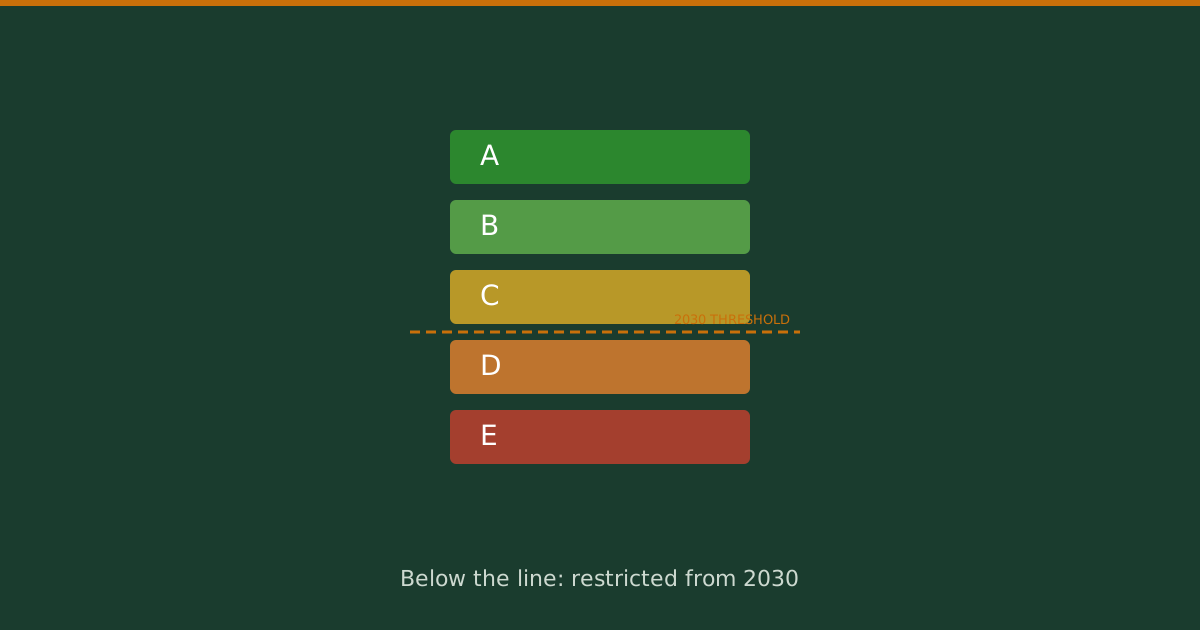
PPWR Article 38 Recyclability Assessment: The A-E Grades and the 2030 Gate
A recyclability grade under PPWR is not a label for the marketing team. It is the number that decides whether a pack can be sold in the EU from 2030 and how much extended-producer-responsibility fee it carries every year until then. The PPWR recyclability assessment under Article 38 requires each packaging to be assessed against design-for-recycling criteria and assigned a performance grade from A to E. Under Regulation (EU) 2025/40, that grade has teeth: from 2030, packaging below a set threshold faces restricted market access, and the grade already shapes the fee a producer pays.
Two methodologies sit behind the grade: the categorical worst-of rule in Annex II and the quantitative grading in Annex VII. This guide stays on what Article 38 obliges and what the grade costs you, market access and fees, and leaves the detailed A-E calculation mechanics to the dedicated Annex VII grading guide. The grade thresholds and dates here are the planning frame; confirm them against the consolidated regulation and its delegated acts before relying on them, as the design-for-recycling detail is still being completed by implementing acts.
In this guide:
- What Article 38 requires of every packaging
- The A-E performance grades and what each band means
- Annex II categorical worst-of vs Annex VII quantitative grading
- The 2030 market-access gate
- How grades drive EPR fees through eco-modulation
- 6-entry FAQ covering grades, thresholds, timing, and methodology
What Article 38 Requires
PPWR Article 38 requires each packaging to undergo a recyclability assessment that assigns it a performance grade from A to E based on design-for-recycling criteria. From 2030, packaging below a set grade threshold faces restricted access to the EU market, and the grade also influences extended-producer-responsibility fees.
The assessment is carried out per packaging type, against the design-for-recycling criteria the regulation sets, and the result is documented in the technical file that supports the Declaration of Conformity. It is not a one-time marketing exercise but a standing classification: the grade follows the packaging and is the basis on which both market access and fees are decided. A producer who cannot state a defensible grade for a pack cannot show it is compliant.
The A-E Performance Grades
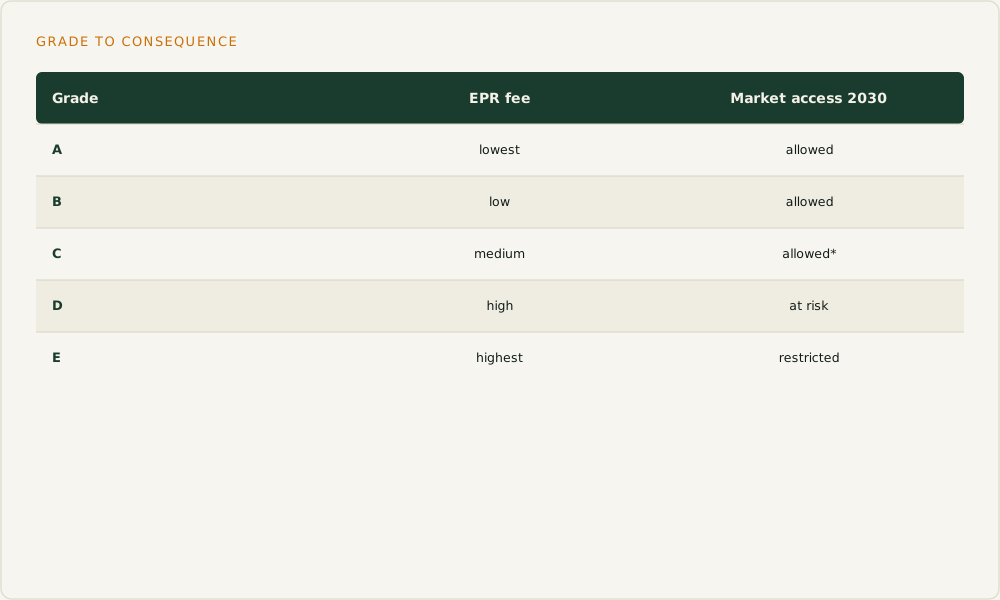
The grades run from A, the highest recyclability performance, to E, the lowest. They are a performance class rather than a simple pass or fail: a pack does not "pass" or "fail" Article 38 in the abstract, it sits in a band, and the band determines the consequences. A higher band means lower fees and unrestricted market access; a lower band means higher fees and, from 2030, the risk of being shut out of the market.
The grade is built on the design-for-recycling criteria set out under Article 6: how well the packaging can actually be collected, sorted, and reprocessed at scale. Design choices that frustrate sorting or reprocessing, such as incompatible material combinations or problematic additives, push a pack down the grade scale. The grade is, in effect, a score for how recyclable the design really is in the systems that exist.
Annex II vs Annex VII
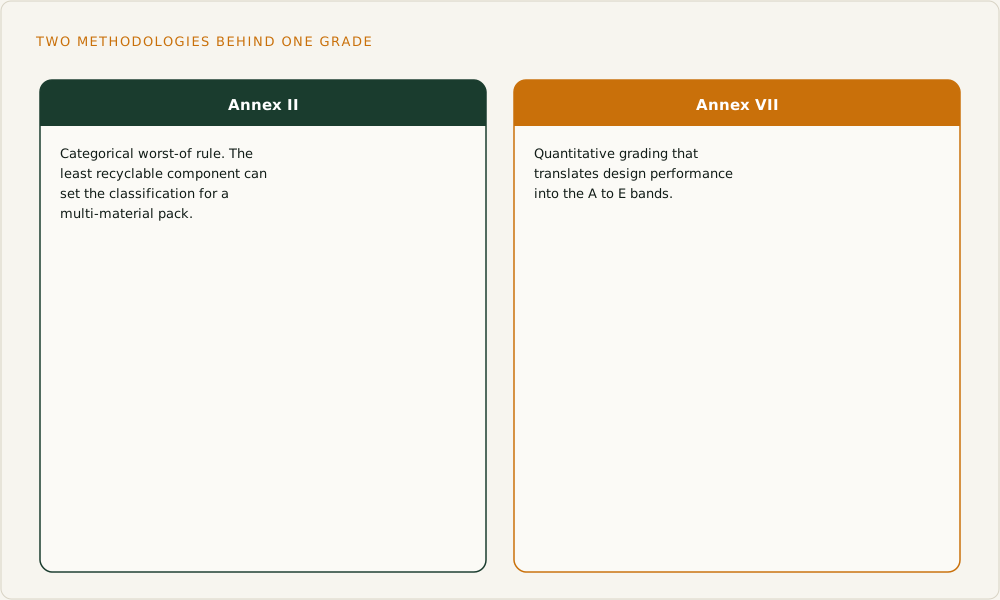
Two methodologies feed the grade, and it helps to keep them distinct. Annex II applies a categorical worst-of rule: in a multi-material pack, the least recyclable component can set the classification for the whole, which is why a single problematic layer drags an otherwise recyclable pack down. The Annex II worst-of methodology guide works through the edge cases where this bites.
Annex VII provides the quantitative grading that translates design performance into the A-E bands. The two are complementary rather than alternatives: the worst-of principle shapes how multi-material packs are treated, and the quantitative grading assigns the band. The detailed A-E calculation mechanics belong in a dedicated Annex VII grading deep-dive; here the point is simply that one grade emerges from both a categorical constraint and a quantitative method, and multi-material design is where they interact most.
The 2030 Market-Access Gate
The most material consequence of the grade is not the fee, it is market access. From 2030, packaging that grades below the set threshold faces restricted access to the EU market: it cannot be placed on the market in the same way as before, which for a producer means a graded-out pack is a pack it can no longer sell. A later point in the decade brings a further tightening, raising the threshold again, so a grade that clears the first gate may not clear the second.
Confirm the exact threshold grade and the precise dates against the consolidated regulation, because these are set with delegated-act detail and are the highest-stakes numbers in this guide. The strategic implication does not depend on the precise figure, though: any pack sitting near or below the threshold is a commercial risk with a fixed deadline, and the lead time to redesign packaging and re-qualify suppliers is measured in years, not months. The 2030 gate is the reason recyclability grading is a board-level issue and not a back-office one.
How Grades Drive EPR Fees
Before and alongside the market gate, the grade works through money. Extended-producer-responsibility schemes increasingly apply eco-modulation: better-graded packaging pays lower EPR fees, worse-graded packaging pays more. The grade therefore becomes a recurring annual cost signal rather than a one-off classification. Two packs with the same function but different grades carry different fees for every unit placed on the market, year after year.
This makes the grade a live financial variable, not just a compliance attribute. A redesign that moves a high-volume pack up a grade can pay for itself through reduced fees well before the 2030 gate arrives, which is why grading and cost modelling belong in the same conversation. The fee link is also why national scheme detail matters: the modulation is applied through the EPR schemes in each market, so the same grade can carry different fee impacts across countries.
What to Do Now
The work is per-SKU and prioritised by risk. Assess each SKU's grade against the design-for-recycling criteria, identify the lines sitting near or below the 2030 threshold, and prioritise redesign where a grade crosses that gate, because those are the packs that become unsellable rather than merely expensive. High-volume packs near a threshold are the obvious first targets, since they carry both the largest fee exposure and the largest market risk.
Frequently Asked Questions
What is the PPWR recyclability assessment?
It is the Article 38 obligation to assess each packaging against design-for-recycling criteria and assign it a performance grade from A to E. The grade is documented in the technical file and determines both market access from 2030 and the EPR fee the packaging carries.
What are the PPWR recyclability grades?
Packaging is graded from A, the highest recyclability performance, to E, the lowest. The grades are a performance class rather than a simple pass or fail, and the band a pack sits in determines its fee level and, from 2030, whether it can be placed on the market.
What happens if my packaging grades below the threshold?
Below the set grade threshold, packaging pays higher EPR fees and, from 2030, faces restricted access to the EU market. A graded-out pack effectively cannot be sold in the same way, so packs near or below the threshold are commercial risks with a fixed deadline. Confirm the exact threshold against the regulation.
When does the PPWR recyclability requirement start?
The assessment obligation applies with the regulation, while the market-access consequence of grades takes effect from 2030, with a further tightening later in the decade. Treat the exact dates as the planning frame and verify them against the consolidated regulation and delegated acts.
How does the recyclability grade affect EPR fees?
Through eco-modulation: extended-producer-responsibility schemes charge lower fees for better-graded packaging and higher fees for worse-graded packaging. The grade becomes a recurring annual cost, so improving a high-volume pack's grade can reduce fees every year it is on the market.
What is the difference between Annex II and Annex VII?
Annex II is the categorical worst-of rule, where the least recyclable component can set the classification for a multi-material pack. Annex VII is the quantitative grading that assigns the A-E band. They are complementary: the worst-of principle shapes multi-material treatment, and the quantitative method assigns the grade.
Conclusion
Article 38 turns recyclability into a graded number with two consequences: an annual EPR fee and, from 2030, market access. The grade is built from the design-for-recycling criteria through both the Annex II worst-of rule and the Annex VII quantitative method, and it is the number that decides whether a pack stays sellable.
For a producer, the move is to grade every SKU, find the lines near the 2030 threshold, and redesign those first, because they carry both the highest fees and the real market risk. Done early, grading is a cost-optimisation lever; done late, it is a market-access emergency.
Carbonorm grades each SKU against the recyclability criteria and flags the lines below the threshold. Start Audit and see which of your packs face the 2030 gate.